Vill du också ha tillgång till vårt videobibliotek?

  • 2500 videor
  • Ingen bindningstid
  • Testa utan kostnad

Välkommen till vår blogg

Yoga, träning och hälsoinspiration för dig

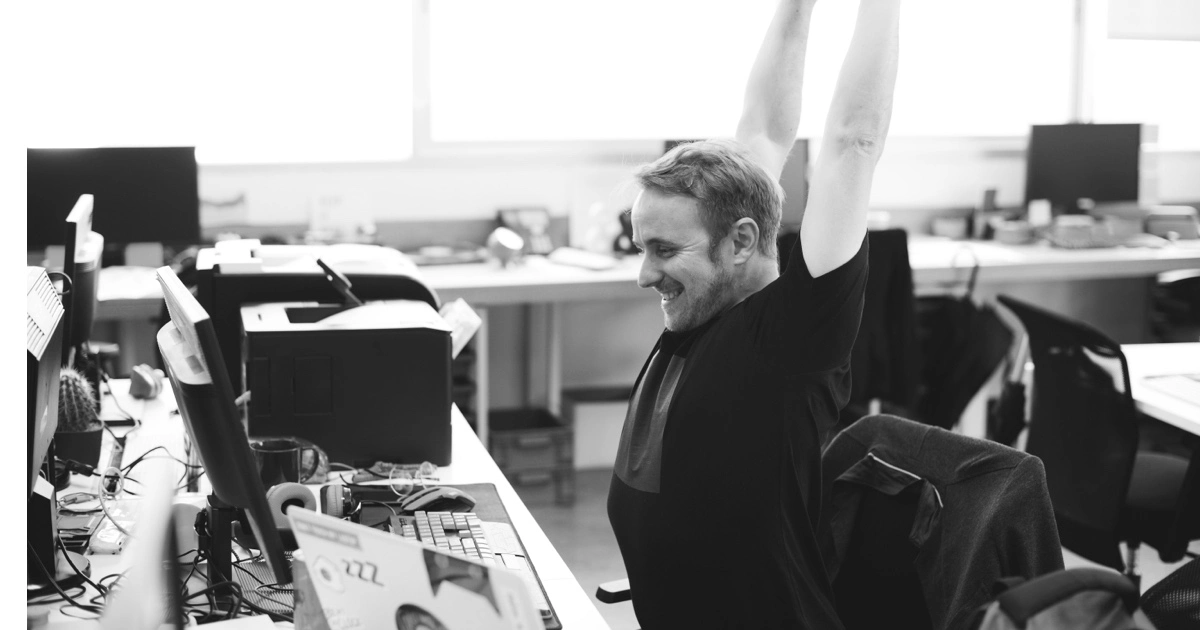
Väck liv i fikapausen & minska sjukskrivningarna

Väck liv i fikapausen & minska sjukskrivningarna

19 februari 2020 | Av

Vår heliga fikapaus, viktig ur många perspektiv. Men allt förändras, och det tycker vi att även fikapausen behöver göra, den behöver ändra skepnad. Det är dags att revolutionera vår älskade fikapaus, och därigenom bidra till att minska sjukskrivningarna!

Är du redo för Paus 2.0? För en hållbar hälsa på jobbet!

Fikapausen är helig på många svenska arbetsplatser och idag visar forskning att pausen inte bara stärker gemenskapen på jobbet, utan också har en viktig roll i vår förmåga att återhämta oss under arbetsdagen. Vi ska och behöver alltså fortsätta att värna om kaffepausen, men i och med att vi går in i ett nytt decennium och samhället inte ser ut som för 50 år sedan behöver också våra pauser förändras och ta sig till nästa nivå för att fungera optimalt.

För den som har ett fysiskt krävande arbete utomhus sker den bästa pausen och energiuppladdningen med stor säkerhet inomhus i skydd från vädrets makter, sittandes och vilandes. Men hur många av oss känner igen sig i den beskrivningen idag?

Snarare arbetar majoriteten av den arbetsföra befolkningen framför en skärm, de flesta sittandes, några ståendes. Men i huvudsak rätt stilla. En paus där vi går från ett sittande till ett annat ger oss därmed inte samma återhämtning. Den sittande nutidsmänniskan behöver snarare pausa med rörelse för att minska på de negativa effekterna som långvarigt stillasittande ger. För de är dessvärre många.

Vill du få inspiration och stöd för att ta pauser för både kropp och sinne? I vårt audio- och videobibliotek hittar du ett stort antal övningar för korta pauser, med rörelser, andning, fokusövningar med mera. 

Fakta om stillasittande

  • Stillasittande orsakar var tionde fall av förtida död (The Lancet 2012)

  • Stillasittande är lika farligt som att röka (The Lancet 2012)

  • Svenskarna motionerar mest, men sitter också mest (Eurobarometern 2013)

  • Många är stillasittande så mycket som 8,5 timmar om dagen! Med 45 minuters löpning på kvällen så slutar man ändå i gruppen ”Aktiv soffpotatis”. Det är såklart bra att träna och motionera på sin fritid, men det räcker inte. Viss rörelse måste också in under arbetstid.

  • Stillasittande innebär frånvaro av kontraktioner i de stora muskelgrupperna, det vill säga muskulär inaktivitet. Långvarigt stillasittande leder till låg energiomsättning, fetma, stelhet, värk med mera. Genom att tillföra mer lågintensiv vardaglig aktivitet motverkar man dessa riskfaktorer.

Få till de smarta pauserna under arbetsdagen

Ok, vad har nu detta med kafferasten att göra tänker du? JO, vi vill revolutionera våra älskade fikaraster. Inte ta bort. Utan lägga till. Vad undrar du? En smart (rörelse)paus såklart! Du kan pausa på mängder av sätt, exempelvis genom att:

  • Ta en kort promenad – ta ett varv runt huset för att få lite luft och samtidigt vila hjärnan.

  • Dansa – sätt på en skön låt eller två och hoppa runt eller mysdansa på känsla, utan krav. I vårt videobibliotek finns sköna videor för bland annat danspauser.

  • Gör guidade övningar för rörelse – ta hjälp av en video med rörlighets- eller styrkeövningar som du kan göra var och när som helst. I videobiblioteket här på Yogobe finns många olika övningar för dina pauser på jobbet.

  • Gå upp och ner i trapporna – ta ett gäng vändor i trappan för att få igång cirkulationen och låta benen jobba.

Lästips

Guidade övningar online – för korta pauser under arbetsdagen

Yogobe Video: 96kcYogobe Video: g25wYogobe Video: dr39Yogobe Video: sr94

För att se en hel video behöver du vara inloggad som betalande medlem hos Yogobe. Ny till tjänsten? Prova gratis i 14 dagar, utan bindningstid. Klicka här och kom igång direkt!

Öppna inlägget
To live with cancer – Increase intensity to decrease fatigue

To live with cancer – Increase intensity to decrease fatigue

15 februari 2020 | Av

Cancer related fatigue is one of the most common side effects cancer patients suffer from. An overwhelming exhaustion that affects all aspects of life. But new research shows that there's one action that has proven very effective to alleviate and reduce fatigue. Learn more here! 

This is the third blog post in a series on living with cancer that I'll be writing the coming months. The introduction and links to the first blog posts, can be found in the first one; To live with, after and next to cancer.

The key to reduce fatigue & nausea

The legs feel like lead. No, that’s a lie. The whole body feels like lead. You can’t think and you struggle to follow the conversation you’re in. The brain feels as heavy as the body.

Cancer related fatigue has entered. Uninvited it ignored knocking on your front door. It just stomped right into your house and made itself comfortable on your favorite couch. And in your bed. And in the kitchen. It accompanies you at work, and it won’t even leave you alone when you hang out with your friends or enjoy time with your family. It puts a heavy dark cloud on the activities you love but now can’t find the energy to appreciate, or even do, anymore.

That's the thing with fatigue – it affects all aspects of your life.

Cancer related fatigue is one of the most common side effects cancer patients suffer from. Fatigue is something else than just feeling very tired. You can’t make it go away by resting more and you feel as drained in the morning as you did before going to sleep the evening before. It is a persistent and overwhelming exhaustion that decreases capacity for both physical and mental work.

Although the level of fatigue, and how long it lasts, differs from person to person, a lot of patients rate fatigue as one of the hardest side effects to deal with due to its severity and impact on quality of life. Once considered a side effect that “comes with cancer” there are now many things that can help with managing the paralyzing feeling of exhaustion.

This blog post introduces one action that has proven very effective to alleviate and reduce fatigue. One way to show fatigue that it’s not welcome, is to do exactly the opposite of what it wants you to do. Fatigue wants you to join it resting on the couch, taking an extra nap, sleep more in the morning. While all those things are good and important for recovery, they should not be all you succumb to.

Introducing: Physical activity!

Exercise is the key

Before it was said to cancer patients to rest to restore energy levels. Now more and more research show that being physically active is not only safe and well-tolerated by cancer patients but also a key factor to reduce symptoms such as fatigue and nausea. The thought of exercising may be overwhelming when you are already feeling depleted. But exercise can increase energy levels and help you to build stamina to do more of your usual activities.

In Helsingborg exercise has become a part of the treatment in cancer care. During the fall of 2019 a project started at Cancerrehabiliteringsmottagningen at Helsingborgs Lasarett. Every patient about to undergo chemotherapy is scheduled to meet a physiotherapist to come up with an individualized exercise plan.

“It’s not a study to see the effects physical activity has on our patients. We already know from many studies that cancer patients benefit from exercise when it comes to counteracting both short- and long-term side effects, especially fatigue. This is a project to evaluate how we can implement exercise as standard care for cancer patients”, says Patrik Göransson, psychologist and leader of the patient process at the Cancerrehabliteringsmottagningen in Helsingborg.

Prevention and treatment

In collaboration with Friskis & Svettis, the hospital offers patients two training sessions each week. The sessions focus on circuit training that includes both strength work and getting the heart rate up, as the combinations of those seem to give “the most bang for the buck”. For those who decide to exercise outside of the hospital-organized sessions the physiotherapist takes extra time to create a plan for them to follow on their own.

“We see physical activity and exercise as prevention and treatment, with the aim to improve the patients’ physical and mental health. We use the same terminology as with medicine, talking about training sessions as doses. It should be natural for doctors, nurses, and patients to see exercise as a part of treatment. With the right support we want to create a behavior pattern where physical activity is a natural part of everyday life.”

Apart from showing fatigue the door, exercise encourage better treatment results. As chemotherapy takes its toll on the entire body, physical activity is important for patients to keep, and even gain, strength and aerobic fitness during treatment. Being in good physical shape seem to improve resilience in a way that lead to less need of care due to treatment related side effects. It also increases the capability to endure the medicinal treatment plan.

Patrik also addresses the positive psychological impact exercise and the feeling of participating have.

“It gives a different perspective from just fighting against cancer”, Patrik says. “You fight FOR something. You fight for wellbeing, for more strength, for better energy in everyday life. It is a positive direction of intention and energy”.

Women in the Swedish study OptiTrain said that the exercise made them experience health, even if battling side effects. Participants often reported to be tired and affected when they arrived for training. Afterwards they expressed feeling better and healthier.

Managing fatigue with exercise

Being physically active is good, but it is always a good idea to talk to your doctor or physiotherapist before starting an exercise program. You can get advice about the best routines for you and discuss if there are any contraindications or limitations that can affect how you tolerate exercise.

Some tips for managing fatigue with exercise:

  • Combine aerobic exercise with strength training = Do something that gets your heart rate up, like walking, running, cycling, dancing, swimming + lift, push and pull something heavy, like your own body, weights, resistance bands, furniture, a child.
  • Base the activity on your own level.
  • Find a regular, daily if possible, routine of being physically active. Some days that will mean high intensity training, other days that will mean a short walk. Doing something active will often make you feel better and more energized after.
  • Be mindful and pace yourself. Allow for rest if necessary.
  • Try breaking up exercise in into smaller amount of time. 3x15 minutes during a day might be better than 1 longer block of time.
  • Exercise with friends and family or ask if there is an exercise program for cancer patients at your hospital. Having a support network both makes exercise more fun and manageable.

Exercise at home

Sometimes it feels better, and easier, to exercise at home and not having to go to a gym. Then online classes come in handy. Below you'll find video recommendations to inspire you to get started. 

STRENGTH
Get your muscles working with these nice whole-body sessions. 

Yogobe Video: 3x5z Yogobe Video: ca83 Yogobe Video: u2f4

STRENGTH & CARDIO
Include some cardio and get the heart pumping.

Yogobe Video: 6bc7 Yogobe Video: 39rz Yogobe Video: 7y9d Yogobe Video: 5h6d

To watch a full video you need to be logged in as a paying Yogobe member. Haven't tried Yogobe before? Try it for free during 14 days – click here to get started!

War on cancer

The physical challenge is huge for a cancer patient. The mental and emotional challenge is at least as great. War On Cancer is a social media-app, a social network and community, where everyone affected by cancer have the opportunity to share their cancer experience and get in contact with others who actually understand. War On Cancer's mission is to put focus on, and radically improve, the mental health of everyone affected by cancer. The first step is the digital social network that creates belonging and community in a time of isolation and uncertainty. You are reminded that you are never alone. We'll fight cancer together.

Learn more about War On Cancer and download their app at waroncancer.com
Share your story, it will make a difference.

Learn more

  • Ongoing studies – In Sweden there are ongoing studies to find out which type of exercise is most effective for cancer patients, both with positive and interesting results.
    • Phys-Can
      In a collaboration between the university hospitals in Uppsala, Linköping, and Malmö/Lund, cancer patients are participating in a study called Phys-Can which is comparing the effects of aerobic- and strength training at a high intensity with training on lower intensity.
    • OptiTrain
      At Karolinska Institute and Karolinska University hospital OptiTrain is a study looking at which physical exercise is best for women with breast cancer diagnosis undergoing chemotherapy: aerobic training, or combination training with both aerobic- and strength training.
Öppna inlägget
Status update - Server attack

Status update - Server attack

11 februari 2020 | Av
Peter Munteanu

This blog post is your update to what is going on at Yogobe HQ since our servers were attacked in the morning of February 1. If you are a member or visitor and want to know more, this is the place to find information.

Dear Member, (Update 2020-03-03, at 22:20)

We are now back on track and while we wait to hear back from Amazon AWS in detail about what happened to our servers on February 1, 2020, when we had to go live with a backup of Yogobe.com, which affected some January data and some on page imagery. If you are merely curious or find yourself affected, please read this post. 

If you would like this update in either Swedish, Finnish or Norwegian, do not hesitate to connect with me personally.

Current situation - payments, access time, etc.
User data between January 11-31 was affected. We have succeeded in recreating user accounts, payments, access-times and receipts from the period although we have identified that a few members might lack some access time and there are a few members who cancelled their subscriptions in this period which we cannot track. If this applies to you, do not worry! <3 Please just connect with us and we will help you! If a payment seems to be missing from your receipt page, please send us a copy/printscreen of your bank statement (so that we can see amount and time stamp) or confirmation email and your payment will be manually processed and receipt generated. Email: help@yogobe.com. 
THANK YOU for your understanding!

General issues / Upplever du att Yogobe inte fungerar?
1. A few of you have been experiencing cache-issues in your browser. An example of this could be that pages only show a "loading-icon". Please attempt to empty the cache in your own web browser. If you don't know how, just google: "empty cache", your device name and the web browser you are on. In Swedish an example of this could be: "Tömma cache safari IOS". If your experience persists, please email help@yogobe.com with your email, what web browser you are using and what device you are on, and we'll see what can be done.

2. We are missing images on several pages on Yogobe. We are working on this and ask for your understanding if things look less than perfect when you click around.

Thank you for taking the time to read this through. If there is anything you believe that I have missed to mention in this post, please do not hesitate to connect with me straight away to my personal email: peter@yogobe.com or via phone.

Sincere regards,

Peter Munteanu
Founder and CEO
peter@yogobe.com
+46709400602

Öppna inlägget
Being authentic – with Satu Tuomela

Being authentic – with Satu Tuomela

11 februari 2020 | Av
Yogobe

Authentic Flow is built on intuition, embodiment and exploration. We asked Satu Tuomela – founder of Authentic Flow, senior yoga teacher and member of Team Yogobe – three questions on the topic authenticity.  And this is truly a yoga style channeling her entire life philosophy. Get inspired to explore authenticity in movement!

Three questions on authentitcity – with Satu Tuomela

1) What has changed in you - the persona "Satu Tuomela"– pre-yoga, vs. post-yoga?
I think the biggest change, if comparing me before discovering yoga and now, is that I truly care about what happens in this world, and that I believe that everything we do as people have an effect – positive or negative. I mean, I started yoga pretty early on and if I look back, I was way more self-absorbed then, than now. Gradually my practice changed everything: from eating meat to not, from drinking in clubs to not, from obsessing over material things to not.

Yoga forced me to get “in me”, if that makes sense. It was a total involusion, and it became loud and clear what was good for me and what was not. As I started to feel this, I also started to sense and be emotional about what was happening outside of me too. My practice really made me an activist.


2) What inspired you to create Authentic flow?
What didn’t!? Let me tell you. At that time, I had been kind of forced into teaching a set series of asanas (yoga poses) for some years and my inspiration for teaching was just dying inside of me. My dance background, even my basketball loving soul, just wanted to break free and start moving and teaching more intuitively. So I did. I started to devour somatic teachings, free movement and non-dual Tantra. The embodiment process of all that was channelling through me as a practitioner and a teacher was intense. It took me some years to get grounded with all of it and start teaching it to others fully. I am so glad I did though, now after 10+ years, our school is ever more a delight for me.

3) What values do you try to live by, for your children and for generations to come?
I have been thinking of this a lot lately as I just had my third child, my first daughter. I feel so responsible and excited at the same time. Responsible, as it is so important for me to raise my children to think for themselves and to feel responsible over the state of this planet and our communities, but also to let things shift and live through them freely as well. I am trying to be an example of that. I feel also excited, as this generation will be epic! I am so privileged to see how it all unfolds as a mother, and how they will teach us so much.

Authentic Flow classes online

Check out the new Authentic Flow-classes with Satu – enjoy!

Yogobe Video: 6gx9 Yogobe Video: 6xk8 Yogobe Video: t6d9 Yogobe Video: 5sh3

To watch a full video you need to be logged in as a paying Yogobe member. Haven't tried Yogobe before? Try it for free during 14 days – click here to get started!

Further reading

Öppna inlägget
Vad är yoga nidra?

Vad är yoga nidra?

09 februari 2020 | Av
Yogobe

Har du testat yoga nidra? Här pratar vi avslappning på riktigt. Yoga nidra kallas även den yogiska sömnen och används bland annat för bättre nattsömn eller för att somna lättare. Lär dig mer och få videotips här!

Yoga nidra – för minskad stress 

Yoga nidra är en guidad meditationsteknik som utförs liggande på rygg. Den kallas ofta den yogiska sömnen då du går in i ett tillstånd mellan vakenhet och sömn och kroppen slappnar av på djupet. Ett tillstånd kallat hypnogogiskt tillstånd, eller alfatillstånd.

Nidra = sömn på sanskrit

Yoga nidra har sina rötter i en uråldrig, tantrisk teknik där du fokuserar din uppmärksamhet på olika kroppsdelar – genom så kallad kroppsscanning. Det handlar alltså om medveten avslappning och vissa menar att en timme av yoga nidra kan vara lika effektiv för din återhämtning som tre timmars sömn! Många upplever att yoga nidra ger en ökad energibalans, större fokus och välbefinnande.

Vill du testa en yoga nidra? I videobiblioteket här på Yogobe har vi flera olika, med olika längd och fokus, på svenska och engelska. Vagga dig till ro!

Yoga nidra ger djup vila och avkoppling som du inte uppnår på samma sätt genom någon annan meditationsövning. Den kan ge utrymme att utforska vad du behöver just nu, och är samtidigt ett tillfälle att vara med det som är.

Förbättra sömnen med yoga nidra

Det går att använda yoga nidra för olika behov och syften, guidningen anpassas då för det tänkta syftet. Allra vanligast är att använda yoga nidra för att förbättra sömnen – antingen för att somna på kvällen eller i förebyggande syfte för att sänka stressnivåer som kan orsaka sömnproblem. Men det finns även andra behov som kan få extra fokus, som att höja energin, komma mer i kontakt med sig själv med mera.

Så fungerar yoga nidra

När du ligger i savasana, eller död mans position som det också kallas, följer du den guidande lärarens röst. Guidningen är till för att skapa en rotation av sinnet och därigenom flytta ditt fokus runt i kroppen på olika sätt. Syftet med all meditation är att stilla tankarna, de kommer alltid vara där men vi kan försöka låta dem stå åt sidan genom att bland annat hitta olika fokuspunkter. Det är det rotationen av sinnet syftar till. Detta tillåter ditt sinne att vila och efter hand gå in i det fullständigt avslappnade tillståndet. I yoga nidra ingår även visualiseringar för att komma djupare in i avslappning och lugna tankarna.

Genomgående för all praktik av yoga nidra är kroppsscanningen som flyttar ditt fokus till olika delar av kroppen. Detta ser olika ut i olika traditioner och skolor.

Efter meditationen kan det ibland vara så att du bara kommer ihåg delar av guidningen. Det är helt i sin ordning. Att somna är också okej eftersom du fortfarande får fördelar genom att det omedvetna sinnet tar till sig meditationen – men det absolut bästa är om du är vaken i sinnet, medan kroppen "sover". Det går alltså inte att praktisera yoga nidra på fel sätt, vilket gör att det passar för alla.

Tips för din stund i avslappning med yogisk sömn

  • Ge det tid & repetera
    Är du inte van vid avslappningar och meditation kan det kännas svårt och frustrerande till en början, tankarna tar över och drar iväg ditt fokus. Men det är helt ok, övning ger färdighet, och även din hjärna behöver tränas. Gör gärna samma yoga nidra flera gånger för att lättare kunna komma in i ett avslappnat tillstånd.
  • Förbered kropp & sinne
    Som med all meditation får du ut ännu mer av din praktik om du förbereder dig genom att hjälpa sinnet att komma ner i kroppen snarare än att snurra i huvudet. Detta kan du göra genom en lugnande andningövning och/eller några enkla asanas, yogapositioner. Det kan exempelvis vara positioner som du gör liggande i sängen, om du ska göra yoga nidra för att somna.
  • Prova dig fram
    Testa olika yoga nidras, och inte minst, olika lärare. Vi har alla olika preferenser – gillar olika röster, olika varianter av kroppsscanning och så vidare.
  • Stäng ute störningsmoment
    För att inte bli störd av andra kan det vara skönt att använda ett par hörlurar för att helt kunna gå in i avslappningen.
  • Ge kroppen de bästa förutsättningarna
    För att kroppen ska kunna släppa taget om spänningar och slappna av på djupet är det bra att använda props (olika tillbehör/fysiska verktyg). För att göra det riktigt, riktigt bekvämt för kroppen:
    • placera en tunnare kudde eller filt under huvudet – för att ge nacken stöd.
    • lägg ett bolster eller en kudde under knän eller lår – för att avlasta ryggen och kunna slappna av ännu mer.
    • täck kroppen med en filt – för att undvika att bli kall, vilket lätt händer när vi slappnar av, samt känna lite tyngd för ökad fysisk trygghet.
    • lägg en ögonkudde eller vikt handduk över ögonen – för att stänga ute allt ljus samt lättare kunna "vända blicken inåt".

Fördelar med yoga nidra

  • Ger mental och fysisk återhämtning
  • Lugnar nervsystemet
  • Minskar stress
  • Främjar djupavslappning
  • Kan hjälpa dig att komma i bättre kontakt med kropp och sinne
  • Kan ge ökat fokus

Övningar online – yoga nidra

Du hittar alla våra yoga nidras här! 

Yogobe Video: 6kd8 Yogobe Video: 5k2f Yogobe Video: zt9x23 Yogobe Video: 2e5a

För att kunna se en hel video behöver du vara inloggad som betalande medlem på Yogobe. Är du ny till tjänsten? Prova gratis i 14 dagar utan bindningstid – klicka och kom igång här! 

Lästips

Öppna inlägget
Block och bälte i yoga är inte fusk

Block och bälte i yoga är inte fusk

04 februari 2020 | Av

Yogaprops såsom block och bälte kan misstas för att vara "fusk" att använda, eller bara till för nybörjare. Här berättar jag varför även ’avancerade’ yogis borde använda sig mer av dessa briljanta redskap.

Utgå från din grundkonstruktion

Många av våra tankar inom yoga gällande linjering är baserade på gamla tankar om hur vi estetiskt kunde forma kroppen efter tillräckligt mycket ”dedikerad” fysisk praktik. Kruxet är att dessa tankar inte tar hänsyn till att vi alla har olika grundkonstruktion, hur vårt skelett ser ut. Utöver det så har vi rört oss olika hela livet, och kanske dragit på oss några skador.

Yoga i sig är ingen tävling, men vårt ego sätter krokben och lurar oss in i jämförelse och prestation. Den anatomiska kunskapen hjälper mig att frigöra mig från självklankande när jag inte når eller kan forma min kropp som bilder och videor visar. Och ger min insikt om att alla inte kommer kunna göra visa positioner, oavsett hur ”dedikerade” de är i sin praktik.

Olika längd på kroppsdelar – olika tillgängliga positioner

Ett visuellt lättillgängligt exempel är längden på våra armar, i relation till resten av kroppen. Min kroppssammansättning är att jag har korta armar i relation till min bål, när jag sitter på rumpan med rak rygg når inte mina handflator golvet. Medan andra utan problem lägger handflatorna på golvet och fortfarande kan ha böjda armar. Korta armar gör det svårare att kliva fram med foten till handen från hunden, eftersom det finns mindre, ibland otillräckligt, utrymme för att benet ska få plats mellan bål och golv. Kortare armar spelar också roll i triangeln, jag måste böja mer för att nå ner till golvet.

I alla dessa fall kan block hjälpa mig att temporärt förlänga mina armar, att jag placerar block under mina händer är då på inget sätt fusk, eller till följd av lathet. Det är både smart och hållbart om jag vill kunna grunda ner, och kanske lyfta upp rumpan.

Om jag vill ta tag i en tå med mina peace-fingrar i utthita hasta padangusthasana (enbent stående hand till fot-position), eller kanske binda händerna bakom ryggen i förlängd sidovinkel, kan ett bälte ge mig de sista centimetrarna som min skapare inte gav mig. Och ta en stadig, avslappnad skön position, istället för att slita, spänna och dra i min kropp.

Våra kroppar ser olika ut (jag lovar)

Byt nu ut korta armar mot olika långa ben, varierande form på ryggraden och skiftande storlek på höft. Det här är bara några av de skeletulära skillnaderna. Vi har också muskler som kan se ut på olika sätt, och fascia som byggts upp enligt just din kropps behov.

Den här härliga uppsjön av kroppsliga förutsättningar cementerar en gång för alla att det inte finns ett rätt sätt att göra en pose. Och att ett bälte, två block, eller tre filtar kan användas på din första klass likväl som din tretusenförsta. Block, bälte och de andra yogapropsen är inte fusk att använda, de är briljanta.

Bli yogalärare med Everyday Yoga School

Du som vill utbilda dig till yogalärare, eller kanske redan har gått en utbildning men vill fördjupa dina kunskaper, är välkommen till Everyday Yoga School 200 timmars yogalärarutbildning. Där vi lär oss om hur vi skapar klasser, väver in filosofi, grundläggande anatomi, om kroppen i rörelse och du får även verktyg hur du själv skapar förståelse för hur du ser över, och bryter ner, en asana när du assisterar någon eller för din egen praktik. Läs mer här!

Lästips:

Videotips

Yogobe Video: w2p7 Yogobe Video: 65490656 Yogobe Video: 63fb Yogobe Video: 7d9c

För att se en hel video behöver du vara inloggad som betalande medlem hos Yogobe. Ny till tjänsten? Prova gratis i 14 dagar, utan bindningstid – klicka här och kom igång direkt!

Öppna inlägget
Hjärtandning för att skapa tomhet

Hjärtandning för att skapa tomhet

02 februari 2020 | Av

Ett tomt hjärta rymmer så mycket mer än ett fullt hjärta. Men vad finns i tomheten och varför är det bra att tömma sitt hjärta regelbundet? Här får du tips på en övning med hjärtandning – för att kunna ge mer kärlek till dem du älskar allra mest!

Tomhet ger utrymme för tankar och känslor

Tomhet är ett ord som sällan förknippas med positiva känslor. Jag har själv varit rädd för tomheten, för vad finns där? Och det är just där i tomheten som allting finns. Öppenheten, nyfikenheten och kreativiteten. Det är i tomheten som tankarna kan få höras, som tristessen kan få plats, som andetagen kan få fylla överkroppen. Och när jag arbetat med att tömma hjärtat finns det helt plötsligt så mycket utrymme för medkänsla till mig själv när jag gör misstag. Tålamod mot min omgivning. Kärlek till dem jag älskar som allra mest.

Inom den buddhistiska traditionen är tomhet ett mer välkänt begrepp där det hyllas, eftersom tomhet kan hålla allt. Är vi överfulla med känslor och tankar så ryms nästan ingenting. Att arbeta med tomhet är ett fint sätt att vårda din inre hemmamiljö. Tomhet är en träning där du låter känslor, tankar och situationer få passera igenom så att du kan bli mer öppen och närvarande inför nuet.

Även om vi älskar våra nära och kära så behöver vi egentid för att tömma, så att vi kan umgås med dem genuint och närvarande. Ofta är det just på våra älskade som vi kan bli less och irriterade på, och ibland är det också de som får ta skiten från det vi samlat på oss under dagens gång. När vi arbetar med att tömma ur med jämna mellanrum så kan vi komma ihåg varför vi älskar våra nära och kära. Det blir lättare att vara öppen och närvarande i möten med just dem, men även med andra människor. Utmanande situationer blir lättare att hantera.

Ett tomt hjärta rymmer så mycket mer än ett fullt hjärta...

Lär dig att hjärtandas

Vissa upplever att det är fullt i huvudet, andra i magen. För övningens skull ska du få visualisera hur allt samlas kring hjärtat. När du tömmer ur hjärtat så tömmer du ur hela kroppen. Den hjärtandning du får beskrivet här nedan är till för att du ska träna på din visuella förmåga och samtidigt skapa mer tomrum i kroppen.

Så här utför du hjärtandningen:

  • Det sägs att vi har en aura runtom vår kropp, ett energifält, och att denna aura finns 12 fingrar utanför kroppen. Placera därför din högra hand framför hjärtat med tummen in mot hjärtat och lillfingret längst bort från hjärtat. Placera vänster hand mot höger hand, med tummen mot höger lillfinger. Då har du 10 fingrar ut från hjärtat. Flytta höger hand och lägg till två fingrar till framför den vänstra handen. Nu när du fått ditt avstånd kan du lägga ned dina händer på låren. Börja nu visualisera din aura, 12 fingrar framför bröstkorgen, och hur den cirkulerar med 12 fingrars avstånd från kroppen hela vägen till baksidan av hjärtat.
  • Börja att andas ned till bröstkorgen och bredda bröstkorgen ut mot din aura. Ta några bröstkorgsandningar för att känna efter hur du upplever din bröstkorg och utrymmet i bröstkorgen.
  • På en inandning, visualisera hur andetaget kommer via auran framför bröstkorgen, hur inandningen fyller bröstkorgen och hjärtat.
  • På en utandning låt utandningen få passera bakåt och hela vägen ut ur din aura.
  • Nästa gång du andas in kommer ett nytt och fräscht andetag från framsidan av bröstkorgen, in till hjärtat och fylls upp. På utandning låter du andetaget få passera bakåt och ut ur din aura. Upprepa detta några minuter.
  • Avrunda med att lägga dig ned. Observera hur det känns i kroppen och hur hjärtandningen påverkade dig.

För att få bäst effekt, öva på hjärtandningen i lugn och ro för att sedan plocka in den i din vardag då du möter olika utmaningar. Att kunna andas in och fylla på, för att andas ut och släppa är inte alltid det lättaste. Med övning och dedikation lovar jag att din inre hemmamiljö kommer kännas betydligt mer harmonisk och lugn när du övar på hjärtandningen i ditt liv.

/Moa Westman

Lästips

Videotips för skön andning

Yogobe Video: 7a5z Yogobe Video: bu75 Yogobe Video: 5e7r Yogobe Video: 5p4k

För att se en hel video behöver du vara inloggad som betalande medlem hos Yogobe. Ny till tjänsten? Prova gratis i 14 dagar, utan bindningstid. Klicka här och kom igång direkt!

Öppna inlägget
To live with cancer – take part in your own wellbeing

To live with cancer – take part in your own wellbeing

26 januari 2020 | Av
Sara Ivarsson

Yoga can be a great tool to improve physical and psychological symptoms as well as emotional health – learn more here! 

This is the second blog post in a series on living with cancer that I'll be writing the coming months. The introduction to these blog posts, and to me, can be found in the first one; To live with, after and next to cancer.

Ease the process with yoga

“I learned that, having been hit by the hammer of Western medicine to save my life, I needed complementary therapies like yoga to regain my health” – Pauline Fray, Yoga teacher and acute myeloid leukemia patient

No matter what your experience with cancer is, there is no denying that being diagnosed with cancer and going through treatment is tough, both physically and psychologically. It often means great physical suffering combined with an emotional roller coaster of uncertainty, anxiety, fear, depression, and loss of security and control.

Being a cancer patient, it’s easy to feel like a passenger in one’s own life. Life is put on hold when treatment takes all focus and behind the steering wheel are the doctors who decide what will happen to you and your body. Sometimes it’s like you’re not even in a car seat, but rather lying in the trunk of the car.

Yoga for body and mind

While the tough treatments breaking you down are necessary for survival, there are things you can do to ease the process. To cope with cancer and its treatment-related side effects and toxicities, the use of yoga is increasingly popular. It’s proving to be very beneficial. Studies show that yoga improve physical and psychological symptoms and improve emotional health and quality of life in cancer patients.

The great thing about yoga is that it offers a way for you to take part in your own treatment. The moving, breathing, and meditating that YOU do are what make you better equipped to deal with symptoms and side effects. Cancer patients are used to having things done to them and for them all the time. To actively do something for your own wellbeing is empowering and gives a sense of participation. You step out of the car’s trunk and go riding shotgun instead. With your own actions you can make yourself feel better and create conditions for body and mind to handle the tough treatments better.

You can affect your everyday life. Studies show that yoga not only increases quality of life, but relieves side effects, increases stress resilience, helps with depression and anxiety, and decreases pain. Yoga strengthens both body and mind since it focuses both on physical activity and have space for recovery and stress reduction through breathing- and relaxation practices.

Exercises for balance and strength

Below I have listed some classes and exercises directed to find more balance and strength in body and mind. While you sometimes notice an immediate effect, it’s often good to create a routine and repeat the exercises often to really reap the benefits. If you find a favorite, weave it into life. Yoga doesn’t only happen on the mat. Use the exercises in those moments where you need the effects they bring – like slow breathing while in chemo if that is a stressful situation for you, or the body scan while anxiously waiting for a test result.

Most of the suggested videos are in Swedish, for videos in English, check out the video library. 

MOVE

Doing physical yoga poses and sequences has many benefits. One is to reconnect with your body and gain better body awareness. When cancer is a fact so is changes in body and energy. Enter fatigue; loss of flexibility and strength; scars; loss of bodily functions; neuropathy; dizziness; the list is long. The mindfulness in yoga makes you aware of your body, how it feels, and how to move with respect of your current state and energy level.

After surgery, radiation or chemo, appropriate poses can realign scar tissue’s collagen strands and help the body to regain lost strength and flexibility and thus improve stability and balance. Yoga can also relieve joint and muscle aches that are common side effects from medications.

While some find breathing or seated meditation the perfect antidote to their anxiety, others find that stillness simply too agitating. The chatter in the mind is amplified. There is a need to get out of the head and onto the feet and feel the ground beneath. Here yoga poses and movement is great - not as a means of escape but as a way to calmly return to center.

Try one of our classes
Let Josefin Wikström guide you through a sequence that moves your whole body and brings you back to your body to regain stability and centeredness.

Yogobe Video: k46w

During this class Milla shows how you can practice the same poses free on the mat or with a chair. That gives you a nice opportunity to adjust movements day to day depending on where in treatment you are and your energy levels.

Yogobe Video: 9h7d

BREATHE

“Cancer took my breath away. Yoga gave it back” – Tari Prinster, founder of Yoga4Cancer and breast cancer survivor

The breath is said to be a mirror of our internal state. When the mind is calm the breath is calm, and when the mind gets agitated our breath follows. What’s awesome is that it’s a two-way street - changing the breath changes our internal landscape. Your breath is one of the best tools you have to work with your mental state.

Stressful events make us hold our breath and force it high up in the chest. Like a viscous cycle this kind of breath tells our bodies that we are under a threat, keeping the breath short and high up creating even more stress. Taking control of your breath, making it even and slow, puts you in the driver’s seat when it comes to dealing with stress and agitated emotions (you’re not even riding shotgun anymore!)

One reason for breathing practices’ effectiveness is its adaptability: Breathing practices can be done anywhere, anytime – in hospital beds; in treatment rooms; and during long, anxious periods of waiting for test results. And it can be done by people in all stages of illness or health.

Try one of our classes
Practice to slow down your breath to become resilient to stress.

Yogobe Video: 47ha

Use this breathing and mindfulness practice to find center, focus, and calm when you feel overwhelmed.

Yogobe Video: 3r4k

PAUSE

Just relax. Sounds easy enough, right? But we all know that’s not the case. Relaxation is something we might need to practice. A restful state doesn’t just appear on its own. It is many times a result of the modern way of living – always on the go; always online, reachable; always performing and achieving, doing something. It is for sure a result of the trauma of being diagnosed with cancer.

With stress levels being high, and being high for a prolonged period, resting and relaxation can be a challenge – but very important to practice. Learning how to pause and rest is vital to improve both physical, mental, and emotional health. Worry, anxiety, and fear thrive when the body is full of stress hormones. When we practice, and learn, how to enter a relaxed state, these emotions can’t get the same grip around us. It will lead to a calmer state of mind, and also improve sleep, which is often compromised in the presence of cancer.

Try one of our classes
This kind of relaxation, and other body scans, helped my boyfriend find calm when he had cancer, and has greatly helped me with my insomnia.

Yogobe Video: sc62

Use this soft and easy sequence as a bedtime routine to help with relaxation and sleep.

Yogobe Video: 3ad5 Yogobe Video: 2t6a

To watch a full video you need to be logged in as a paying Yogobe member. Haven't tried Yogobe before? Try it for free during 14 days – click here to get started!

Photo cred: Mikael Björk

Öppna inlägget