Vill du också ha tillgång till vårt videobibliotek?

  • 2500 videor
  • Ingen bindningstid
  • Testa utan kostnad

Välkommen till vår blogg

Yoga, träning och hälsoinspiration för dig

Livet från den ljusa sidan – tips för att komma ur trötthet & utmattning

Livet från den ljusa sidan – tips för att komma ur trötthet & utmattning

30 augusti 2020 | Av
Yogobe

Först två veckor in i sjukskrivningen kom den stora tröttheten. Men efter det – små steg framåt. Här delar Maria Hässelmar med sig av vad som hjälpte henne att komma ur trötthet och en utmattad period.

Utmattning – tröttheten kom vid sjukskrivningen

Det här är den tredje och sista delen där Maria Hässelmar skriver om sin utmattning. Här hittar du den första delen Rädslor & funderingar mitt i livet!

Den månad jag för en tid sedan spenderade hemma, sjukskriven, använde jag mestadels för reflektion och för att analysera mig själv. Jag yogade varje dag, försökte vila och finna ro. Det var en berg- och dalbana. Inte bara för mig själv, utan även för mina nära och kära. Den första tiden funderade jag ofta över om jag verkligen skulle vara hemma – jag kände mig pigg och rastlös. Det var först två veckor in i min sjukskrivning, då jag efter moget resonerande med mig själv, valde att tillfälligt lämna bort mitt passerkort till arbetet som jag först kunde slappna av. På riktigt.

Nästan med ens hamnade jag i en enorm trötthet. Jag sov i mängder. Det fanns dagar då jag kippade efter andan, luften runt mig kändes alldeles för tät. Jag skrev i mängder, listade saker jag ville förändra, och började träffa en psykolog. Jag var fast beslutsam om att gå till botten med min situation, på djupet förstå varför jag hamnat där jag gjort. Och sanningen är inte alltid så vacker, där den står alldeles naken och blottar ens själ på djupet. För mig kom sanningen med en sorg, och en insikt i att jag måste acceptera tidigare händelser och svek. Det innebar att jag var tvungen att våga möta mig själv där jag stod utelämnad och ensam. Och även om sanningen är jobbig, så är det ändå något vackert i att se och att därefter kunna släppa taget om saker som påverkat mig under så många år och som jag varit oförmögen att själv hantera. Små, små steg framåt i mitt vuxna jag – hand i hand med ett yngre mer sårbart jag.

Jag tänkte dela med mig av min lista med åtgärder som jag vidtagit för att komma ur den svacka som jag tidigare befann mig i. Dessa åtgärder är såklart personliga för mig, men kan jag göra någon skillnad för någon annan där ute som befinner sig i en liknande situation som jag var i så är jag mer än tacksam!

Mina tips för att komma ur utmattning & trötthet

  • Identifiera och hantera dina energiläckage
    Detta har varit den springande punkten för mig. Jag hade sen lång tid tillbaka identifierat energiläckagen själv, men varit oförmögen att hantera dem på egen hand. Under årens lopp har jag testat alla möjliga varianter, men inget som verkligen verkat på djupet. För mig var det inte förrän jag fick professionell hjälp som jag på riktigt kunde förstå varför jag hade de energiläckage jag hade. Och att hitta och förstå rotorsaken har bidragit till att de successivt mattats av.
  • Boka in tid för återhämtning
    Jag har lagt om mitt arbetsschema och lagt in en förmiddag varje vecka för återhämtning. För min del använder jag den tiden till att yoga, alternativt springa en sväng i skogen.
  • Prioritera vad jag ska använda din energi till under veckan
    Inför varje vecka går jag igenom vad som är ”energikrävande” respektive ”energigivande” under veckan. För de energikrävande aktiviteterna är jag noga med att skriva ner en strategi för mig själv att hålla mig till, samt att fundera över hur mycket energi det faktiskt får ta från mig. Under veckan ska det vara något sånär lika balans mellan de energikrävande och de energigivande aktiviteterna.
  • Sätt dagliga mål
    Jag börjar varje morgon med att skriva ner några enkla mål får dagen. Det kan vara allt från att yoga till att försöka vara närvarande i stunden, till att ta en vilopaus under dagen. Till att ha kul och skratta. :)
  • Lita på dig själv och din kapacitet
    Det här syftar till att våga lite på magkänslan och att inte invänta bekräftelse från andra. Hitta tryggheten i att tro på dig själv. Inte alltid helt enkelt :)
  • Boka in må-bra-grejer
    Jag är rätt kass på att ta hand om mig själv om jag ska vara ärlig. Det kan gå (väldigt) lång tid innan jag till exempel klipper håret – och när det väl sker undrar jag alltid varför det inte blir av oftare! Eller skrubbar kroppen, fixar fötterna, you name it. Jag ska vara lite snällare mot mig själv och försöka tänka på detta lite oftare än jag gjort hittills

Varje lördag morgon utvärderar jag mig själv. Hur väl har jag uppfyllt mina åtgärder, vad har jag lyckats med och vad behöver jag fokusera lite extra på nästa vecka? Detta har hjälpt mig oerhört att vidhålla mitt fokus och att inte låta mig själv glida tillbaks till mina gamla vanor. Vägen leder framåt, och solen lyser. Det går inte annat än att se livet från den ljusa sidan.

Lästips om trötthet, återhämtning och forskning

Yoga och meditation online – för vila och återhämtning

Yogobe Video: f57x Yogobe Video: xk38 Yogobe Video: 7d9c Yogobe Video: c4g7

För att se en hel video behöver du vara inloggad som betalande medlem hos Yogobe. Ny till tjänsten? Prova gratis i 14 dagar, utan bindningstid, klicka här och kom igång direkt!

Öppna inlägget
Att aldrig känna sig utvilad 

Att aldrig känna sig utvilad 

11 augusti 2020 | Av
Yogobe

Maria Hässelmar har börjat ta hand om sina inre demoner. För att lyckas med det behöver hon acceptera att hon är en människa, med vissa begränsningar. Kan man välja hur dagarna ska se ut? Isåfall – hur skulle dina vara?

Energilös, trött & utmattad

Jag har förmodligen vågat inse, att även jag är en människa av kött och blod. Med känslor och med begränsningar. Eller nej, jag brottas med att inse detta, men är nog inte riktigt där än.

Jag har under mina yrkesverksamma år, på senare tid, förundrats över hur många medmänniskor i min närhet som brottats med utmattningssyndrom. Kvinnor och män, unga och äldre. Jag har haft flera i min närhet som beskrivit den enorma känslan av trötthet som liksom svept in i deras kropp och dränerat dem på all energi. Det starka behovet av att få sova. I mängder. Att aldrig vakna utvilad. Och så huvudvärken som så sakteligen träder fram innan den till fullo blommar ut. Deras förtvivlade ansikten, som ger uttryck för en rädsla av att aldrig mer kunna verka så som de önskar. Med spontanitet och energi. Och vi har pratat om vikten av att sätta gränser, göra en sak i taget, vila och att få låta det ta tid. Torkat tårar som runnit längs deras bleka kinder och sagt att det kommer att ordna sig.

Visst har jag alltid vetat att jag har en manisk sida, en sida som har svårt att tagga ner. Gör aldrig något på en ”bara okej” nivå och tänker att det är viktigt att sprida en god energi till mina kollegor och vänner. Just att bidra till att det finns en god stämning, att sprida min energi, gör att jag emellanåt blir rätt urlakad. Det kräver tid för återhämtning. Och det är något jag, som många andra, har brist på i dag. Tid för att göra ingenting. Tid då kroppen och knoppen får läka och vila.

Bedövande trötthet och huvudvärk 

Jag har den senaste tiden känt att min kropp har betett sig annorlunda. Flertalet gånger har jag av min trötthet nästan varit som i ett bedövat tillstånd, där jag betraktat mig själv och andra utifrån. Nästan som i en dimma. Och även då jag upplevt att saker ibland genat iväg har jag varken haft orken eller energin att träda in och bryta, utan har med en tom blick stirrat in i dimman. Jag har inte haft energin att samla mig inför veckans roliga utmaningar, utan har istället känt en inre panikkänsla av att jag inte orkar samla mig. Var ska jag hitta min energi och hur ska jag lyckas sprida den till de andra om jag inte kan lokalisera den själv? Och huvudvärken, som jag helst av allt velat ignorera, har gjort sig mer påmind än tidigare.

Jag har tidigare haft perioder av trötthet och huvudvärk. Någonstans tänker jag också att det är normalt när man lever att gå igenom alla möjliga känslotillstånd och energinivåer. Jag har alltid lyckats ta mig ur dem på egen hand, varit mån om att tagga ner och vila. Under en tillfällig tid. Sedan har jag vänt tillbaks till mitt ursprungliga tempo. Men nu upplever jag att känslorna och tröttheten har starkare påverkan på mig än tidigare, och de blir svårare att ta sig ur. Det blev rätt tydligt förra veckan då jag skulle bära ner ett bord från vinden till bilen tillsammans med min sambo, och blotta tanken på det fick mig att börja gråta. Av orkeslöshet. Jag ville bara sova!

Från trött till att känna sig pigg – hur gör jag?

Så nu har jag gått hem. Och ska vila upp mig. Innan jag på riktigt börjar ta hand om mina inre demoner. För att lyckas med dem inser jag att jag behöver acceptera att jag är en människa, som likt alla andra, har vissa begränsningar. Hur jag vill leva mitt liv och när och till vem jag vill sprida min energi är något jag behöver medvetandegöra för mig själv. Där kommer min yogapraktik in. Att få yoga är något som på djupet påverkar min sinnesstämning. Och även om jag vet hur mycket det betyder för mitt välmående, har jag ändå ganska svårt att hitta orken att gå upp tidigare på morgonen, eller efter att jobbet är klart, för att yoga.

Tips för mig själv och andra – så ser min önskedag ut

  • Ställa klockan på 07.00, ta en kaffe och därefter yoga i 30 min.
  • Lämna barnen på skola och dagis och sedan vara inne på jobbet till cirka 09.
  • På lunchen: prioritera en promenad eller en kortare löprunda.
  • Avsluta arbetet så att jag är hemma till cirka 17.
  • Efter middagen: prioritera tid med barnen, därefter gärna ta en kortare promenad eller en kortare löprunda, eller spela fotboll med familjen.
  • Någon dag i veckan: träna yoga i klass.

När jag läser vad jag skriver blir jag själv förvånad över hur enkelt det låter. Helt överkomligt! Det enda som skulle förändras är att min arbetsvecka blir något kortare än en heltidstjänst. Men det tänker jag är ett relativt litet pris att betala för att leva full av energi och ork.

Det känns viktigt att förmedla de erfarenheter jag har om trötthet och orkeslöshet med andra. Hitta forum där man kan få ventilera sina tankar, få tips av andra och dela sina erfarenheter. Tillsammans är vi alltid starkare!

Övningar online för bättre sömn

Behöver du stöd för att sova bättre? Här på Yogobe hittar du ett stort antal yogaklasser, avslappnings- och andningsövningar samt meditationer i videobiblioteket som hjälper dig att såväl somna lättare som att på sikt sänka stress och därmed förbättra sömnen. I playlisten Sov gott – slappna av och somna gott finns också en fin mix av videor.

Yogobe Video: 4pa6 Yogobe Video: e2w5 Yogobe Video: k23b Yogobe Video: hp43

För att se en hel video behöver du vara inloggad som betalande medlem hos Yogobe. Ny till tjänsten? Prova gratis i 14 dagar, utan bindningstid – klicka här för att komma igång direkt!

Läsning & tips för att må och sova bättre

Om Maria

Maria Ely Hesselmar är en rastlös och energisk själ med stort intresse för yoga. Hon har tre underbara barn, en härlig man och två söta katter. Har nyligen upptäckt en passion för trädgårdsarbete, och pendlar så ofta hon kan mellan Bromma och lantstället i Dalarna. På dagarna arbetar Maria med ledarskap, och drivs av att få utveckla människor och organisationer.

Öppna inlägget
To live after cancer – nature therapy

To live after cancer – nature therapy

28 juni 2020 | Av

Taking time alone in nature can be a great way to restore your capacity. Research shows that in times of great need for mental rest, it's helpful to find an environment that doesn’t place any demands or requires any action. Get away from movement, busyness and social interaction – and just be in nature.

This is the last blog post in a series on living with cancer that I have been writing this year. The introduction to these blog posts, and to me, can be found in the first one; To live with, after and next to cancer.

Time in nature as rehabilitation

“Whenever possible, I think every cancer patient needs to get outside during treatment. Fresh air works wonders for the mental state of mind as well as feeling more alive in every other aspect.”
Rex Jones, diagnosed with Hodgkin’s Lymphoma in 2017 and user of War On Cancer

The therapeutic quality of nature is real. There are numerous practices and research promoting nature as therapy, like the Japanese Shirin-yoku, forest bathing, read in Swedish about getting in contact with nature in the blog post Kom i kontakt med naturen by Bianca Barck, that has become popular lately. And also, Sweden is a leading country when it comes to research about nature-based therapy.

Spending time in nature is good for everyone, enhancing physical and mental wellbeing as well as sparking creativity. But I think it is especially essential for those who experience a situation too overwhelming to deal with.

Both when living next to and after cancer, I’ve been seeking comfort in nature, not knowing how to be with people at all times. Sometimes trees, flowers, the green, the brown, the sound of wind rustling through the leaves, was all I could, and had energy to, be with. It calmed me down. I didn’t want to talk more about my boyfriend and cancer. And I didn’t know how to talk about other random things, since everything seemed irrelevant when his life was first being threatened, and later ended.

I sometimes went to the forest, but mostly I walked around in the park in Alnarp close to where I live. That park helped me immensely during the darkest times, and it is still the place for me those days when life is too hard to take.

Alnarp is the seat of The Swedish University of Agriculture Science (SLU). In 2002 a Rehabilitation Garden was formed in the eastern part of the park and campus area. It’s closed off to the public and research is being made regarding nature-based care and rehabilitation interventions. Among other things, they research how to work with a green environment to help people with different diagnoses regain health and move closer to work and a better functioning life. The garden has become an international leader in nature-based therapy for stress-related mental illness like burnout, fatigue, and depression. Research have also been made in areas such as stroke and dementia.

As I had experienced the healing qualities of nature as I spent time in the public areas of the park, I was excited to go to a field trip to the Rehabilitation Garden last year on one of the few occasions they have public tours in the garden.

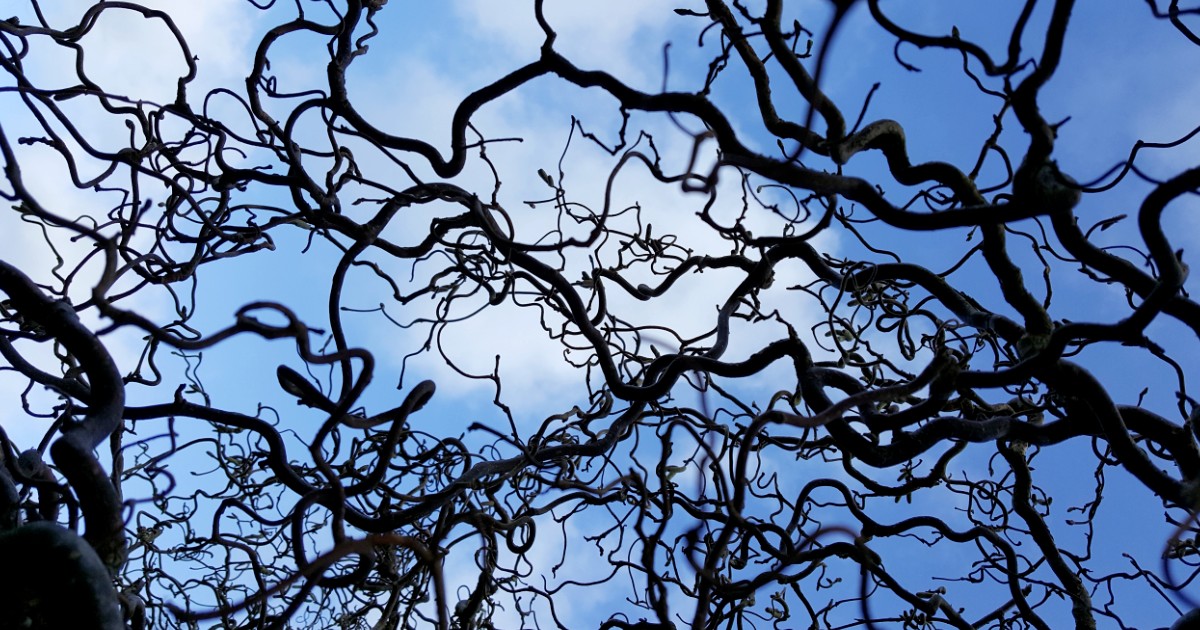
I know that life isn’t always an easy, comfortable straight line, “a walk in the park”. But I never imagined it to be such a mess. But when one go on an actual walk in the park, one might notice that between the messy knots and twists of sorrow, tiredness, anxiety, and anger, there are hints of a lovely blue sky.

An undemanding environment


In previous posts about living with, next to, and after cancer there has been emphasis on the importance of community and social support following a cancer diagnosis. That is still vital, but there can also be moments when the bare thought of other people is exhausting.

One of the most interesting things I learned on the field trip was a model of needs for a restorative environment after you been through crisis or severe stress. The model is created by Patrik Grahn, professor in Landscape architecture and environmental psychology at SLU.

Depending on our mental strength and energy at any given moment we need different environmental experiences and social interaction. When we are in a very bad state with low mental energy and strength, what we humans feel most comfortable with is simple things as rocks, water, trees, a single flower. When psychological capacity increases, we can take in more complex nature and animals. Last come people. It takes effort to engage and interact with other human beings. Effort that we at some times can’t muster up energy for.

If you as a patient or a loved one is struggling with your current situation; are suffering from cancer related fatigue; or are grieving after losing a loved one; you might have noticed that inability to think, function, and interact with others like you used to before. Taking time alone in nature can be a great way to restore emotional and physiological capacity.

Results from the studies made in Alnarp show that, in times of great need for mental rest, it is good to find an environment that doesn’t place any demands on us or requires an action from us. Nature environments offers that non-achieving quality that can be hard to find in everyday life that is filled with movement, busyness, and social interaction. A tree doesn’t need anything from you, neither does a pond or flowers.

If possible, make habit of going to a peaceful place that offers the feeling of retreat, safeness and being one with nature. A place where you can just be. Where you don’t need to explain, adjust, or achieve. This promotes automatic relaxation of the nervous system and restoration of cognitive resources.

Take in natures therapeutic qualities

  • Find wild, free growing nature that gives you a sense of peace, refuge, solitude.
  • Go for a walk. Sit. Lie down. Look at the surroundings. Close your eyes. Listen to the sounds. There is no right way to experience nature, do what feels best for you. All is good.
  • The feeling of awe is restoring. Go places that are beautiful. Let yourself be swept away by the wonder of nature – big views and small details, like the softness of a flower petal.
  • Experience with all your senses. Feel, listen, see, smell, and taste if there is an opportunity.
  • Sometimes finding symbols and metaphors in nature’s process helps you to put words on feelings and thoughts in your own life situation.
  • Tend to something. When we gain more mental energy and strength, nature or garden-based activities like planting seeds, re-potting plants, preparing the grounds, cutting flowers, and picking berries, fruits and vegetables, are good activities for rehabilitation.
  • Most important – let your experience be undemanding. You don’t have to do ANYTHING. Just be in nature.

The Rehabilitation Garden works closely to Försäkringskassan och Arbetsförmedlingen in Sweden. The studies and work have resulted in NUR (Naturunderstödd rehabilitering) in several areas in the country. You might ask your physician if you are qualified for that.

In near future the Rehabilitation Garden have some exciting research on the way. Coming up is a preparatory study on rehabilitation for persons living with chronic cancer. They will look at finding new rehabilitation programs for people having gone through cancer treatment. The researchers want to find out if spending time in the Rehabilitation Garden can give the patients a faster way back to work, and also a method to cope with the psychological distress associated with cancer.

If you are in a place where you are ok with guidance:

Audio and videos you can do in nature

Yogobe Video: 4f9w Yogobe Video: k65t Yogobe Video: 24gf

To watch a full video you need to be logged in as a paying Yogobe member. Haven't tried Yogobe before? Try it for free during 14 days – click here to get started!

War on cancer

The physical challenge is huge for a cancer patient. The mental and emotional challenge is at least as great. War On Cancer is a social media-app, a social network and community, where everyone affected by cancer have the opportunity to share their cancer experience and get in contact with others who actually understand. War On Cancer's mission is to put focus on, and radically improve, the mental health of everyone affected by cancer. The first step is the digital social network that creates belonging and community in a time of isolation and uncertainty. You are reminded that you are never alone. We'll fight cancer together.

Learn more about War On Cancer and download their app at waroncancer.com

Share your story, it will make a difference.

Read more about nature, therapy and rehabilitation

Öppna inlägget
Meditation as a sacred practice

Meditation as a sacred practice

24 juni 2020 | Av
Yogobe

For yoga and meditation teacher Eleonora Ramsby Herrera, meditation is a sacred practice. It's a process without a means to an end. Meditation is there to remind you that you are perfect as you are. In this interview she shares her thoughts on meditation and how it can support you in life.

You are human and perfect

Eleonora Ramsby Herrera has taught yoga since 2008. She is developing and running teacher trainings in London, Stockholm and Lisbon and has also worked with trauma-adapted yoga. Eleonoras’ yoga classes are multi-dimensional and contemporary in nature. Movement, breath, touch, sound and poetry weaved together into a well-rounded embodied experience. We asked her some questions on meditation – and she gives her best advice on how to start meditating. Come join!

1. How did you start meditating?
I was introduced to meditation as a child through my parents. My mom works in holistic therapy and one of the things she does is to teach meditation. I would participate in her meditation retreats and she would also introduce me to CD´s with guided meditations that I listened to before going to sleep as a child.

For me, meditation is a sacred practice and there are many forms of sacred practices, religion being one of them. I attended both Catholic kindergarten and Sunday school growing up. Now, I was not their ideal Catholic student, far from it, nor do I consider myself religious and I don’t think you have to be to do any form of meditation, but I do consider myself to have a spiritual practice. Thanks to the Catholic practices, rituals became an important part of growing up. My father and I would pray and contemplate on the divine as part of our everyday life, and that too is a form of meditation to me. So, these early childhood years shaped my personal and professional practice that I have today.

Later on, as I had just begun teaching yoga in 2008, I came across Michael Stone’s book “The Inner Tradition of Yoga” which left a permanent imprint on my consciousness. I keep returning to his book, and I also include it as mandatory reading in all my teacher training courses. I was lucky to formally train for Michael in 2016 at Yogacampus in London, and that further contributed to the depth and breadth of what my practice consists of today.

2. How has meditation affected your life?
Meditation humbles me and helps me remember that I am human with all the nuances that entail. In moments when I feel disconnected, the practice is there to bring me home to myself. It reminds me that everything is a process and it’s important to let those processes take the time they need to take.

3. How can meditation be supportive when life feels hard? 
Meditation is not like a magic wand that take all our troubles away. However, it can help us broaden our perspectives and thereby change how we approach life’s challenges. Meditation can give us the space to sit with our discomfort and to stop fighting or fixing it, and instead, we can gently face our present moment with acceptance. Like a good friend, meditation provides us with a space to be listened to. As we sit with whatever emotional turmoil that we may be faced with in that moment, we give ourselves permission to be as we are. This can in turn help to ease any pressure we might put on ourselves and thereby cultivate more compassion and acceptance into our lives.

4. Your best advice on how to start meditating? 
Find a meditation method that works for you, whether it is guided or not. Feel free to try out a few practices and teachers before finding a method that resonates with you! There is not one way of doing it, so keep an open mind.

Locate a place in your home that you devote to your meditation practice. Perhaps keep a candle and a photo of someone you care for next to your seat. Lighting the candle can become part of your own sacred ritual and the photo can remind you to feel love.

Keep a steady yet relaxed seated posture, use the props needed to feel comfortable. You do not need to endure too much physical discomfort and if it becomes a distraction then mindfully change your seated position to feel more at ease.

Meditation is a process without a means to an end. You are perfect just as you are, meditation is just there to remind you of that.

Read more about Eleonora here and see her classes online here!

Read more

Meditation online with Eleonora Ramsby Herrera

Yogobe Video: k5t3 Yogobe Video: g5w6

To watch a full video you need to be logged in as a paying Yogobe member. Haven't tried Yogobe before? Try it for free during 14 days – get started here!

Photo: Magnus Keijser

Öppna inlägget
Flyg utomhus i din yoga – intervju med Milla Floryd

Flyg utomhus i din yoga – intervju med Milla Floryd

16 juni 2020 | Av
Yogobe

Gör det på gräsmattan, på en klippa, eller var som helst egentligen – yoga utomhus! Att vara lekfull med sin yoga kan vara att kliva ut ur boxen och utforska möjligheterna utanför det som är vant och tryggt. Läs mer om yogalärare Milla Floryds yoga, inspiration och livsinställning i intervjun här!

Om yoga, inspiration och rättesnören

Milla Floryd har gått från dans och kampsport, till luftakrobatik och över ett decennium av fysisk yoga.  Hon är en dynamisk och mångfasetterad yogalärare som inspireras av alla möjliga sorters rörelser. Havets vågor, vindens dans med trädens grenar, stadstrafiken, den blixtsnabba tanken, hjärtats rytmiska slag. Vi ställde några frågor till Milla här:

1. Hur kom du i kontakt med yogan?
– Min ursprungliga kontakt med yogan är hemifrån, min pappa övade yoga (främst meditation men lite asana) under min uppväxt. I tonåren så kom jag i kontakt med yoga via min huvudtränare i ju-jutsu som pratade lite om yogafilosofi och använde vissa asanas i uppvärmning och nedvarvning. I vuxen ålder mötte jag Anja Bergh på det lokala gymmet och då kom idén att det här kanske var något jag kunde jobba med när jag pensionerade mig från akrobatiken – och så blev det.

2. Vad inspirerar dig, i ditt liv och på mattan?
– Människor och relationer inspirerar mig. Just nu i alla fall, det brukar skifta på en två-tre årsperiod.

3. Vilken stämning vill du skapa i yogasalen? Och har du några tips till yogalärare?
– Jag vill erbjuda en inkluderande miljö där deltagaren känner sig välkommen och kapabel. Mitt tips till yogalärare är att bli medveten om hur snabbt vi kategoriserar våra elever helt utanför kontext. Vi vet egentligen extremt lite om dem vi träffar i gruppsammanhang, det pågår alltid saker under huden som vi omöjligen kan ha en aning om. Var ödmjuk.

4. Vilka etiska rättesnören/filosofi försöker du lever efter?
– Min etiska livsinställning är nedärvd från en lång stark linje av kvinnor på mammas sida. Hederliga mormorsråd som säkert många känner igen:

  • Tugga med munnen stängd.
  • Gör mot andra vad du skulle vilja att de gjorde mot dig.
  • Avbryt inte när någon pratar och lyssna till vad de säger istället för att försöka fundera ut ett finurligt svar.

Läs mer om Milla här och testa gärna hennes sköna klasser i videobiblioteket!

Lästips

Tips på playlists

För att ta del av en hel video behöver du vara inloggad som betalande medlem. Har du inget konto på Yogobe än? Testa tjänsten gratis i 14 dagar (utan bindningstid eller kreditinformation). Klicka här för att komma igång!

Öppna inlägget
Going outside, being lost, and staying found

Going outside, being lost, and staying found

07 juni 2020 | Av
Yogobe

Our surroundings may affect how we feel, think and live. How can nature change your yoga and meditation practice?  Follow yoga teacher Frida Boström and go outside to meditate, find a favorite place, sharpen your senses and just breathe.

Go into a different physical space

It takes a particular collection of skills for one to be able to get lost in one ́s own apartment. Think about it; it is a place where everything is known – each squeaking floor tile, every crack in the ceiling, every single door and window opening. It is a place in which you can manoeuvre your way effortlessly onto the toilet seat in the dark of night if needed. Which is all good and well – in the best of worlds your home is a place of security, of comfort and peace. But in other circumstances, this zone of comfort can also be a zone of confinement, of set expectations, and of limitations of mind.

I once picked up a collection of essays by Rebecca Solnit, an author who amongst other things explores the theme of wandering and venturing into the unknown. She suggests that going into a different physical space can provide a new psychic space, which made my mind travel to the practice of meditation. As opposed to the well- established image of a philosopher/thinker as a person in confined solitude, Solnit argues that in fact, “introspection is an outdoor pursuit.” I could not agree with her more.

Listen mindfully

When I came to the Sivananda ashram in India the first time in 2015, I arrived late at night. Aided only by the dim light of a lamp post high above, I climbed the front stairs and knocked on the gate to be let in by the night guard. Soon I was hurrying after him along a winding stone-laid path, making out the ashram temples and office buildings only as deep shadows. When we came into the dormitory with its long row of beds, people were already asleep under the faint humming of ceiling fans and low noises of snoring. As discreetly as I could, I shuffled my backpack into a corner and slipped out of my sweaty clothes. I had been travelling for a day and was exhausted. None of the noises coming from my neighbours could disturb me, and I was asleep within minutes.

Before night had turned into dawn, me and my dorm companions were brutally awakened by the ringing of a loud bell. It was 05:30 and still pitch dark as I hustled outside, passed through a garden and walked up the massive entrance stairs into the main meditation hall. The floor was already filled with people, all silent, their eyes closed in the dark. But in the hour that passed, as we sat meditating, the sun began to rise. Outside the high, open valves of the large hall, birds I couldn ́t even imagine the names of, were waking up and starting to sing. Suddenly there was a different sound, one that made me open one eye into a half squint. Had anyone else heard that... a roar? Could it have been a lion? The thought seemed totally absurd. And since no one else reacted, I closed my eyes again.

Get lost in nature

To me, the change of soundscape is one of the major fascinations of meditating outside. If you go outside and close your eyes - anywhere outside - you ́ll notice the vast difference from being in an indoor space. And while the eventual goal of meditation is to withdraw from all sense impressions, you surely know that being present in observation is the first step on the journey towards letting go. I find this much easier to do surrounded by the sounds of nature.

I used to think that in order to change one’s pattern it would not be enough to travel. I thought that one had to move, probably far away and forever. Now, back home, I realise that while not everyone will get the chance to meditate accompanied by roaring lions (they were in fact lions I was told later) there ́s usually somewhere one can go. Being outside always contains venturing into unknown territories to some extent, of getting lost in the space that nature provides. If that happens to be in a distant country or in your own backyard makes no difference. The perk is that once you ́ve been out there, especially while in observing meditation, that experience will always stay with you.

Video recommendations to practice outside

Why not take your practice outside?

Yogobe Video: 4f9w Yogobe Video: r94g Yogobe Video: t6k8 Yogobe Video: x9r7

To watch a full video you need to be logged in as a paying Yogobe member. Haven't tried Yogobe before? Try it for free during 14 days – click here to get started!

Playlist with mindfulness meditations

Here you'll find a playlist with sequences in both English and Swedish, to calm the mind, reduce anxiety and to find your focus: Playlist Mindfulness.

Read more

About Frida

Frida Boström is a Vinyasa Flow and Ashtanga instructor (200 hr RYS), educated in Goa, India. She started off as an architect but after a burnout she decided to shift careers. Her first trip to an ashram in India in 2015 led to many more, and evoked her already existing curiosity about philosophy and meditation, as well as fun and physically challenging yoga. Frida teaches Ashtanga, Vinyasa, Rocket and Yinyoga classes in Sweden and India, and assists at yoga teacher educations in both countries. Read more about Frida at her website or follow her at Instagram: @frida_bostrom

Öppna inlägget
Living after cancer – growing after cancer

Living after cancer – growing after cancer

31 maj 2020 | Av

Positive psychological changes can be developed after going through cancer – I talked to Fabian Bolin, a survivor of leukemia and the CEO and co-founder of the app War on Cancer, on the subject. Read more about post traumatic growth and strategies to process what you’ve been through here!

This is the seventh blog post in a series on living with cancer that I'll be writing coming months. The introduction and links to the first blog posts, can be found in the first one; To live with, after and next to cancer.

Before doesn't really exist

“When we are no longer able to change a situation, we are challenged to change ourselves.”

Viktor Frankl

When things happen, we absorb and adapt. We respond to what we experience, and that is neither good nor bad. It simply is. Recovering from cancer doesn’t mean going back to who we were before. Before doesn’t really exist anymore. The ground we’re standing on has been shaken and our response will create changes in ourselves and our lives. There is not so much going back, as moving forward.

There is no one way of moving forward, and definitely not one way to feel when moving forward. For me, who lost my boyfriend, life has become a blend of heart wrenching low valleys and wonderfully high peaks. On beforehand I would have guessed that high peaks wouldn’t be possible anymore. How can they when he’s gone?

Then, reading a post about post traumatic growth (PTG) on the digital social network app War On Cancer, I understood more about what I’m experiencing. The post was written by the founder of War On Cancer, Fabian Bolin. Fabian is a survivor of leukemia. He has in several posts and interviews stated that he thinks his life has improved after being diagnosed with cancer. I called him to talk about mental health, cancer, and post traumatic growth.

Trauma is , in different degrees, traumatizing
How going through cancer affects each person will always be different. No matter the outcome; your role; or the severity, living with cancer is, in different degrees, traumatizing.

– If trauma isn’t properly dealt with there is a pretty high risk of developing either PTSD or clinical depression”, Fabian says.

– Research shows that 22% of cancer patients suffer from PTSD within the first six months of diagnosis and 25% suffer from clinical depression at some point during or after treatment.

But while mental health issues being quite common in cancer patients, there are also reports of positive psychological changes that develop after going through cancer. That experience – that from adversity and the following struggle, positive life changes occur – is what’s called post traumatic growth PTG).

Fabian describes that PTG generally happens in five areas in life:

  • Improved relationships with others – It’s very common to value friends and family more deeply and develop closer and stronger relationships.
  • New possibilities in life – We might see opportunities we didn’t see earlier. We dare to, and see the value in, taking steps; making changes; and do things we might have hold back on before.
  • A greater appreciation of life – Coming face to face with our mortality can lead us to appreciate and treasure moments we may have taken for granted. We are more able to live in the present and often life take on a new meaning.
  • Personal strength – Going through adversity increase our inner strength and faith in our own capability, often with a strong feeling of “If I lived through that, I can face anything”.
  • Spiritual development – As cancer often evokes bigger questions about life, death, meaning and purpose, it’s not unusual to gain a stronger connection to our spiritual side.

Not everyone experiences PTG. You may relate to having positive changes in one or all the areas above, or none. Most people who experience PTG are often surprised by the growth that occurs. It often comes unexpectedly, as the result of trying to make sense of an unfathomable event.

And while you can’t make PTG happen, there are known strategies to process what you’ve been through that increases mental wellbeing and contributes to the possibility of experiencing growth and positive psychological changes:

Strategies in processing what you've been through

  • Reflect on your experiences
 – Write, talk, and share about your story and the effects living with cancer have on you.
  • Connect with others 
– Apart from telling your own story it’s good to hear others’ stories. From a trauma perspective it is very healing to have someone empathize and say “I know exactly what you mean, I’ve been through that”.
  • Help others – Helping others is healing in many ways. You can volunteer or support charities that are important to you, but simply sharing what you’ve been through can also help others going through cancer to feel better, or more comfortable, or less scared.
  • Create a post trauma life vision 
– Reflect on what you’ve learned from your experience and what's meaningful in your life going forward. Then with small steps day by day, make positive changes to support your goals, like schedule activities involving these interests.
  • Allow yourself to feel what you feel
 – Don’t diminish your response to the hard time you are going through. Our natural inclination are to avoid uncomfortable emotions and thoughts. However, you have to go through the difficult emotional process before adversity can turn into advantage.
  • Reduce anxiety 
– Relaxation techniques, such as meditation and progressive muscle relaxation, and regular exercise can both prevent and decrease anxiety.

Approach these strategies in ways that make you feel safe and are suitable for you. If you want support and help, practicing with Yogobe and using the War On Cancer app will provide you with appropriate tools.

As Fabian and his team build and develop the War On Cancer app they take into consideration the strategies above. The social network app is created just to serve the needs there are to reflect, connect, help, and create visions moving forward.

Awareness and openness to allow all emotions and thoughts to be present is a central part of yoga. At the end of the article you find suggestions for videos for reducing anxiety and connecting with your emotions.

Beauty despite of trauma
It’s important to be aware that PTG does not make everything all better. Even if you, or someone you’re close to, is experiencing growth it does NOT mean that they will not suffer. Both can occur simultaneously. The trauma was and is still real.

Personally, I can relate to positive changes in all five areas. That doesn’t make my boyfriend’s death less painful. It doesn’t exclude the days when I’m feeling numb or the days when I’m just a limp puddle on the floor crying so hard I can’t catch my breath. It is all real. But nonetheless, I’m genuinely happy with my life today. Through all this I have learned that I can go through trauma and still find beauty.

"And if you were to ask me

After all that we’ve been through

Still believe in magic?

Well yes, I do

Oh yes, I do"

– Magic, Coldplay

Video recommendations

Progressive muscle relaxation and meditation are good tools to reduce anxiety:

Yogobe Video: sc62 Yogobe Video: 7z3r Yogobe Video: h85u Yogobe Video: te37

Use this Sankalpa practice as one way of creating your post trauma life vision:

Yogobe Video: k2z8

Practice noticing and being with your feelings:

Yogobe Video: fp68 Yogobe Video: x67g Yogobe Video: 64ur

To watch a full video you need to be logged in as a paying Yogobe member. Haven't tried Yogobe before? Try it for free during 14 days – click here to get started!

War on cancer

The physical challenge is huge for a cancer patient. The mental and emotional challenge is at least as great. War On Cancer is a social media-app, a social network and community, where everyone affected by cancer have the opportunity to share their cancer experience and get in contact with others who actually understand. War On Cancer's mission is to put focus on, and radically improve, the mental health of everyone affected by cancer. The first step is the digital social network that creates belonging and community in a time of isolation and uncertainty. You are reminded that you are never alone. We'll fight cancer together.

Learn more about War On Cancer and download their app at waroncancer.com

Share your story, it will make a difference.

Read more

Öppna inlägget
Rädslor & funderingar mitt i livet

Rädslor & funderingar mitt i livet

06 maj 2020 | Av
Yogobe

Att vara förälder med hull och hår – utan tid för att prioritera sig själv. Någon som känner igen sig? Säkerligen många, men vad händer, när vi glömmer bort oss själva? Här delar Maria Hesselmar med sig av vardagen och känslan av att inte vara sig själv.

Att ta sig tid, för sig själv

För många år sedan träffade jag en ny man, och vi har fått ett barn tillsammans. Livet har landat bra trots de utmaningar som passerat under årens lopp. Varannan vecka är vi fem, och varannan vecka tre. Och jag slutar aldrig förundras över hur svårt det är för oss alla att anpassa oss till den nya dynamiken som uppstår då vi går från tre till fem, eller tvärtom. Den sker fortfarande, efter alla dessa år.

Min man säger ofta till mig att jag borde ta mer tid för mig själv, för att hämta energi. Ändå gör jag inte det. Jag lever, som många andra, ett ganska hektiskt liv. Mitt arbete är fantastiskt kul och inspirerande. Och utmanande. Jag arbetar med ledarskap, och är tacksam över att få arbeta med de människor jag gör. Jag är ofta trött när jag kommer hem, och full av tankar som behöver processas. Det sker efter jobbet. Hemma när jag ska spendera tid med min familj. Jag har visserligen blivit bättre på att förstå att det sker, och försöker lägga tankarna åt sidan, men det är rätt svårt om jag ska vara ärlig. Då smyger de istället fram på natten, när jag ska sova.

De veckorna mina två äldsta barn är här är det mycket läxor och plugg. Så inte allt för sällan kommer jag hem, läggar av mig arbetsväskan och fortsätter med läxläsning i flera timmar. Sedan stupar jag i säng. Och så kan det fortsätta. Jag ger mig sällan tid att stanna upp och reflektera. Att vara barnslig och lekfull.

Tacksamhet över liv och familj

Så kommer dagar som denna, då jag plötsligt får tid med mig själv, skrivandes vid köksbordet. Och jag är tacksam. Jag är tacksam för allt jag har och alla känslor jag känner. För alla människor omkring mig och för min familj. För att jag får denna tid att reflektera över vem jag har blivit. Vem jag är. Vad jag tycker om att jag göra, vad som får mig att gapskratta. Att gråta. Vilka värderingar jag har. Vilka värderingar jag växte upp med.

Jag upplever inte helt sällan att jag är mitt föräldraskap. Mitt eget jag ligger gömt långt bakom mitt föräldraskap. Att alltid finnas till för mina barn – vilket jag tycker är jätteviktigt, men som också gör att jag mycket sällan finns till för mig själv. Att ständigt fundera över hur de mår och vad som händer i deras liv – vilket innebär att jag sällan tar mig tid för att reflektera över hur jag själv mår och vad som händer i mitt liv. Att känna efter vad de har för behov av närhet, utan att fundera över mitt eget.

Detta sammantaget gör att jag efter många år, i många avseenden, inte helt och hållet längre känner mig själv. Jag kan till och med bli lite rädd av tanken att behöva spendera tid med mig själv. Vad vill jag göra som gör att jag känner mig levande? Och jag får dåligt samvete av tanken att ta tid för mig själv, jag känner mig självisk som ens vill det. Det är en rätt tuff avvägning för mig att hantera känslomässigt. Det kan skrämma mig att jag blir rädd för att känna så. För någon dag kanske den tiden kommer då jag behöver spendera många dagar med mig själv. Och jag vill ju fortsätta att leva då, inte bara existera.

Vad bottnar rädslorna i?

När jag sitter här ensam och funderar över de rädslor jag numer har handlar de ofta om att mina barn inte skulle växa upp och vara lyckliga och friska. Att inte vara den bästa mamman jag kan vara för mina barn. Att de inte känner sig älskade. Men det kan också handla om att jag själv är för allvarsam och inte längre vågar leva som jag känner. Att jag blir begraven under en stor hög av ansvarstagande. Att jag inte presterar på topp i mitt arbete, att jag inte är tillräckligt omtänksam och bryr mig om mina medmänniskor. Att jag inte är tillräckligt kreativ. Att jag inte längre är mig själv.

Jag inser att jag mitt i livet fortfarande har många rädslor. Och jag inser när jag sitter här och skriver hur mycket jag uppskattat den tid jag fått för mig själv idag. Att jag har fått utrymme att känna efter vem jag är och att fundera över vad mina rädslor bottnar i. Och att få fundera över hur jag vill vara, så att jag kan fortsätta utmana mig att vara mig själv.

Playlists för barn och vuxna

  • Nybliven mamma? Hormonerna är all over the place och allt är nytt. Här får du tips på övningar för lugn och mental styrka: Mammapepp för nyblivna mammor.
  • Sugen på rörelsepaus med familjen? Haffa barnen och dra igång några lekfulla, korta sekvenser med Playtime – familjeskoj!
  • Ta med din partner på en hälsosam date på mattan! Här hittar du enkla övningar för både lugn och styrka: Relationsboost.

För att se en hel video, även i våra playlists, så behöver du vara inloggad som betalande medlem hos Yogobe. Ny till tjänsten? Prova gratis i 14 dagar, utan bindningstid. Klicka här och kom igång direkt!

Lästips

Om Maria

Maria Ely Hesselmar är en rastlös och energisk själ med stort intresse för yoga. Hon har tre underbara barn, en härlig man och två söta katter. Har nyligen upptäckt en passion för trädgårdsarbete, och pendlar så ofta hon kan mellan Bromma och lantstället i Dalarna. På dagarna arbetar Maria med ledarskap, och drivs av att få utveckla människor och organisationer.

Öppna inlägget

Sok

Kategorier