Do you also want access to our video library?

  • 2500 videos
  • No binding period
  • Free trial

Welcome to our blog

Yoga, training and health inspiration for you

Utbildningsvecka på Fuerteventura

Utbildningsvecka på Fuerteventura

04 desember 2013 | Av
Yogobe

Åk med Yogobe-ambassadören Malin Berg till Fuertenventura och utveckla dina yogakunskaper. En vecka fylld av spännande aktiviteter för dig som vill bli instruktör inom yoga. Vi lovar att det är en upplevelse du sent kommer att glömma.

Malin Berg är inte bara personlig tränare och yogainstruktör, hon är även en av Yogobes härliga ambassadörer som sprider yoga och glädje över världen. Mellan den 28 januari och 2 februari arrangerar Malin tillsammans med Aerobicsweekend en utbildnings-/inspirationsvecka inom yoga på Fuertenventura. En fantastisk start på det nya året där du kan utveckla och boosta din egen yogapraktisering. Här yogar du i den vackra miljön på Playitas Fuerteventura och inspireras genom dagliga yogaklasser, workshops och föreläsningar.

För vem?
Att följa med på Yogaveckan är en fantastisk start på det nya året och passar dig som vill påbörja din resa med yogan, men också dig som vill fortsätta utvecklas och inspireras. Varje dag startas med att yoga i soluppgången. Efter det följs dagen av workshops och yogaklasser med olika teman. Det finns även möjlighet att boka personlig träning i yoga på plats.

Vad är Yogaveckan?
Yogaveckan är en del av Inspirations- och Utbildningsveckan med Aerobicweekends vilket innebär att man som deltagare även erbjuds gruppträning, aktiviteter, mingel och middagar. På Playitas finns även möjlighet att simma, springa, cykla, surfa, golfa, spela tennis och gymma!

Om du vill veta mer, läs här. 

Lite om Malin:
Malin har en kandidatexamen inom folkhälsa samt vidareutbildning inom idrotts/träningspsykologi, träningsfysiologi och stressfysiologi. Hon är utbildad yogainstruktör genom Mya Flow och IKSU med Sanna Ångqvist som lärare. Sedan 2012 driver hon det egna företaget Inspirit där hon arbetar med bland annat personlig träning och yoga.

- Det som motiverar mig mest i min yoga är känslan av att leka, upptäcka och vara kreativ. Jag slutar aldrig att fashineras av vad vi kan åstadkomma med lite kroppskontroll, grundad i närvaro och medvetenhet. Yogan ger mig utrymme för nya (och ibland galna!) idéer och uttryckssätt som får mig att växa. Allt detta, samtidigt som det är en plats för vila, återhämtning och meditation, säger Malin.

I dag instruerar hon yoga både i Sverige och utomlands för AerobicWeekends.

- Min förhoppning som instruktör är att dela med mig av en avslappnad, lekfull och nyfiken inställning till yoga. Alla kan yoga – när som helst, vart som helst, avslutar Malin.

Open post
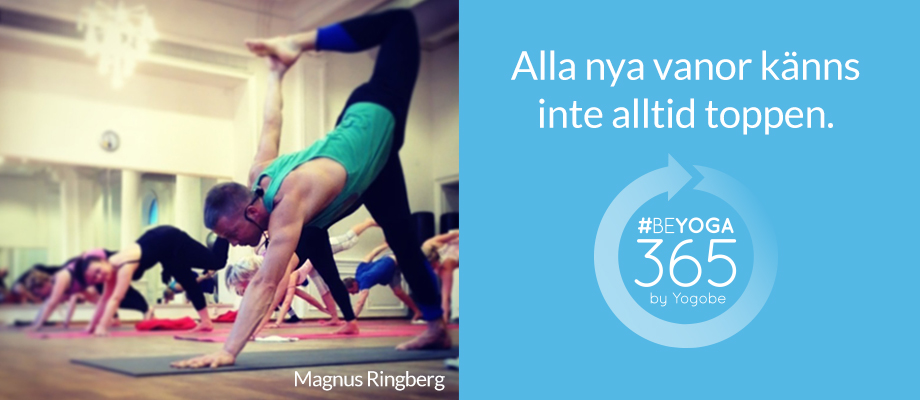
Alla nya vanor känns inte alltid toppen

Alla nya vanor känns inte alltid toppen

01 desember 2013 | Av

November och en månad på mattan är nu slut och jag hoppas att ni har lärt er något nytt som ni kan bära mer er i ert yogapraktiserande. Idag avrundar jag november månad med några tänkvärda ord.

November har inneburit en hel del tid på mattan. Under den första veckan fick ni ta del av några handplockade Yogobe yogapass som jag tyckte var bra för en kickstart med ”yoga på mattan”. Detta var en introduktion. Missade ni detta så kan ni läsa här: Introduktion till en månad på mattan.  Introduktionen följdes av tre delar med olika teman. Har ni missat dessa inlägg så kan ni läsa dem här:
Del 1: Bakåtböjningar 
Del 2: Handstående
Del 3: Huvudstående

Avrundning november

Många som börjar att yoga förväntar sig att det ska vara fantastiskt, skönt, mjukt och energivande… Förvänta dig inte det. Det kan vara så, men det kan också vara det motsatta.

Att stärka upp, balansera och förlänga kroppen är ett arbete som kräver daglig träning och dedikation. Disciplin är inte ett fult ord. Det ger dig möjlighet att förändra. Det är dina dagliga vanor av rörelser, tankar, mat och relationer som skapar din kropp.

Vad är du beredd att offra för att nå dina mål?

Jag önskar dig lycka till med din fortsatta yogaträning här på Yogobe. Missa inte att delta i december månads utmaning i BEYOGA365 som kommer att presenteras här i bloggen under morgondagen. Den kommer garanterat att bli lugn, energigivande och en härlig kontrast till den annars ganska julstressiga månaden. 

Open post
60 of the most recommended yoga books

60 of the most recommended yoga books

30 november 2013 | Av
Yogobe

Thinking of what to gift your favorite yogi? They would love to receive a sparkly, new yoga book to geek out with. Here are some suggestions organized by category

Testimonials:

Yogi Bare: Naked Truth by Philip Self
Yoga from the Inside Out by Christina Sell
Yogini: the Power of Women in Yoga by Janice Gates
Misadventures of a Garden State Yogi by Brian Leaf

Meditation:

Lovingkindness: The Revolutionary Art of Happiness by Sharon Salzberg
A Path With Heart: A Guide through the Perils and Promises of Spiritual Life by Jack Kornfield
Wherever You Go, There You Are by Jon Kabat-Zinn
The Wisdom of No Escape and the Path of Loving Kindness by Pema Chodron
Peace Is Every Step by Thich Nhat Hanh
Faith by Sharon Salzberg

Ayurveda:

Ayurveda Revolutionized: Integrating Ancient and Modern Ayurveda by Edward Tarabilda
Ayurveda: A Life of Balance by Maya Tiwari
What’s Your Dosha Baby? by Lisa Marie Coffey
Yoga and Ayurveda by Dr. David Frawley
Prakriti: Your Ayuvredic Constitution by Dr. Robert Svoboda
Yoga & Ayurveda: Self-Healing and Self-Realization by Dr. David Frawley
The Complete Book of Ayurvedic Home Remedies by Vasant Lad
Yoga for your Type: An Ayurvedic Approach by Dr. David Frawley
Ayurveda for Women by Maya Tiwari

Philosophy

Bringing Yoga to Life by Donna Farhi
Eastern Body Western Mind by Anodea Judith
Downward Dogs and Warriors: Wisdom Tales for the Modern Yogi by Zo Newell

Hatha Yoga Practice

Light on Yoga by BKS Iyengar
Yoga The Spirit and Practice of Moving Into Stillness by Eric Schiffmann
Jivamukti Yoga by Shannon Gannon and David Life
Yoga for Wellness by Gary Kraftsow
Yoga: The Iyengar Way by Silva, Mira, and Shyam Mehta
Living Your Yoga: Finding the Spiritual in Everyday Life by Judith Lasater
The Heart of Yoga: Developing A Personal Practice by Desikachar
The Language of Yoga by Nicolai Bachman

Pranayama and Breath:

Light on Pranayama by B.K.S. Iyengar
The Yoga of Breath: A Step-by-Step Guide by Richard Rosen

Teaching Skills

Teaching Yoga: Exploring the Teacher-Student Relationship by Donna Farhi

Yoga History:

The Yoga Sutras of Patanjali by Swami Satchitananda
The Secret Power of Yoga by Nischala Joy Devi
Hatha Yoga Pradipika by Swami Swatmarama

Anatomy/Physiology:

Yoga as Medicine: The Yogic Prescription for Health and Healing by Timothy McCall, M.D.
Yoga Anatomy by Leslie Kaminoff
Anatomy of Movement by Blandine Calais-Germain
The Anatomy Coloring Book by Kapit & Elson
The Key Muscles of Hatha Yoga by Ray Long

Inspirational

Go In and In: Poems From the Heart of Yoga by Danna Faulds
The Alchemist by Paulo Coelho
Buddha: A Story of Enlightenment by Deepak Chopra
Meditations from the Mat: Daily Reflections by Rolf Gates
Awakening the Buddha Within by Lama Surya Das
Shantaram by Gregory David Roberts
Siddhartha by Hermann Hesse

Poetry

The Soul of Rumi by Coleman Barks
The Gift by Hafiz
Sweat Your Prayers by Gabrielle Roth
The Essential Rumi, New Expanded Edition by Jalal al-Din Rumi

Nutrition

Omnivore’s Dilemma by Michael Polland
Radical Healing by Rudolph Ballentine
If the Buddha Came to Dinner by Sofia Hale Schatz
Creating Health by Deepak Chopra
Food & You by Sari Harrar and Barbara Loecher
Healing with Whole Foods by Paul Pitchford
Food and Healing by Annemarie Colbin
Feeding the Body Nourishing the Soul by Deborah Kesten

Source: yoganonymous 

Open post
12 tips for a better yoga practice

12 tips for a better yoga practice

28 november 2013 | Av
Yogobe

Känner du dig yr, irriterad eller dömer du kanske rentav både dig själv och instruktören under yogapasset? I så fall har vi 12 fina tips som du kan ta till dig för att få ett bättre yogapass. Följande tips ges på engelska. Lycka till med ditt nästa yogapass.

Hydrate all day: Drinking water in the middle of your practice can mess with your flow, so arriving hydrated is necessary. Focus on drinking water all day long; you’ll be amazed at what a difference it will make.

Show up early: Rushing into the studio with a harried mind and no time to chill gets your practice off to a rough start. Allow at least 10 more minutes than you think you’ll need to have plenty of time to change clothes, check in with a cool mind, and sip on some tea, if you can.

Dress the part: There’s nothing worse pulling up the waistband of your pants or making sure your top doesn’t spill out of your built-in bra all class long. That’s not where your mind needs to be during your Downward Dog. Wear clothes that are fitted and comfortable, but not so snug that they’re distracting.

Grab props: More advanced yogis sometimes shy away from grabbing props, but there’s no harm in keeping them next to your mat. Grab a block, strap, and blanket before you take your seat. You’ll never know when you’ll need one.

Be quiet before class: I’m known to chat up a storm with fellow yogis in the moments before class, but do you best to stay quiet and turn inwards. Lay on your back or sit up with your eyes close to connect with yourself and prep for class.

Expect nothing: If this is the only piece of advice you take away from this list, you’ve learned a great lesson. Some days you’re going to be able to fly into a crazy arm balance and other days things are going to be more difficult. Every day our bodies are working with something different; don’t expect anything to look or feel a certain way.

Stop judging: You know that checking everyone out in the room isn’t a good use of your time, you might not even be aware of how much you’re comparing your progress to other students in the class. Keep your mind on your mat, and keep your attitude positive and full of possibility.

Breathe deep: It takes years and years to “perfect” your breath. Whenever a pose is feeling difficult or your feel some self-judgment creeping in, take deep ujjayi breaths in and out through your nose. They will help you release any tension or negativity and help you continue class with a more composed, calm perspective.

Listen to your teacher: Obviously, your teacher is going tell you which pose is up next, but don’t tune them out once you’re in a pose! I find that the tiny details or suggestions they offer once you’re in the pose are the real gems. One subtle tip could help you develop a completely new relationship with a pose that seemed too hard — or too easy.

Smile more: Yes, I know; this one is corny, but it works. Once you’re really flowing, your muscles have heated up, and your breath is connected to your movement, get grateful and start smiling. There’s no need to plaster an inauthentic expression across your face for 45 minutes, but there is plenty of opportunity to stop taking yourself so seriously during class. Smile and mean it; you’re taking care of your body just by being in class.

Try something new: If a pose comes around that you always skip or think you’re “not ready” for, try it tonight. The only way we conquer challenging poses is by experiencing the fear and moving through it. You might not nail it right away, but the only way you’ll eventually be able to hold it is if you try.

Stay in Savasana: Don’t leave or mentally check out during SavasanaLet all of your lists and obligations go; I promise they’ll be there after class. That five or 10 minutes of final relaxation is worth it, because you’re worth it.

Source: Yogaanonymus 


Open post
FAQ Yoga for seniors

FAQ Yoga for seniors

27 november 2013 | Av
Yogobe

Kan man yoga när man är över 65-70 år? I detta "frågor och svar"-inlägg med temat yoga för seniorer så finner ni svaren på det vi oftast undrar över - är yoga verkligen för alla? Inlägget är på engelska och guidar till kunskap om yoga för seniorer.

We are as young as we feel! Yoga asanas tone up the body, keep our internal organs and the hormonal system in balance, and refreshes the mind and spirit. Hence, it is essential for people of all ages to practice yoga regularly. Following Q&A's.

1. Can seniors (above 65 years) do yoga asanas?

As age progresses, one should focus on doing to the best of our bodily abilities. It is more important to focus on HOW YOU DO rather than how much you can do. Yes, of course older people can do asanas. The basic premise in yoga is union - union of the various aspects of our existence like body, breath, mind etc. In fact the word yoga comes from a Sanskrit root 'Yuj', which means 'to unite'. Hence, it is possible for people of all ages and from all walks of life to utilize the techniques of yoga for creating a harmonious and joyful existence. Elderly can do yoga asanas - provided they keep some guidelines in mind.

2. What kind of asanas should one do as age progresses?

  • Substitute warm-ups with brisk walking and joint movements.
  • Standing Yoga Poses Triangle Pose (konasana series) and Standing Spinal Twist (Kati chakrasanas)
  • Sitting Yoga Poses Butterfly Pose, Cradling (if possible), body rotation, Cat stretch and Child pose (Shishu Asana).
  • Yoga Poses lying on the back or stomach Focus on repetitions rather than holding any posture such as the Cobra Pose (Bhujangasana), the Locust Pose (Shalabhasana) or the Knee to Chin Press (Pawanmuktasana).
  • Yoga nidra is by far the most essential part of any yoga practice, and as age progresses, it becomes even more essential to help assimilate the effect of the asana practice into our system.

3. Are there any easy exercises for senior people?

Sukshma Yoga may be practiced independently or as part of a larger yoga plan. People of every age can practice and receive the benefits of these exercises that can be comfortably practiced within 20-30 minutes. It includes simple and gentle exercises for the eyes, tongue and jaws, neck, hands, feet, knees, ankles and hips.

4. How should senior people practice yoga asanas?

The Patanjali Yoga Sutras define asana as "sthira sukham asanam" that which is stable and comfortable is an asana. Thus, any posture, held with awareness, in a stable and comfortable manner constitutes an asana.

5. Are you getting your yoga practice right?

Check your inner gauge, your smile-o-meter. Just do as much as you can, with a smile, for that is the indicator, which tells you whether you are doing it right or not.

6. How does yoga practice for seniors differ from those for the young?

The same asanas performed by a younger individual could be more challenging in terms of effort put into the posture, the duration of holding the posture and amount of flexibility required. Some cardio vascular movements and abdominals would be more appropriate for a person with higher level of endurance and body fitness.

7. Do yoga asanas increase the efficiency of immune system for the elderly?

Here again, the Patanjali Yoga Sutras provide a clue - it says - "heyam dukham anaagatam", so that we can avoid the misery that has not yet come. As our age increases, the efficiency of our bodies and immune system seems to deteriorate, bringing on the possibility of various diseases. Regular practice of yoga techniques, such as asanas, pranayama and meditation can help to avoid these conditions, remove the misery, and lead to a happier and more fulfilling life.

Photo: Shutterstock.com

Source: Artofliving

Open post
5 life changing ways to start your day

5 life changing ways to start your day

26 november 2013 | Av
Yogobe

Hur brukar ni starta er dag? Ser det ut något i den här stilen? Alarmet på smartphone ringer. Ni stänger av, ligger kvar en liten stund och greppar sedan efter telefonen igen. Mail, Instagram, Facebook och Twitter scannas av och hjärnan har redan börjat rusa. Ni har inte ens klivit upp och är redan medvetna om allt som händer på de sociala medierna. Om detta stämmer in på er så har vi 5 tips på hur man får en lugnare start på dagen i denna artikel som är på engelska.

The smartphone. I can't imagine that any other gadget in history has changed how we function, spend time, and relate to ourselves and others more than this device. But this isn't a diatribe against the smartphone; I love/hate my iPhone just as much as everyone else. It's an invitation to ask yourself how, if you do begin your day by reaching for your phone (or television, computer, radio), that action may affect your levels of equanimity or anxiety.

When we first wake up in the morning, we're in a highly vulnerable state. Fresh from the world of dreams and the unconscious, it always takes a few minutes for our psyche to plant fully back into our bodies. Some traditions teach that the soul travels between worlds when we sleep, and that the first words to break the silence each each morning should be, "Thank you for restoring my soul to me." This speaks to the fact that morning is a time when the portal between conscious and unconscious is thin, the veil lifted.

So what happens when we fill this soft, vulnerable time with the loud sounds of the electronic world? And I'm not talking only about literal sound. I'm referring to the soundless chatter that emanates from scrolling through Facebook and absorbing the images and words of other people's lives; the silent cry of news stories that scream the latest tragic headlines onto your screen; the boiling up of feeling that churns from reading a friend's response to the email you sent last night; the rise and fall of self-esteem as you learn about news from work.

What I've observed with my clients is that the way you begin your morning sets the tone for the rest of the day. If you start your day by externalizing your experience—as inevitably happens when you reach for a device—you're already sending yourself the message that the world outside of you is more important than the world inside.

It's as if you had a young child who wanted to snuggle and share her dreams in the morning but you were constantly pushing her aside so that you could read your phone. Would the child feel loved and appreciated or rejected and cast aside? That's what we do on the inner level: When we fail to give ourselves attention by spending a few quiet minutes attending to our inner world upon awakening, we send ourselves the message that everything else and everyone else is more important.

As an experiment, I invite you to begin your day in one of the following ways for the next week. (If your alarm is on your phone, turn it off, set it aside and resist the impulse to "check.") The work is to create a gap between the tender "being" realm of sleep and the fast-paced "doing" realm that defines most people's days.

1. Practice mindfulness.

Even five minutes of mindfulness practice can set a calmer tone for your day. Mindfulness helps you come into the present moment and ground yourself to the here and now (here I am in space; right now in time). Cultivating that pause each morning will help you anchor back into it if the busyness reaches a crescendo as your day progresses.

2. Write down your dreams.

While dream-tending is an art and a science that usually requires the guidance of a skilled therapist, even taking a few minutes to jot down last night's dream can help you honor the vulnerable space of morning and fill yourself with soulful energy instead of technology energy. You may not understand what your dreams are trying to communicate, but if you carry one dream image with you throughout the day and roll it around inside your mind, you'll be able to maintain a tether to Self that will serve you well.

3. Journal.

When's the last time you journaled? Journaling is one of the most effective ways to know yourself and fill your inner well with self-love and self-knowledge. If you find that journaling makes you feel more flooded with negative feelings, you're not journaling effectively. An effective journaling technique should leave you feeling more clear and grounded than when you started. It's a great way to start the day. Even just writing down a few simple sentences of what you appreciate can set a positive tone.

4. Practice simple yoga exercises.

Yoga is a mind/body practice that is meant to be done at home. The world has climbed aboard the yoga train with a frenzy, which is mostly positive, but we also transmit the message that you have to take a yoga class in a studio in order to learn and practice yoga legitimately. There are many excellent yoga videos that can safely teach you the basics. Once you learn basic poses, you can practice without a video if that feels more natural for you.

5. Open the window or step outside and let the light rush in.

There's nothing like fresh air and sunshine to reconnect to you to your essential nature, which is good, loving, and worthy exactly as you are.

Into the open vessel of our morning-selves we can pour technology or we can choose actions that will fill the inner well with positive energy. Which do you choose?

Source: MindBodyGreen

Open post
Träning på mattan - del 4

Träning på mattan - del 4

25 november 2013 | Av

Utmaningen att vända dig upp-och-ner fortsätter! Det är lättare än du tror, och extremt kul och inspirerande. En utmaning för kroppskontrollen och ett fint sätt att stärka musklerna över axlar, bål och ben. Våga vänd din kropp upp-och-ner!


Missade du introduktionen till denna den utmaning hittar du den här.
För att lära dig stå på huvudet rekommenderar vi här videos som förbereder dig och passar temat. Om du inte är van vid att stå på huvudet eller känner dig osäker så tycker vi att du skall fortsätta stå på händer men var med och låt dig inspireras och lär dig. Ha kul på mattan!

Videoförslag, huvudstående
 

Måndag: Teknik huvudstående, 10 min - Ulrica lär dig implementera huvudstående i din yogapraktik, samt vad som krävs tekniskt, på ett enkelt och säkert sätt.

Tisdag: Tadasana, bergspositionen, 5 min - Detta är urmodern av alla yogapositioner. Ulrica lär dig grunden till god hållningsteknik som du sedan kan ta med dig in i andra asanas för att motverka skador eller andra obalanser.

Onsdag: MOJO yoga®1 - Eld, 30 min - Ett yogaflöde med 3 vågor som alla utgår från samma ställningar. Våg 1 utförs statiskt, våg 2 dynamiskt och våg 3 bygger upp till denna sekvens peakposition - huvudstående.

Torsdag: Lunch breath break, 10 min - några lugna rörelser och en andningsövning som ger energi och sänker stress. 

Fredag: Huvudstående, 60 min - Teknik för peakposition i MOJO yoga1.

Lördag:  Power Book - kapitel 8 Mage, 10 min - Älska din mage! Ge den en utmaning med Kitty. 

Söndag: Vilodag eller valfritt pass som ni kan söka på under VIDEOS


Om du inte redan är del av vårt community, gå med i vårt community på Facebook #BEYOGA365, där vi pratar yoga, inspirerar varandra till yoga i vardagen och från Yogobes håll 365 dagar om året vägleder er med kunskap, teman och passande yoga-videos som du kan göra i vardagen. Var med en dag då och då, en hel månad när du kan eller varför inte följa oss genom året?

Open post
Gör din egna äpple- och kanelgranola

Gör din egna äpple- och kanelgranola

24 november 2013 | Av
Yogobe

Vill du pimpa din smoothie? Den här granolan är magiskt god och perfekt att toppa smoothien med. Älskar du dessutom kanel + kakao? Då kan du vara säker på att du kommer att gilla den här blandningen!

Du behöver:

3 dl bovete
1 dl quinoaflingor
2 & 1/2 dl mandlar
1/2 dl rå kakaonibs från superfruit
1 msk kokosolja
2 msk ekologisk kanel
1 & 1/2 dl torkade äpplen
1 msk ekologisk honung (valfritt)
En liten nypa rosa rå Himalayasalt

Gör så här:

Blötlägg boveten + mandlarna kvällen innan.

Nästa dag - sätt ugnen på 100 grader varmluft.

Häll sedan av vattnet och hacka mandlarna i bitar.

Lägg sedan allt i en och samma bunke och tillsätt dem andra ingredienserna. Rör om väl!

Bred ut allt på ett bakplåtspapper och baka mitt i ugnen i ca. 50 – 60 minuter.

Avsluta med att tillsätta kakaonibsen -  Voilá!

Receptet kommer ifrån Foreverfit

Open post

Search

Categories