Do you also want access to our video library?

  • 2500 videos
  • No binding period
  • Free trial

Welcome to our blog

Yoga, training and health inspiration for you

How to have a healthy & happy winter

How to have a healthy & happy winter

15 desember 2013 | Av
Yogobe

Vintern och mörkret är här och det går inte att undgå att vi blir lite tröttare. I detta blogginlägg (på engelska) får ni tips på hur vi kan få en hälsosam och lycklig vinter.

It’s almost winter, and you might really hate it! Really, for most of you, you do. It’s too cold, too dark, you feel depressed or “blue,” stressed out and worn down. All of this can lead to imbalanced actions like staying up late and partying, losing sleep and rest, eating too many Christmas cookies, moo shoo chicken or drinking too much eggnog and beer, becoming too sluggish and stagnating.
Doing all of that will surely have us miss out on claiming the life we want and I feel will prevent us from achieving our New Year’s resolutions. I believe our problems come from resisting winter’s energy, not the winter herself. So the key is to align with this seemingly annoying season and learn to listen to its teachings.

If the winter acts a certain way, why not act with it? Go with its flow instead of rebelling against it. Notice the plants and animals and how they act, along with the sounds of winter (quiet) and of course the sun, moon and weather. It all suggests slowing down. Please, slow down.

When I first clued into the winter’s flow, I changed a lot of habits. I began to go to bed earlier, I woke up with the sun, got slow and created meditations based on stillness. It was already still and quiet outside; why not have this energy reside within me? I noticed the moonlight and studied it. I started learning about yin and yang, winter’s feminine energy and the water element, which correspond to our own inner emotional state.

The winter is deep, so if you like depth and want to change some habits, here are five tips (that might not seem obvious) to improve your health and well-being this winter:

1. Practice stillness meditation.
Notice the leafless trees. Nature dies in winter, and its energy moves into the ground. You should also pull your own energy back and meditate on stillness. Slow your roll this winter for greater acuity and attentiveness. Meditation is a great internal exercise for the winter, just as being all uppity and bouncy is great for the summer. Do a one-minute meditation a few times per day. Pair it with a cup of herbal tea and savor the stillness.

2. Pay attention to the moon and honor it.
It’s connected to your emotional state and represents the wintertime’s essence. Get to bed early and honor your internal process. Journal before bed and in the morning upon waking and wake with the sun or just after it.

3. Remember: the water element rules the winter.
Try to get warm fluids in your body most of the day. Eat soups with miso and sea vegetation, and drink herbal teas like ginger, nettles and juniper. Try to avoid the stimulation of caffeinated beverages like coffee. It’ll be tough, but you can do it. Remember that without proper fluidity and circulation, you’ll stagnate, get stuck and feel the winter blues. Blech!

4. Eat more sea salt, because it’s a crystal!
Crystals promote clarity. The Celtic grey salt variety is my favorite. Salts contain the minerals needed for kidney health, and balanced kidneys lead to proper fluid movement. This means no stagnancy, which will help boost your mood. PS: Refined salt is missing these important nutrients. Don’t eat it, it’s garbage and stresses kidney and heart health.

5. Listen more and speak less.
Did you know the kidneys and ears form in the fetus at the same time? According to Chinese medicine, the ears and listening plays an important role in wintertime health. They're the key sense organ for the winter, telling us to listen more and speak less. Listen to what goes on inside of you, listen to how your diet affects you, and listen to winter’s teachings to slow down and reflect.

Along with these tips, eat warming foods like soup, stews and broths. Do yoga and dive into yourself before coming out and celebrating like it’s spring — you’ll be healthier the rest of the year.

Source: MindBodyGreen

Open post
5 confusing things heard in class

5 confusing things heard in class

14 desember 2013 | Av
Yogobe

Visst kan det vara förvirrande när man är ny till ett yogapass och språket som instruktören använder sig av känns som "rena rama grekiskan"?! Ibland är det verkligen svårt att hänga med. I detta blogginlägg (på engelska) gestaltas fem förvirrande yoga-uttryck.

I often think about how confusing it must be to walk into a yoga class for the first time and realize you have no idea what people are talking about. I’m not just talking about the Sanskrit (but here’s a  guide to common Sanskrit words) but the jargon that often comes up in conversation without much explanation that can make beginning yoga students feel like outsiders. Often, it’s not even the teacher that sounds like she’s speaking a foreign language, but the students, who are so immersed in their yoga practices they might not even realize that they’re using language that most people outside of the yoga community would not understand. After more than a decade of yoga practice, I still occasionally find myself rushing straight home from a yoga class so I can Google something someone referenced before class. I know I’m not alone because friends who know I write about yoga contact me regularly to ask me about things they heard in class.  Here’s a short list of some of the confusing yoga class jargon that has most recently come onto my radar.

1. “Hot yoga aggravates my pitta.” Ayurveda is yoga’s sister science, and, like yoga, it seems to be growing exponentially in popularity. I could easily write a separate blog post all about the words used in Ayurveda, but the most important are the three constitutions, vatapitta, or kapha. While we each have a combination of the three constitutions, usually one or two will be dominate. It’s a good practice to tailor your asana practice, diet, and lifestyle to help bring your dominate constitution into balance. In other words, if your pitta dosha is dominant, you might already have lot of internal heat, so a heated class might not be the best choice.

2. “Happy full moon!” No, I’m not talking about sheer yoga pants… I’m talking about the actual moon–you know, that big round rock that glows on clear nights? But what impact does the moon have on the practice of yoga? And why do yoga students seem to celebrate every time the moon is full? In the Ashtanga tradition, full moon and new moon days are holidays from asana practice. In other traditions, the full moon represents a new beginning and a time to reflect.

3. “Mercury is in retrograde.” I know very little about astrology, but because I’m a yoga student, I know that when Mercury is in retrograde it means communication is a bit more difficult. Honestly, I don’t know how astrology and yoga are connected other than a lot of people who practice yoga are also into astrology.

4. “If you’re on your ladies’ holiday …” This is just pretty language for a woman’s period. Many yoga traditions call for women to back off a bit during their menstrual cycle and abstain from inversions.

5. “My second chakra is out of alignment.” Chakras are centers of energy. Each of the seven chakras is associated with functions of the body and life. Depending on the style of yoga you practice, you’ll either hear about chakras constantly or practically never. Kundalini Yoga, for example, is all about clearing each of the chakras so that the energy can raise from the base of the spine all the way up through the crown of the head. In other traditions, certain yoga poses correspond to various chakras.

Source: Yogajournal

Open post
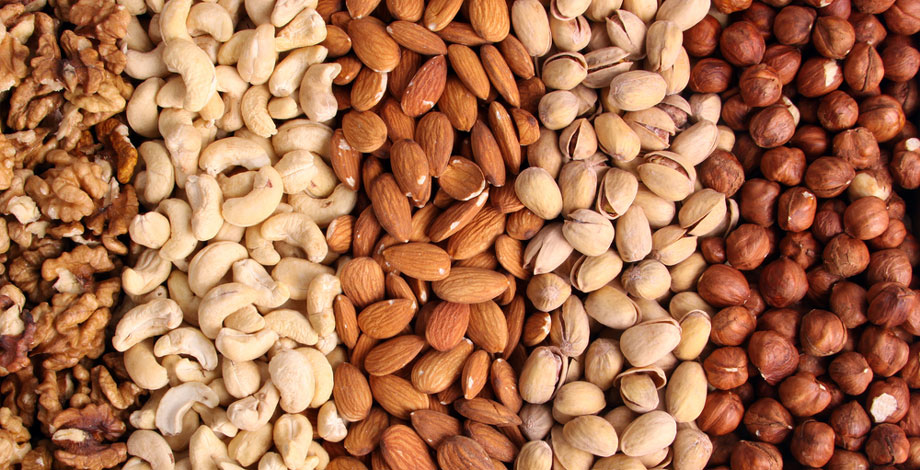
16 Reasons to GO NUTS for Nuts

16 Reasons to GO NUTS for Nuts

12 desember 2013 | Av
Yogobe

Nötter hör ju julen...och livet till. Vi allra flesta vet ju att nötter är sprängfyllda med härliga nyttiga saker, men vet vi egentligen VARFÖR det är så bra med nötter? I detta matnyttiga inlägg får ni svaren på de flesta frågor angående nötter. Psst, inlägget är på engelska!

A recent article in the New England Journal of Medicine underscores the health benefits of nuts. Researchers followed over a hundred thousand men and women over several decades and concluded that eating nuts helped them stave off the Grim Reaper. Seven or more servings of nuts per week cut the risk of dying by a third! (“A serving” was defined as one ounce, which is about one handful of almonds.)

Specifically, those who at nuts five or more times per week were found to enjoy a 29% reduction in death from heart disease; an 11% reduction in death from stroke; a 23% reduction in death from infection; a 24% reduction in death from respiratory diseases; a 29% reduction in death from kidney disease; and an 11% reduction in death from cancer.

It’s long been known that nuts are heart-healthy. A now-famous study of Seventh-Day Adventists who consume a low-fat, plant-based diet compared non-nut eaters to nut-eaters, anticipating that the nuts (which are high in calories and fat) might raise their heart disease risk. Au contraire!

Even though they were already on a heart-healthy, predominantly vegetarian diet, those Adventists who consumed nuts at least five times a week had a 48% lower risk of death from coronary heart disease and a 51% lower risk of a nonfatal heart attack compared to those who consumed nuts less than once weekly.

Ironically, the Federal Government doesn’t want nut manufacturers to broadcast these benefits to consumers. In a recent case, the Food and Drug Administration sent a sharply-worded warning letter to Diamond Food, Inc., a manufacturer of walnuts, ordering them to “cease and desist” from making medical claims about their products. They even threatened to confiscate the “misbranded” nuts as illegal contraband!

It seems that, the way the officials see it, if nuts are to be advertised as reducing the risk of a specific disease, they must undergo the same rigorous application process as drugs, an insurmountable regulatory hurdle that would require years of wrangling and hundreds of millions of dollars. Meanwhile, and fortunately, we don’t need FDA approval to enjoy the many health benefits of nuts.

Here are 16 reasons why you might want to include them frequently in your diet.

1. Nuts are a perfect VEGAN food
With the current emphasis on plant-based diets, nuts provide a great complement to grains, fruits and vegetables, and legumes. They add protein and healthy oils to balance vegetarian diets that might otherwise tend to be carb-rich and skimpy in beneficial fats and certain vitamins and minerals.

2. Nuts are PALEO
That is, with the exception of peanuts, which are actually legumes, sometimes spurned by hard-core Paleo adherents because of their lectin content. Tree nuts and seeds are ancient staples of the human diet to which millions of years of evolution have made us well-adapted.

3. Nuts are LOW-CARB, low GI
The Glycemic Index, or GI, is a determinant of how quickly the sugars in foods are digested, absorbed, and released into the blood stream. High-GI foods are thought to overwhelm the body’s sugar-handling capabilities, resulting in progression towards metabolic syndrome and diabetes. Nuts are relatively low-carb to begin with, and the carbs they contain are released slowly after a meal. They make a great snack to stave off sugar-craving or hypoglycemia.

4. Nuts promote SATIETY
While nuts are caloric, eating nuts promotes a sensation of fullness that fends off the munchies for less healthy fat-laden or sugar-laden junk food. Some studies suggest that adding nuts to your diet can actually help you lose weight.

5. Nuts are high in FIBER
While not traditionally thought of as a high-fiber food, nuts are rich in soluble fiber, the best kind for reducing the risk of cancer and heart disease.

6. Nuts are a rich source of PHYTOSTEROLS
These plant sterols are thought to bind to cholesterol and help to sweep it harmlessly out of the body; phytosterols are even recognized by the American Heart Association as a natural way to reduce heart disease risk.

7. Nuts contain healthy fats and oils
Nuts are rich in the essential fatty acids linoleic acid and alpha linolenic acid. Note the word essential: the body cannot make these oils on its own, and we must obtain them from outside sources. Lack of these essential fatty acids can cause dry skin, inflammation, infertility, mood and memory problems and promote heart disease.

8. Nuts are a great source of Vitamin E
Getting your vitamin E from a pill may not be as good as getting natural vitamin E from nuts and seeds. There are actually eight different forms of natural vitamin E tocopherols and tocotrienols: nuts deliver the full spectrum of this critical antioxidant.

9. Nuts are rich in B vitamins
Nuts provide many vital B-complex vitamins such as riboflavin, niacin, thiamin, pantothenic acid, vitamin B-6, and folates.

10. Nuts are a source of critical POLYPHENOLS
Polyphenols are plant-derived antioxidants that protect the body from free radicals. Nuts contain a wide variety of polyphenols, including resveratrol, lutein, cryptoxanthin and many others. Some seeds, like flaxseed and sesame, are rich in lignans, a specific subtype of polyphenols that may protect against reproductive cancers.

11. Nuts are the richest plant source of ZINC
A mineral critical for immunity and reproductive function, strict vegetarians sometimes don't get enough.

12. Nuts are high in MAGNESIUM
Consider magnesium the energy mineral; its lack may be felt as fatigue or irritability and it can even increase the risk of heart problems, diabetes and high blood pressure. Magnesium’s role in bone metabolism is often underestimated.

13. Nuts deliver COPPER
Unless you fancy liver or oysters, nuts and seeds are your best bet as dietary sources for the essential trace mineral copper.

14. Nuts provide SELENIUM
Just two or three Brazil nuts per day can give you all the immune-boosting selenium your body needs, especially if you’re not fond of fish or meat.

15. Nuts are PORTABLE
Unlike baked chicken breast or poached salmon, a small packet of nuts can easily be stashed in your briefcase, purse or backpack, ready to provide an instant, non-perishable hunger-banishing snack in the office, on the commute, or on the trail.

16. Nuts are VERSATILE
They can be used as stand-alone snack foods; spread on sandwiches (with all the nut butter varieties available, you don’t need to get hung up on just traditional PB); sprinkled on salads or vegetable side dishes; mixed with grains to provide a flavor accent; as a gluten-free crust for baked fish or chicken; or even power-blended into your favorite smoothie.

Source: MindBodyGreen 

Open post
Don't Worry: Mindfulness Meditation

Don't Worry: Mindfulness Meditation

10 desember 2013 | Av
Yogobe

Har du provat mindfulness meditation någon gång? Om inte så tycker vi att du ska göra detta. Mindfulness meditation har visat sig lugna hjärnan, öka immunförsvaret, reducera blodtryck och gjort människor mer tillfreds. I denna vetenskapliga text (på engelska) får du veta mer om de positiva effekter som mindfulness meditation kan ge.

In times of stress, we're often encouraged to pause for a moment and simply be in the 'now.' This kind of mindfulness, an essential part of Buddhist and Indian Yoga traditions, has entered the mainstream as people try to find ways to combat stress and improve their quality of life. And research suggests that mindfulness meditation can have benefits for health and performance, including improved immune function, reduced blood pressure, and enhanced cognitive function.

But how is it that a single practice can have such wide-ranging effects on well-being? A new article published in the latest issue of Perspectives on Psychological Science, a journal of the Association for Psychological Science, draws on the existing scientific literature to build a framework that can explain these positive effects.

The goal of this work, according to author Britta Hölzel, of Justus Liebig University and Harvard Medical School, is to "unveil the conceptual and mechanistic complexity of mindfulness, providing the 'big picture' by arranging many findings like the pieces of a mosaic." By using a framework approach to understand the mechanisms of mindfulness, Hölzel and her co-authors point out that what we think of as mindfulness is not actually a single skill. Rather, it is a multi-faceted mental practice that encompasses several mechanisms.

The authors specifically identify four key components of mindfulness that may account for its effects: attention regulation, body awareness, emotion regulation, and sense of self. Together, these components help us attend to and deal with the mental and physiological effects of stress in ways that are non-judgmental.

Although these components are theoretically distinct, they are closely intertwined. Improvement in attention regulation, for example, may directly facilitate our awareness of our physiological state. Body awareness, in turn, helps us to recognize the emotions we are experiencing. Understanding the relationships between these components, and the brain mechanisms that underlie them, will allow clinicians to better tailor mindfulness interventions for their patients, says Hölzel.

On the most fundamental level, this framework underscores the point that mindfulness is not a vague cure-all. Effective mindfulness meditation requires training and practice and it has distinct measurable effects on our subjective experiences, our behavior, and our brain function. The authors hope that further research on this topic will "enable a much broader spectrum of individuals to utilize mindfulness meditation as a versatile tool to facilitate change - both in psychotherapy and in everyday life."

The article is tilted, "How Does Mindfulness Meditation Work? Proposing Mechanisms of Action From a Conceptual and Neural Perspective."

Source: The above story is based on materials provided by Association for Psychological Science.

Open post
Gästblogga på Yogobe

Gästblogga på Yogobe

08 desember 2013 | Av
Yogobe

Älskar du att skriva och brukar yoga med oss på Yogobe? Då kan du nu få skriva ett gästblogg-inlägg hos oss!
- Tillsammans med Leia från Alltomyoga.se, kommer vi välja ut och publicera några gästinlägg i bloggen. Det hade varit kul om just du ville vara med och inspirera andra yogis där ute! Vi vill att du delar med dig av dina erfarenheter om hur det är att yoga online, hur du får disciplin att yoga på egen hand, utan att en instruktör väntar på dig. Vilka utmaningar har du haft i din practice och har du några tips till andra i liknande situation? Vilka är fördelarna och nackdelarna med att yoga online och vad tycker du är viktigt att tänka på, både vad gäller yoga på och utanför mattan?

Låter detta intressant, skulle du vilja inspirera andra yogis? Skriv ihop och maila oss ett blogginlägg (och en passande bild som kan anpassas för att passa vår blogg i bredd/höjd) och dela din kunskap och dina insikter med i synnerhet nybörjare inom yoga.

Sista inlämning: 16 december
Mailadress: [email protected]

Namasté

Open post
5 perfect yoga poses for mothers

5 perfect yoga poses for mothers

07 desember 2013 | Av
Yogobe

Lyfta matkassar, bära ungar, stressa till dagis, köra till skolan, laga mat och multi-taska lite till. Ja, så ser väl vardagen ut för väldigt många och det går inte riktigt att rå på. MEN här kommer 5 positioner som passar perfekt för alla mammor där ute och som kan göra att du orkar med en stressig och o-ergonomisk vardag. Inlägget är på engelska.

Easy Seated Pose with “Success Breath”
Multi-tasking can easily become overwhelming. Try this simple posture for a few minutes to ground your thoughts and slow your heart rate down.

Sit in a comfortable position, either on the floor or a chair.
Rest your palms on your thighs or place your dominant hand on top of your non-dominant hand.
Close your eyes.
Take a couple of minutes to let go of what has happened prior to this moment and what is going to happen after this moment.
Relax your entire body, including your jaw, neck and shoulders.
Start to take a deeper inhalation through your nostrils as you constrict the throat muscles slightly. This will be an audible breath.
Exhale completely through your nostrils as you constrict your throat muscles again.
Keep your awareness at your breath as you continue to take these long, slow deep breaths through your nostrils.
Keep it gentle, relaxed and maintain the intention of letting go, each time you exhale.
 
Cobra Pose
Carrying your children, groceries, laptop, diaper bag, yoga bag, etc. can start to wear you down. Take a few of these gentle backbends to counteract the heavy lifting and back rounding we do each day.

Start lying down on your belly with your legs extended back, tops of the feet on the mat.
Root through the tops of the feet and legs and spider your fingertips off the mat onto the floor.
Lengthen your tailbone down towards the earth, inhale and slowly start to peel your chest off the floor.
Unclench your buttocks and your teeth and lift your heart.
Roll the shoulders back and down, keeping the shoulder blades hugging in towards one another.
Keep the back of your neck and forehead relaxed.
Exhale and slowly lower back down towards the earth.
Repeat 5 times.

Standing Forward Bend
Let gravity support you as you lengthen out the backside of your body. Enjoy the benefits of an inversion with increased circulation and oxygen to the brain.

Stand with your feet about hip-bone distance and somewhat parallel apart.
Lift all your toes and fan them out.
Release your toes back down to the earth with space in between each toe. (make a mental note to yourself to make time to take care of your feet)
Root through all four corners of your feet.
Inhale and reach your arms overhead. Exhale to forward fold, hinging at your hip crease, keeping the abdominals drawn in and your knees bent.
Bring your fingertips down to the earth. (bent knees are fine and good for supporting your lower back)
Let go of your head, neck and shoulders and keep your jaw relaxed.
Hold here for a few deep breaths, keeping the abdominals engaged to support the low back.
Put a slight bend in your knees, if you haven’t done so already, and slowly roll yourself up to standing, one vertebra at a time.
Engage your core center to lift you all the way back up.
Take a couple breaths in a standing position before moving back into activity.

Supine Spinal Twist
Spinal twists promote flexibility in the spine while improving digestion. As mothers, we are always concerned about feeding our kids healthy snacks but we often forget about feeding ourselves!

Start laying down on the floor with your legs extended.
Take a moment to just relax and do nothing.
Hug your right knee in towards your chest and take your leg towards the left.
Keep your shoulder blades on the floor and extend your arms out into a “t” shape, palms up.
Gaze towards the right hand and close your eyes.
Take a few breaths here to lengthen out the right side of your waist and nourish the ascending colon.
Inhale to come back to center, using your abdominals and release the right leg down.
Take a moment to notice the difference between the right and left sides of your body.
Repeat on the other side.

Legs Up the Wall (with or without the wall)
Try this restorative posture, especially if you have been on your feet all day. Use a block, bolster or pillow for support. This pose is a passive variation of Shoulderstand. (avoid during menstruation)

Start by laying down on the floor with your legs bent, feet on the floor.
Take your prop and place it underneath your sacrum. (make sure that it is comfortable there. If not, remove the prop and continue without it)
Hug one knee in towards your chest and then the other.
Extend your legs up towards the sky without engaging your abdominals, legs or toes.
Keep the back of your neck relaxed and avoid turning your neck.
Keep the gaze towards your toes and breath.
Stay for about 5 minutes.
Come out slowly by bending one leg, then the other and placing the feet back down to the earth. Lift your hips and remove the prop.

For all these postures, make sure that they are comfortable and relaxing. They are here to support your busy life as a mommy!


Source: Danielle Mika Nagel, studio director for the world’s first Chopra Yoga Center in Vancouver.

Open post
5 warming herbs to weather the winter

5 warming herbs to weather the winter

05 desember 2013 | Av
Yogobe

Det är äntligen den där tiden på året, då man kan vurma i alla möjliga härliga och nyttiga kryddor. Vart man än går så doftar det kanel, kardemumma, nejlikor och ingefära. Dessa kryddor hör inte bara julen till, dem är även oerhört nyttiga och kan hjälpa att bota förkylningar och andra virus. I detta inlägg på engelska får du lära dig mer om dessa kryddor.

Ever wonder why this time of year is so closely associated with these fragrant and comforting herbs (spices, actually) and why they feature so heavily in our holiday baking?

For one, they’re extremely warming (try putting a little cinnamon or ginger on your tongue and see what happens), which is good for the body in the midst of winter. These heating herbs bring blood to the surface of the skin, acting as a radiator of sorts, and warming the body (this is definitely why you crave a cinnamon and ginger hot chocolate in the late afternoon as the sun begins to set).

Warming herbs also tend to soothe the stomach, aid digestion, and regulate blood sugar. That’s right—that heavily spiced pumpkin pie may actually help your digestion and keep your blood sugar from spiking and crashing. Obviously, adding these herbs and spices to desserts helps, but it’s not the ideal way to take them (unfortunately). So let’s break down a few of the most common (and seasonal) warming herbs; see if you can integrate them into a variety of foods and beverages.

1. Cinnamon
Cinnamon is good for people who complain that they are always cold, no matter what the thermostat says. Cinnamon dries dampness in the body (you know—that cold-to-the-bone feeling) and stimulates circulation. It’s an excellent digestive tonic, immune booster, and blood sugar regulator.

2. Ginger
Ginger really does it all—boosts the immune system, fights allergies, lowers cholesterol, relieves arthritis pain, stimulates digestion, fights nausea and morning sickness, and warms the body. Try drinking ginger tea, ginger hot chocolate, or adding a strong ginger infusion to your bath (this is stimulating, though, so keep the ginger bath early in the day).

3. Cardamom
Cardamom is also a member of the ginger family and has the same warming, stimulating effect. It also opens the respiratory passages and helps clear the mucus associated with a heavy chest cold.

4. Nutmeg
Nutmeg is good for preventing and flatulence, treating diarrhea in children, and for breaking up chest congestion. It also has antiviral properties.

5. Garlic
Finally, garlic is an incredible herb for the immune system—antibacterial and antiviral. It’s also a vasodilator, meaning that it improves circulation and keeps blood cells from clumping together. Garlic also lowers glucose metabolism in diabetics, aids heart health, kills parasites, heals wounds, and keeps vampires at bay (or so I’ve heard...).

A note about garlic: it’s totally safe. However, avoid medicinal doses if suffering from a fever in a long-term illness (cancer, AIDS, etc).

This is one time of year when the use of herbs and spices is more intuitive and culinary than usual. What does that mean? Well, it means you don’t really have to think about it; use your instincts and follow your own tastes. If you’re craving a particular herb or spice, indulge (yes, even if that means gingerbread cookies). No matter what the vehicle, the featured herb will benefit your body. Just be sure to use organic, whole forms of the herb when you can.

Enjoy the sugar, but especially enjoy the spice!

Source: MindBodyGreen 

Open post
Puja - en lugn oas för din yoga

Puja - en lugn oas för din yoga

05 desember 2013 | Av

Hur hittar du ett lugn och fokus när du praktiserar framför en dator? Skapa en puja. Puja är sanskrit och betyder en ritual som man utför på morgonen. Även platsen som man skapat för sin ritual kallas för puja. En plats som du avsatt för yoga och meditation.


Skapa en plats för yogamagi

I min puja samlar jag mig på morgonen, tänder doftljus, lägger en blomma, samlar saker som är viktiga för mig såsom foton på någon jag vill skicka en tanke till. Jag brukar även lägga mina anteckningar inför kommande föredrag här för att ge dessa lite extra tanke och magi!

Det är också här jag slår upp datorn och med lugn i själen surfar till den yogaklass jag vill ta, med lite andakt. Som att ta en promenad till yogastudion!

Sedan sitter jag och andas och fokuserar min tanke på det som är viktigt för mig just den här dagen. En enkel meditation som inte behöver ta mycket tid. Efter det är jag redo att trycka på play och min yogastund kan börja.

Som en liten bonus vill jag passa på att berätta om en av mina favoritgudinnor, Nataraj. Hon kom till mig en dag via en vän i Italien. Så nu står hon i min Puja för att hedra alla mina år som jag spenderat där. Gör din puja till din!

Videor som kan passa dig

Yogobe Video: p7b4 Yogobe Video: r26x Yogobe Video: 67131784 Yogobe Video: 67548804

Lästips

Open post

Search

Categories