Do you also want access to our video library?

  • 2500 videos
  • No binding period
  • Free trial

Welcome to our blog

Yoga, training and health inspiration for you

blog post thumbnail

What is emotional regulation and how can we practice it?

13 tammikuuta 2026 | Av

Emotional regulation is often misunderstood as a way to control or suppress what we feel. Here, Eleonora Ramsby Herrera shares her perspective on emotions as meaningful responses that help us orient ourselves in the world and serve as a compass for self-understanding, relationship and conscious choice – and how practices like meditation and breath can support this process.

Emotions can help us orient to the world

The way I understand emotional regulation is closely aligned with an existential view, where emotions serve as an orientation to where we stand in the world. Emotions can tell us something about what is happening to us and how it affects us in a particular moment. In this sense, emotions are not merely internal states to be managed but meaningful responses to our lived situation.
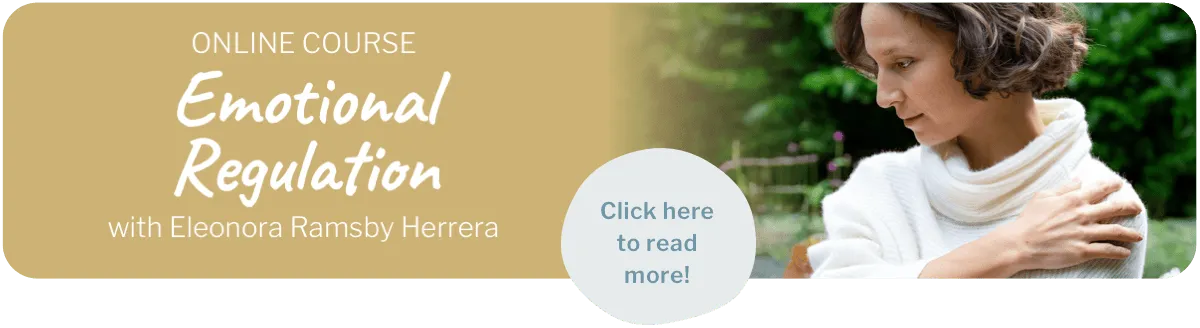
Emotional regulation is sometimes misunderstood as a means of controlling our emotions by trying to remain calm and detached amid chaos. This can border on spiritual bypassing, a term introduced by late Buddhist and psychologist John Welwood to describe how a spiritual practice can become a way to avoid, rather than engage with, the realities of our life. Consequently, it can create distance from experience, severing our connection with the world and our relationships within it. We are not separate individuals moving through the world unaffected by what happens around us; rather, we are always in relationship with it. We cannot touch something without being touched ourselves.

Emotional regulation as awareness rather than control

Instead, emotional regulation can be understood as the capacity to be aware of our emotions and to acknowledge that we never encounter the world in a neutral way. Our interactions are always coloured by our assumptions, histories, and perspectives. While we cannot remove this lens, we can become more attuned to how strongly it shapes us and how we allow it to influence our way of being in the world.

We can either be reactive to our emotions, controlled or overwhelmed by them, or suppress them because we do not like how they feel. Alternatively, as existential philosopher and psychotherapist Emmy van Deurzen suggests, we can learn to relate to emotions as a compass for orienting our lives and to approach them as moments of learning through self-enquiry. This can be done by reflecting on questions such as: What happened for me to feel this way? What did I or didn't do in that moment? How can I take charge and control the situation as it is now? Can I do something different about it that will shift how I am in the world and with people, in such a way that I am happy to go by my emotions rather than being run over by them?

Meditation and breath as tools for emotional regulation

A central aspect of this work is learning how to be with our emotions as they arise in present-moment experience. Meditation can be a supportive practice here, as it allows us to feel emotions fully and directly within a space of stillness and contemplative compassion. Here too, the breath can be our companion, helping us remain grounded and steady amidst the inner turbulence that may arise.

A full and meaningful life is not one that avoids difficult emotions, but one that embraces the full range – from joy and laughter to rage and sorrow. This is part of what it means to be human. From this perspective, learning to live with our emotions and to use them as guidance for conscious choice allows us to inhabit our lives with greater clarity, depth and wakefulness.
Online Course: Emotional Regulation with Eleonora Ramsby Herrera

Interested in exploring practices to navigate your emotions? In the online course Emotional Regulation, Eleonora Ramsby Herrera guides you through simple ways to regulate your nervous system and support your emotional wellbeing using meditation and pranayama.

Read more here!

Practice Online – Meditation & Breathwork

Yogobe Video: 6a8w4e Yogobe Video: 27ucw4 Yogobe Video: zt9x23 Yogobe Video: 6rs2

To watch a full video, you need to be logged in as a paying Yogobe member. Haven’t tried Yogobe before? Try it free for 14 days – get started here!

Further reading

Open post
blog post thumbnail

5 Benefits of Pilates – A Fitness Approach for Your Body and Mind

30 tammikuuta 2024 | Av

Pilates can help you strengthen your body, with quick results, and also strengthen the mind and body connection. In this post I give you five reasons to start practicing Pilates.

Pilates – Tones Your Body and Provides Mental and Physical Benefits

I’ve worked and practiced Pilates for over a decade now. When I began my practice, I noticed the result almost immediately. With consistent practice Pilates has provided me with a strong body from the inside out that moves with ease. I’ve gained more confidence and a deeper interest in all activies that strengthen the mind and body connection!

Practicing Pilates offers a comprehensive workout that tones your body and provides mental and physical benefits. Here are five reasons why I think Pilates can make a significant difference to your workout routine:

5 Reasons Why You Should Do Pilates

  • Core Strength: Pilates focuses on deep abdominal and core muscles, giving you a strong foundation for overall stability. Strengthening these muscles enhances balance and leaves you feeling more powerful.
  • Flexibility: Pilates is a full-body workout that boosts flexibility and increases your range of motion. By stretching and lengthening muscles, it makes you more agile and less prone to injuries. Because of this I highly recommend incorporating Pilates with any other type of workout regimen!
  • Mind-Body Connection: Beyond physical exercise, Pilates is a mindful practice. Controlled movements and conscious breathing create a connection between mind and body, reducing stress and promoting overall well-being.
  • All-Inclusive: Suitable for all fitness levels, Pilates can be adapted to individual needs. It's gentle on the joints yet challenging enough for both fitness enthusiasts and beginners. All you need is a mat, and you're good to go!
  • Results: Consistency with Pilates brings results – expect improved posture, increased muscle tone, and enhanced overall strength. Pilates sculpts and defines your body without heavy weights or intense workouts.

Pilates is more than a workout; it's a fitness approach for your body and mind. Roll out that mat and start a journey towards a stronger, more flexible, and harmonious you. Your body will thank you!

Happy training,
Emma

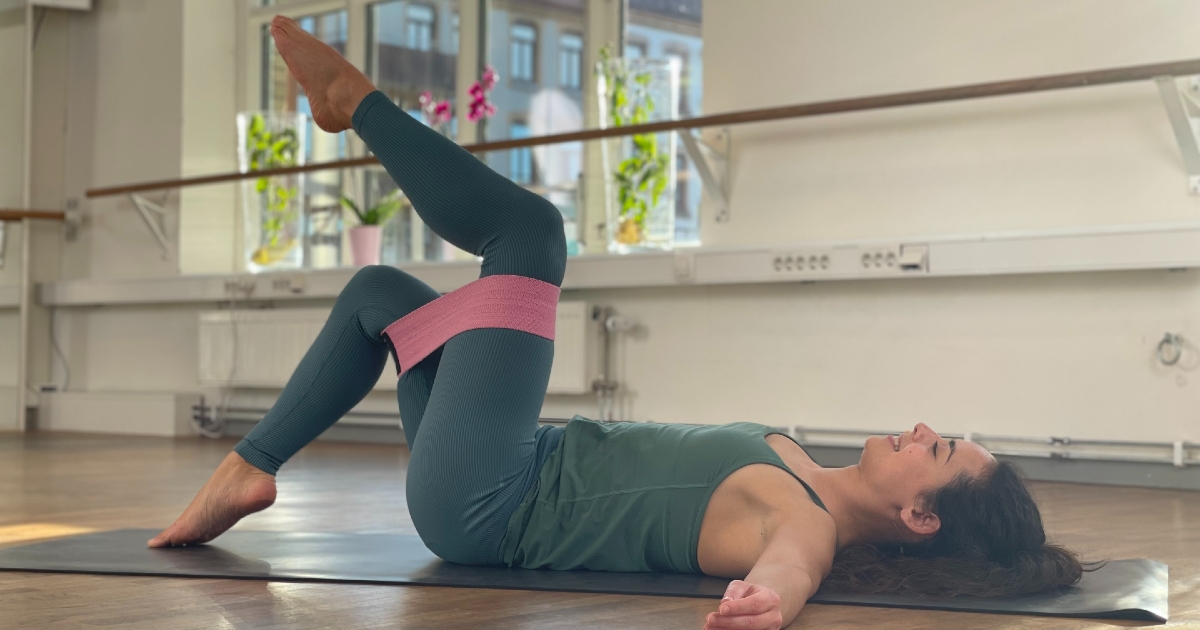
Exercises Online – Pilates with Emma Cowan

Do you want to try out Pilates? Here you'll find selected classes and playlists. You will find all our Pilates classes, in both Swedish and English, in the audio and video library.

Yogobe Video: 4ec3 Yogobe Video: 9rw2 Yogobe Video: x67e Yogobe Video: 62ch

To watch a full video you need to be logged in as a paying Yogobe member. Haven't tried Yogobe before? Try it for free during 14 days – get started here!

Further reading

Open post
blog post thumbnail

How Yogobe works – get the most out of your subscription

10 kesäkuuta 2023 | Av
Yogobe

Learn more about our subscription service and maximize your experience! In this blog post you will find information about how Yogobe works – various features and how to find them, both on the website and in the app.

Explore the video & audio library

In our library, we have over 2300 classes, exercises and lectures. You can choose between 80 different forms of yoga, lots of different forms of exercise as well as methods for personal development in, among other things, stress and sleep management. Go to the library – click here.

Find your way to our new classes and save the ones you like:

  • Use the filter function: To easily find what you're looking for in the library, we recommend you to use our filter function. You can use filters based on time, needs, instructors (Team Yogobe), styles, body parts and type of results.
  • Save your favorite classes: Remember to save the classes you like or want to try later. To mark a class as a favorite, just click on the ♡ heart next to the class. On the website, you will find your favorites under your profile (in the top right corner of the page) and My favorites. In the app, you will find them under Dashboard.

What is included in a subscription?

In addition to the content in the video and audio library, you'll also find the following to support you, bring you inspiration and help you create healthy habits:

  • Programs to help you create positive habits. We have +30 customized programs available for all active and paying subscribers. You'll find programs within yoga, exercise, stress management, personal growth and more. Take me to the programs!
  • Looking for a challenge? In addition to programs, we also offer challenges that last anywhere from seven days to several weeks. Go to all challenges!
  • Create & follow playlists. A playlist is exactly what it sounds like – a list of selected video or audio sessions. You can create your own playlists as well as follow playlists of other members or the ones created by us at Yogobe, based on different needs and themes. Take me to Yogobe's playlist overview.
  • How do I create a playlist? When you are watching a video or listening to an audio in the library, you can click on ⚫️⚫️⚫️ (three dots) under the video window, then select "add to playlist". You can either add it to an existing playlist or create a new one. You will then find your own playlist in your profile, under My favorites.

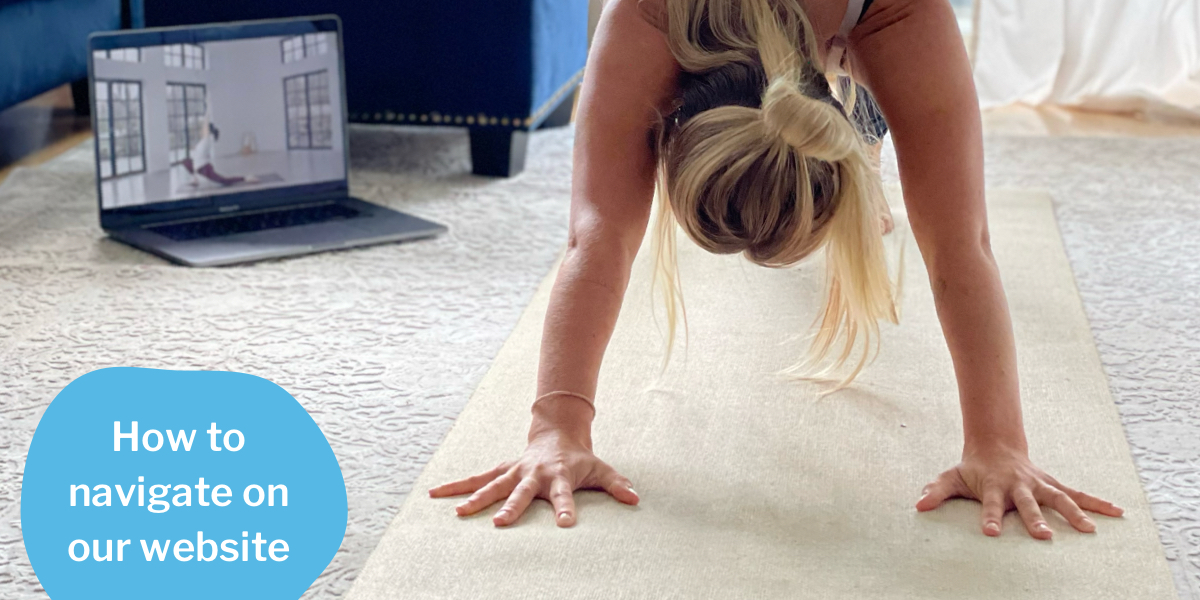
Navigate Yogobe's website

On the website you will find all of our content, even some content that is not available in the app. Below we list some of the most important features that may be useful to know about.

  • Your profile: Your profile is located in the upper right corner of the page. This is where you'll find all activated programs, theme pages and challenges, favorite marked video and audio sessions as well as playlists, settings for your subscription and much more.
    • Overview – this is where you will find the latest classes you have watched, the programs, challenges and theme pages you have joined, your booked LIVE events and the online courses you have purchased.
    • My Favorites – here you will find the video and audio sessions and playlists which you have marked as favorites. In the drop-down list at the top you are able to choose what you want to display.
    • My Playlists –  these are the playlists you created yourself.
    • My Settings – manage your profile and account settings, your personal information and access receipts, your promotion code to share with friends, codes for LIVE classes if you have a trial period and more.
    • Subscription – upgrade your subscription.
    • My Statistics – see statistics for your activity at Yogobe.
  • The subscription – Yogobe PLAY: On the website, you will find all that is included in the subscription under Play in the menu at the top of the page, however, you will find the LIVE classes under LIVE.
  • LIVE classes & events: These are included in a subscription. If you are on a trial period, two LIVE classes are included – codes to use for booking can be found under your profile (in the upper right corner of the page), click on My settings and then LIVE codes. The LIVE schedule is found under LIVE in the menu on the page.
  • Online courses: In addition to our subscription service, we also offer online courses. These are purchased separately and you will find them under Courses in the menu, click on Online courses.
  • The blog: In our blog, you will find lots of blog posts on different themes – for in-depth knowledge and inspiration. Find the blog under More in the menu at the top.
  • More: Under More in the menu, you will find our blog, our team of experts, information about wellness grants, our non-profit engagements, information about our care and business offers and more.
  • Knowledge & more information: At the bottom of the page you will find links to, among other things, pages with information about the different yoga and training styles we offer, more knowledge about yoga and different needs as well as information about the service, such as Q&A, contact details for customer service and more.

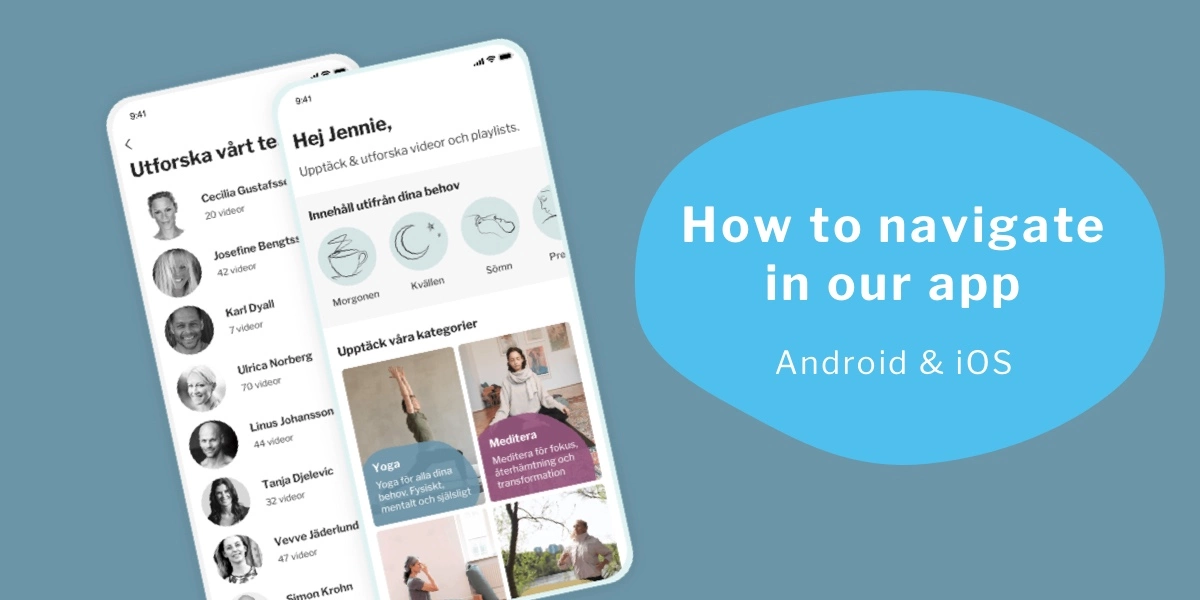
Navigate Yogobe's app

We also have an app, for both Android and iOS, where you will find, among other things, our entire video and audio library. If you don't already have the app – download it here!

The app includes the following:

  • Home: Here you can easily find all video and audio sessions based on, among other things, needs, news and different orientations as well as playlists.
  • Search: This is where you can search by free text but also through the filter function based on, among other things, time, yoga teacher/instructor/expert and various needs.
  • My overview: Here you will find the sessions and playlists you have marked as favorites as well as everything you have saved to offline mode. Here you will also find the theme pages, programs and challenges that you have joined on the website, as well as the online courses you have purchased on the website.
  • Programs, challenges, theme pages & courses: To be able to take part in programs, challenges and theme pages, as well as purchased online courses, in the app, you first need to have joined, or purchased, them on the website. You will then find them under My overview.
Open post
blog post thumbnail

Meditation as a tool for improving mental health

13 marraskuuta 2022 | Av
Anna-Mari Pentikäinen

Do you know that mindfulness and meditation can have positive effects on our mental health? And that we can alter our mood with meditation? Meditation also teaches us something profound that can be very transformative and shift our way of being.

Coping with life's ups and downs through mindfulness

In the news, we hear about global pandemics, conflicts, environmental crises and wars. The stories we read or hear on the news feed our minds with fear and anxiety and we wander away by stressing about the future or dwelling in the past. It’s only human. Yet it's also an evolutionary fact that we tend to focus on the possible threats rather than what’s good and pleasurable in our lives.

We can’t run away from adversity but we can learn to adjust to it by practicing mindfulness and meditation. I experienced this strongly during the hardships of last summer when I had a miscarriage and my partner got a cancer diagnosis.

Mindfulness – the art of observing

Research shows that people are the happiest when they live in the moment. Jon Kabat-Zinn (the founder of Mindfulness-Based Stress Reduction) describes mindfulness as awareness that arises through purposefully paid attention to the present moment, without any judgement.

According to the University of California–Berkeley mindfulness is “maintaining a moment-by-moment awareness of our thoughts, feelings, bodily sensations, and surrounding environment.”

In my experience, the thought of a threat is often more painful than the threat itself. Even in the midst of a health crisis or grieving and loss, when we mindfully bring our awareness to this very moment – which can happen by simply observing our natural breath – we can bring a sense of safety, roundedness and stability into the now, no matter what we're experiencing in our inner landscape or what the outer circumstances are.

Meditation and mental health

Researchers have also found a link between mental health and wellbeing and mindfulness practices like meditation. Studies show that mindfulness and meditation can improve our mental health and that even the people who are not naturally mindful can acquire these benefits through cultivating meditation and mindfulness.

Studies also prove that mindfulness practices, such as meditation, improve attentiveness, emotional stability, compassion, social skills and happiness, even in the face of adversity.

When I talk about meditation I don't mean only sitting meditation but also movement meditation or yin yoga done in meditative way. Explore different meditation techniques and choose the meditation style that resonates with you.

The mental health benefits of meditation

  • Develop emotion regulation skills: According to many studies, meditation can develop our emotion regulation skills. Emotion regulation means recognizing, understanding, labeling, expressing and regulating our emotions. These skills develop naturally but studies show that we can improve them by practicing mindfulness and meditation.
  • We can tame negative feelings: Researchers from Michigan State University have found neural evidence that mindfulness helps to control negative feelings.
  • Become calmer: Meditation helps us to stay centered and keep our inner peace and calmness – despite the external circumstances.
  • Be aware of what we think and do: Meditation helps us to notice and change harmful thinking and behavioral patterns.
  • More positivity and happiness: We can linger in the positive and empowering feelings and emotions with meditation and through that, bring more happiness, hope and meaning into our lives.
  • Nothing lasts forever: Last but not least, in my experience the most transformational effect of regular meditation practice – it helps us realize that we are not our social roles, age, feelings, emotions, thoughts or actions. All emotions and thoughts are fleeting, even the most difficult ones. Nothing lasts forever.

In short, we can say that mindfulness and meditation can improve our mental health and that emotional skills are also part of mental health skills.

When we dedicate time to meditation we improve our wellbeing and mental health. In my experience, even 10 minutes of meditation each day can help us to create a significant change to the tone of the day – no matter where you are and what you are going through.

Practical tips for meditation

  • Invite an attitude of curiosity. It will help you to sustain your meditation practice when your mind is busy, restless or frustrated.
  • Try Metta ”Loving Kindness” meditation to change your negative self–talk. It’s one of my favorites and is suitable for anyone.
  • Try mantra meditation to create stability and inner safety. There's a lot of transformational power in words.  Repeat "I am safe" mantra silently to yourself for 5–10 minutes whenever you feel anxious or worried. Imagine that the words are like honey drops melting into your heart space and softening it.
  • Explore our online video library and find your favorite style of meditation. Try this playlist to get started.

Further readings about meditation

Meditate with Anna-Mari & others

In the library you can find:

Yogobe Video: z49f Yogobe Video: 3e8f Yogobe Video: f93a Yogobe Video: r79g

To see a whole video you need to be logged in as a paying Yogobe member. Haven't tried Yogobe before? Try it for free for 14 days – click here to get started right away!

Up-coming yoga retreats with Anna-Mari

Sources: 

Open post
blog post thumbnail

Yoga from a scientific perspective – for a sustainable body, mind, and community

06 syyskuuta 2022 | Av

How can yoga help us to find our way towards restful states and to move our bodies? I will tell you more about yoga’s benefits and what the research says.

Pockets of time where we can catch our breath

Whatever happened to margins, air in the schedule, and our perspectives on tempo? In our modern society, in the chase for efficiency and performance, we quite often find ourselves with packed schedules ready to burst. We seem to somehow have removed the margins, those pockets of time where we can catch our breath and relax. Not only have we built away moments for doing ‘nothing’, moments of physical movement also seem to have gotten lost.

The question I will address here is, how can yoga help us to find our way towards restful states and to move our bodies? I will tell you more about yoga’s benefits and what the research says.

Yoga as a support for physical and mental health (challenges)

Yoga is unique. It is unique in the way that it contains both movement and rest, two things that many of us lack today. This is true from us as individuals, bur also for our society. We have built away getting between places through movement, we have built away the margins in our schedules that would have given us recovery. To mention a few.

Although our health has generally improved over the past 100 years, with increased life expectancy and fewer deaths and infectious diseases, we face other problems. Challenges we face are all the years that we live but with reduced health and function. Today, it is (too) common to be struggling with mental illness such as depression, stress and fatigue, pain e.g. It is easy to think that it does not concern you or me, but most likely you will have already experienced something of the mentioned yourself, or have had someone close to you who has. When challenges like this hit you or your loved ones, it can be very helpful to have wellness and coping strategies at hand.

Fortunately, I think we as communities are starting to realize that many are facing these challenges, and we now know that we can do something about it. But then, what can we do? Yoga might be the answer.

What is yoga?

In order to be able to answer what yoga ’works for’, let's for a moment concretize what we mean by yoga. Even though yoga can take many shapes and forms, within the (medical) scientific landscape, yoga can be described, mainly, as having the following four components:

  • Low-intensity form of physical activity
  • Relaxation
  • Breath
  • Meditation

When researchers investigate the reason why we engage in yoga, it is mainly two reasons that come up:

  • For wellbeing and to prevent ill-health.
  • To take care of pre-existing health problems such as depression, exhaustion, pain, and anxiety.

Reserach shows effects from breathing exercises and meditation

  • When you have two minutes to spare:
    Some researchers investigated the effect of slow breathing on a group of yoga beginners. By breathing slowly for two minutes, both blood pressure and the experience of anxiety were lowered. The likely mechanism behind the effect is increased activation of the calming part of the nervous system. Exciting news, as a large percentage of us walk around with high blood pressure, much due to our lifestyles with a lack of physical activity and stress management.
  • When you want to sleep better:
    The hours of sleep in the day are your most important restorer. The hormone melatonin is an important regulator in the body to stimulate sleep. Some researchers, therefore, wanted to investigate melatonin levels in connection with meditation. A small group of experienced meditators meditated with different techniques, one group meditated for 30 minutes with one technique and another for 60 minutes with another. The meditation took place at midnight just before melatonin levels are at their peak. Blood samples were taken once an hour to measure levels, between 10 pm and 2 am. Another night the same things were measured but without the meditation to check for any differences in levels. Both groups got increased levels of melatonin the night they meditated. The researchers, therefore, theorized about how this effect can positively affect sleep. Most likely, meditation can be practiced at any time of the day, depending on the effect you want to achieve. So you don't necessarily have to meditate in the morning, or at midnight.

The effects of yoga compared to other physical activity

The calmer components of yoga can thus have a positive effect on things that have a strong connection to our health. However, most research that has been done on yoga involves yoga's physical activity components of some kind.

So how does yoga compare to other physical activity? This is something that is currently being researched intensively. As an example, one of the largest studies conducted on mild and moderate depression was conducted in Sweden, where several hundred participants took part. Three training groups (yoga, and two other cardio training groups) performed their training three times a week for 60 minutes, for a total of 12 weeks. That study showed that yoga produced the same effect as moderate- and high-intensity cardio exercise on lowering the level of depression, in particular compared to usual treatment.

In summary, yoga reminds us to move the body we were given and it can make us aware of how it feels at the moment. Yoga also reminds us to slow down, and pace the outer tempo with our inner tempo.

Yoga in the future

Change is inevitable, but which direction change takes can often be influenced by the actions we and our communities choose to take.

I believe that we have to start to rethink how we construct our schedules in the present moment, and for the future. In politics, at workplaces, at schools, in our residential areas, and at home. Building sustainable practices and communities means bringing back the margins and pockets of space in our schedules to do nothing, as well as for opportunities to move and relax. To create opportunities for yoga. As individuals, we must show that we want change through the choices we make on a daily basis. We must be the role models we want others to be for us. For ourselves, but above all, for others. It is something we can do together. Every small change matter, because it accumulates into something bigger. Our vision about the future begins right now, in this exact moment, through action. I guess next question is: what will your next step be?

Foto: Malin Wittig, copywright Bonnier Fakta (top image)

Playlists and more to read about science and yoga

Videos to get you started

Yogobe Video: 4gu3 Yogobe Video: ax64 Yogobe Video: 9uh4 Yogobe Video: d72r Yogobe Video: pf54 Yogobe Video: s6k9

To see a whole video you need to be logged in to Yogobe, as well as a paying member. First time here? Try our subscription service – free of charge for 14 days! 

Refereces:

Open post
blog post thumbnail

How does the breath work & benefits of conscious breathing

31 elokuuta 2022 | Av

Curious about the breath, how it works and the benefits of conscious breathing? Here I'll introduce you to the basics and inspire you to start to add breathing techniques into everyday life. 

Conscious breathing as a way to battle stress and tension

A great step to a healthy attitude about stress is to realize our ownership over our brain and learn to engage our brain intentionally to manage the consequences of the fight and flight response.

It is actually very simple for us to learn to intentionally engage the parasympathetic nervous system, which controls the relaxation response in our body. The relaxation response returns the body’s resources toward the digestive system but also the brain balance needed to maintain a healthy brain wave. We have the power to educate our own brain to do so intentionally. Once the overstimulated fight and flight response returns under control, the true potential of our brain becomes accessible, our learning ability is enhanced, and our executive reasoning functions become strong again.

Hence, the more we can learn conscious breathing the better. We enhance our quality of life via how we breathe.

About the breath

  • The breath is one of only two functions of the body that is both voluntary and involuntary (the other function is blinking). If we can master breath consciously, we can control other functions in the body like heart rate, blood pressure, and breath. Through the breath, we can access the parasympathetic nervous system and activate the relaxation response in the brain, which results in stress reduction for our entire system.
  • Most people are not breathing to their fullest capacity, which actually means that the nerve cells do not get fully activated, which chokes the life force in us. Through conscious breathing, we can mindfully generate more oxygen for the body.
  • Tightness or stress in the body often creates tightness in the breath. Think of wearing a body suit that is too tight — it is hard to breathe. When your body is tight and tense, you can’t breathe fully. You can be tight in your breathing body just like you are tight in your physical body. Some of this is physical strain impinging on the breath volume; some is an emotional or mental blockage preventing us from breathing fully.
  • Our breathing patterns are closely linked to our emotional states. We breathe differently when we are angry, excited, tired or when we are nervous. Yet, it works the other way too. We can calm or energize ourselves by changing our breathing patterns. Even by just taking time out to consciously become more aware of our breath we can help to start to alter our emotions.

What is pranayama?

Pranayama is a form of breath gym. It is where you go when you want to conditions yourself from the inside. In relation to asana practice if you are a yogi, it will enhance the effects of your physical practice. If you exercise, you will not only perform better in the whatever sport or fitness regim you have, it will give you greater focus, concentration and body awareness. You will notice how much better you sleep at night, that your posture has improved and that you are less stressed. Pranayama is a bridge between you and anything. For those of you who meditate, this is the path to help you quiet those disturbing thought and emotional patterns.

When prana, the life force within us in the yogic tradition, is spread evenly throughout the cellular body, compassion and equanimity arise and the fluctuations of the mind cease. This phenomenon can be achieved by cultivating the art of listening intentionally to your breath. To let go of the need to maneuver and control the breath. Pranayama and meditation are acts of letting go. With these practices, you learn how to let go of psychological blockages and attachments. They will over time help you to free yourself from who you think you are and get you in touch with the essence of who you really are.

The practice of pranayama takes us beyond our skeletal, muscular and circulatory systems, even beyond the nervous and endocrine systems. In its essence, this practice aims to attain mastery over the life force itself. And in that pursuit, your body heals, your mind gets strong and focused and your spirit free and happy.

Learn more about the breath – online course with Ulrica Norberg

Join Ulricas online course here at Yogobe – The art of Breathing – where you get to explore the power of the breath and learn how to balance your body and mind through different breathing techniques.

Read more

Breathing techniques & pranayama online

Yogobe Video: 3r4k Yogobe Video: 3t8f

Yogobe Video: 52bd Yogobe Video: 9uh4
Open post
blog post thumbnail

Salutary qualities of cooling foods on a hot summer's day

26 elokuuta 2022 | Av

Learn how eating according to Traditional Chinese Medicine (TCM) can benefit your health! This is our third blog post in the series about vegetarian, healthy food.

Feed your body and wellbeing with TCM

We eat every day, and it is such a beautiful opportunity to do something good for our body, mind and spirit.  When I was studying shiatsu massage – a type of Japanese massage that works with pressure points – I also learned about Traditional Chinese Medicine (TCM). Food and herbs have an important place in this tradition. It was so inspiring! To me, it was such a new way to look at food.

While Western medicine focuses mainly on the content of the food – like vitamins, calories and minerals – TCM focuses more on how the food works energetically in the body. We look at how food can support our physical and emotional well-being during varying times of the day, different seasons and even during different phases of our life. It is all about creating balance, harmony and a natural flow.

5 tips from Traditional Chinese Medicine about food

  • Keep your stomach nice and warm: In TCM we look at whether foods are more Yang (warming or even hot), neutral, or Yin (cooling or even cold). Our stomach is seen as a little soup pot and our spleen as a fire that heats up the ‘soup’ (food) in our stomach. When the ‘soup’ is nice and warm, we can extract the nutrition well from our stomach, and we also digest and process the foods well. If the ‘soup’ doesn’t warm up well, we can eat a lot, but still lack nutrition.
  • Hydrate yourself with ‘wet’ meals and warm water: In TCM, the best way to hydrate is considered through ‘wet’ meals, like warm soups, stews and sauces. This way of hydrating is the most gentle on our stomach. Water in itself, besides being physically cold (if not heated) – is also considered energetically cold. On a summer’s day some more cold water won’t hurt you, but the general advice in TCM is to drink preferably warm or hot water. Coffee and tea are not recommended in large quantities: They are considered medicine due to their strong qualities (and thus be taken in smaller amounts). Their ‘bitter’ nature also makes us dehydrate and pee.

Photo: Elaine Lilje

  • Choose the right ingredients – neutral or warming as the base
  1. Neutral and warming ingredients are generally those that have a mild and slightly naturally sweet flavor. Think of grains such as rice, oats, wheat and quinoa, but also of mild sweet vegetables, like carrot, pumpkin, beets, cabbage, potatoes, corn.  Proteins that are warm or neutral are eggs, beans, peas, old hard cheese.
  2. Cold food: Lettuce, spinach, celery, cucumber, zucchini, pack choy, tomato, eggplant. Basically, lots of leafy greens and also some fruits. Many fruits are cooling or cold: like bananas, melon, pineapple, apples, pears and plums. Eating fruits on a hot day, is therefore a nice way to cool down (not all though, as we'll see later).
  3. Hot foods! Think of chocolate, coffee, ginger, chili, raw onions, avocado, lamb, pungent cheeses, garlic and shrimps. Also, certain fruits, like mango, pomegranate, lychee and cherries. It’s important to keep the balance. If you have a tendency to have lots of ‘heat’ and much upward energy – like in the form of headaches, red face, tensions in the upper body, then it can be good to reduce the hot foods. Even more so on a summer’s day, when it’s also hot outside.
  4. To a certain extent, we can influence the cooling and warming effect of foods by the way we prepare them. Grilling and drying foods, brings a hot and warm quality. The other way around, making a mango into an ice cream or a smoothie will make its effect on our body colder. In essence, the quality of the ingredient stays the same, but we can nudge them a bit further down the Yin-Yang spectrum.
  • Dairy is special in TCM: Think of milk, soft cheeses, yogurt, butter, cream and so on. Most dairy belongs to the cooling foods. But beside being ‘cool’, dairy is said to create a dampness and slime in the body that makes us more slow, it can make us tired, a bit phlegmatic. No worries! TCM doesn’t say not to eat it, but to eat it with the right measure, in smaller amounts. Dairy that is fermented, like kefir and yogurt, are also considered more beneficial.
  • Play with Yin and Yang foods and find your way: We are all different. Some of us have a tendency to be more cold and slow, and some of us are more warm and maybe fast. What we eat can help us find a comfortable and happy balance.

Nice summer salad

Well… lots to play with! I hope you enjoyed these insights and principles. I will add a nice summer salad to this recipe that has a beautiful balance between warming and cooling elements, so it’s refreshing, yet nicely supportive to our digestion. Millet salad – with roasted veggies, orange and almonds

Mundekullas Gröna Kök – want to buy Stephanie's book?

Mundekullas Gröna Kök won the Gourmand Cookbook Awards 2021 for Best Vegetarian Cookbook in Sweden and Best Hotel Cookbook in the World. The book features more than 70 vegan and vegetarian recipes and 10 chapters on playing with flavors and textures, how to design and plant-based meal or buffet, the love for cooking farm-to-table. Buy the book here

The series about healthy vegetarian food

Breathing & yoga online to cool you down

Yogobe Video: ba78 Yogobe Video: du83

To watch a full video you need to be logged in as a paying Yogobe member. Haven't tried Yogobe before? Try it for free during 14 days – get started here!

Mundekulla retreat center

Mundekulla is an ecological course and retreat center in the Småland countryside. At Mundekulla, people meet for courses, conferences and festivals, focusing on personal development, mindfulness, creativity, nature and of course beautiful nutritious food! Since its start over 20 years ago, the center has been built on sustainable principles. With traditional building methods and green energy, as well as with a focus on social justice and promoting various peace projects. The whole idea with Mundekulla is to create and co-create learning, art, music, community and health. The best thing is all the wonderful, meaningful encounters with other people. That's the core. Find out more at mundekulla.se

Photographer: Elaine Lilje

Open post
blog post thumbnail

Integrating healthy, creative and wholesome eating into your daily life

21 elokuuta 2022 | Av

How do we sustain inspired and healthy cooking and eating in daily life? It’s not always easy! In this blog post, I'll give you tips and inspiration for healthy, creative, and wholesome eating.

Cooking to let go of the day

Sometimes for me, it helps to see cooking not just as something that needs to be done, but rather as a way to unwind. A moment to let go of the day. Especially when I sat behind the computer for a long time or when I had many meetings with people, cooking could be a beautiful way to calm down. It’s a way to work with all my senses and to be in the moment, enjoying the smells, colors, and warmth.

It requires a little mind shift, but it can really bring a more calm and more enjoyable quality to cooking, especially on busy days. Of course, it helps when we have some practical pillars that can help support this.

Tips for healthy, creative and wholesome everyday eating 

  • A good mix of easy and more challenging, creative recipes.
    It’s good to have a whole bunch of easy and fast recipes for daily life, that take under 30-minutes of preparing time. These are the go-to meals on a daily basis: think of vegetable soups, salads with good grains and nuts in them, a simple curry or Indian dal with lentils. We can save the more challenging or time-consuming recipes for weekends and special occasions. You can make the daily recipes more festive by adding some easy but wonderful toppings, like sunflower seeds, sesame, dried cranberries, nuts or fresh herbs.
  • Have easy healthy and yummy ingredients and snacks always available.
    Some of my favorite go-to ingredients for easy and good eating, are: canned butterbeans, dried fruits, frozen tempeh by Bärta, hazelnuts and walnuts, frozen green peas, apples, cucumbers, red paprikas, baby spinach and other lettuce, good olive oil. The great thing about many of these ingredients, is that all you have to do is to combine them on a plate, and you are ready to go.
  • Make extra’s!
    While you are making a soup, a curry or a salad, just make extra! Then you immediately have a good lunch (or another evening meal) for the next day.
  • Food excursions!
    Make the Farmer’s Market, visiting a local farm or buying at REKO-ring (regional networks and markets for local farms) part of a fun (bi-)weekly excursion. This way, you can combine exploring local, healthy and seasonal ingredients, with a nice day out with family or friends.

Photo: Sara Vitale

  • Foraging and walks in nature.
    I have a puppy that needs to go on a daily walk. Since I am out every day, I have discovered the amazing amount of edible plants that grow in the Swedish countryside. Not only is it really fun to pick wild plants for eating, it is also very tasty and healthy! So if you love nature walks, I would highly recommend studying edible wild plants, such as berries, herbs, mushrooms, leaves and flowers. Some of my favorites are wild pea (gökärt), sorrel (ängssyra), lingonberries, pine sprouts (granskott), ramson (ramslök), parasol mushroom (stolt fjällskivling), lilac (syren) and dandelion (maskros).
  • Grow your own!
    For those of you who love to also work with plants, you can grow your own food! Why only grow decorative plants? There are so many plants that are both beautiful and edible. Only have a window to grow in? Then go for sprouts and herbs. Especially sprouts of mung beans, lentils, and yellow peas are east to grow. If you have a garden, the sky is the limit (and the climate ;)). Lazy gardener? Go for berry bushes, fruit trees, rhubarb and edible weeds. These take care of themselves.
  • And… last but not least: Be kind and patient.
    It’s not easy to change eating habits! It takes time to find new ways, discover what works for you. And sometimes that frozen pizza is the best option for you that day. Don’t be discouraged when you don’t get it right every time. You’re on a journey, enjoy the ride!

Recipe – easy, tasty and healthy 

The recipe of the month is one of my favorite and easiest recipes to go to:
Creamy tomato soup with lemongrass and lime leaves! So easy and yet so tasty, as well as delicious. Guaranteed within 30 minutes on the table!

Mundekullas Gröna Kök – want to buy Stephanie's book?

Mundekullas Gröna Kök won the Gourmand Cookbook Awards 2021 for Best Vegetarian Cookbook in Sweden and Best Hotel Cookbook in the World. The book features more than 70 vegan and vegetarian recipes and 10 chapters on playing with flavors and textures, how to design and plant-based meal or buffet, the love for cooking farm-to-table. Buy the book here.

Read more: Inspiration & recipes from Stephanie Verstift

Videos for creativity and healthy living

Yogobe Video: 97se Yogobe Video: z47a Yogobe Video: dh52 Yogobe Video: 4c9t

To watch a full video you need to be logged in as a paying Yogobe member. Haven't tried Yogobe before? Try it for free during 14 days – get started here!

Mundekulla retreat center

Mundekulla is an ecological course and retreat center in the Småland countryside. At Mundekulla, people meet for courses, conferences and festivals, focusing on personal development, mindfulness, creativity, nature and of course beautiful nutritious food! Since its start over 20 years ago, the center has been built on sustainable principles. With traditional building methods and green energy, as well as with a focus on social justice and promoting various peace projects. The whole idea with Mundekulla is to create and co-create learning, art, music, community and health. The best thing is all the wonderful, meaningful encounters with other people. That's the core. Find out more at mundekulla.se

Photographer: Sara Vitale

Open post

Search

Categories