Do you also want access to our video library?

  • 2500 videos
  • No binding period
  • Free trial

Welcome to our blog

Yoga, training and health inspiration for you

PEACE of my MIND

PEACE of my MIND

14 marraskuuta 2015 | Av
Peter Munteanu

The social tectonic plates of the world are massively shifting and they are way up there on the hypothetical richter scale. Peace in the world must start with peace within ourselves. Finding balance and harmony in our lives, souls and for the planet upon which we walk our walk cannot be done from the outside. It cannot be structured or forced. It cannot be packaged and sold off the shelf. It must come from the inside.


I believe this fact scares a more and more disconnected community, because we have to confront our primal drivers, identity and authentic selves. We can't just treat the symptoms with a pill. We need to look at the origin, at the source, at the reason for the symptom and attack there! What we are looking at is NO QUICKFIX. Frankly: Isn't that ok? Why are we in a rush? As long as we are moving toward the light, toward love., the pace can be adjusted to be sustainable.
- Definitely a side effect of globalization and an evermore hectic and rapidly changing reality.

Are we at a point in evolution where we are forgetting that we are all part of a whole and when there are terror attacks and wars, large or small, imbalances and all, we are attacking ourselves, our world, our oneness like terminal cancer to a weaker and weaker body?

Let us all aspire to inspire people to care for themselves, to nourish and sustain their self worth and self esteem. Let us allow and accept people to create their own space for reflection and thus collectively change the world through yoga, meditation, walks, dance or other practices for providing grounding for more ethical and wise action and thus compassion, generosity and kindness. Hopefully leading our lives from the inside out can help us all to gain a better realization of the interconnectedness of all things, and thus stop inflicting hurt, pain and tragedy on our planet and people. I choose peace. I choose to be the change I wish to see in the world.

Namasté.
#‎jesuisparis‬ ‪#‎prayforparis‬

Open post
Jivamukti Yoga at Wild Wood Stockholm

Jivamukti Yoga at Wild Wood Stockholm

14 marraskuuta 2015 | Av
Yogobe

Be the light in November! The founders of Jivamukti Yoga, Sharon Gannon and David Life, are coming to Stockholm to spread some yoga love at Wild Wood Stockholm. Experience yoga with Sharon, David and Team Yogobe's guest teacher Camilla Veen from Norway, and meditate with the swedish artist Thomas Di Leva. Here are Sharons words about Jivamukti Yoga and Wild Wood Stockholm.


Soul liberation and enlightenment
The word Jivamukti is composed of two words: jiva = individual soul + mukti = liberation. Jivamukti means soul liberation. The Jivamukti Yoga method is a path to enlightenment through compassion for all beings, grounded in the original meaning of the Sanskrit word asana as 'seat, connection' – relationship to the Earth, this implying all of life. The classes are usually quite vigorously and presented in a flowing form, combined with hands-on adjustments, breathing exercises, meditation, Sanskrit chanting, yogic philosophical teachings and deep relaxation.

Compared to a lot of other types of modern yoga, it perceives yoga not as just a way to improve ones physical health but in a more holistic way, equating yoga with spiritual enlightenment. One of the main things that strike most people about Jivamukti Yoga is the emphasis on ahimsa (non-harming) – especially expressed in veganism and animal rights activism. 

Chanting and music in a Jivamukti class 
During a class we experience chanting and music through Nada and Shastra. Nada yoga – the yoga of deep listening – is one of the five tenets of Jivamukti Yoga: The development of a sound body and mind through deep listening. The teacher will incorporate this in class using recorded music, spoken word or silence. Exuberant, eclectic music plays an integral role in a Jivamukti yoga class. 

Shastra – the study of yogic teachings as found in the ancient Sanskrit texts – is another one of the five tenets. This is usually incorporated in class by the teacher leading the class in chanting a Sanskrit mantra and/or a verse from a classical Yogic text, for example: Patanjali’s Yoga Sutra or the Bhagavad Gita, then explaining the practical application of that classical teaching in one’s modern life. Each month there is an essay written by either Sharon Gannon, David Life or one of the senior Jivamukti teachers in the lineage. The teachings in this essay focus on one or more philosophical ideas/concepts found in the shastras (classical Yogic scriptures).   Another way that Shastra is incorporated into the Jivamukti Yoga system is through the study of Sanskrit. All teachers are given a basic understanding of the alphabet and some rudimentary grammar, when they are certified as a Jivamukti Yoga teacher and because most of the relevant ancient Yogic texts are written in the Sanskrit language, Jivamukti teachers are encouraged after graduation to continue to study.

Experince this at Wild Wood Stockholm
Vigorously physical and intellectually stimulating yoga classes, including flowing asana sequences, hands-on adjustments/ alignments, breathing exercises, chanting, yogic philosophical teachings, meditation and deep relaxation. 

  • Three special three hours master classes where you get the opportunity to go deeper than what we can typically accomplish in a standard practice. 
     
  • Two Asana labs: An interactive asana creative problem-solving laboratory workshop. 
     
  • Open class: One of the six standard Jivamukti types of classes. All Open classes include asana, meditation and spiritual teachings – in a sequence creatively designed by the teacher. Music plays an integral role. 

Thrilled to teach Jivamukti in Stockholm
Jivamukti Yoga is spreading all over the world and we are especially happy and honored to be apart of its blossoming in the beautiful city of Stockholm. Yoga is synonymous with peace and Stockholm is the noble city of peace. This is the first time in many years that David and I will both be traveling together to Europe to teach at such an event. We are especially thrilled to be teaching along with senior teacher, Camilla Veen, director of Atha Yoga, the Jivamukti Affiliate Center in Norway. We hope that this gathering of the tribe will draw many old and new Jivamukti students together to celebrate the opening of the first Jivamukti Yoga center in Sweden. 

Read more about Wild Wood Stockholm here! 

Jivamukti Yoga Videos

Jivamukti Yoga online with Camilla Veen. 

Jivamukti Yoga

Läs mer om Jivamukti Yoga här! 

Open post
Punajuurisosekeitto ja cashewtuorejuusto

Punajuurisosekeitto ja cashewtuorejuusto

13 marraskuuta 2015 | Av
Yogobe

Suurin osa meistä syö aivan liian vähän kasviksia, jopa reilusti alle 500 grammaa päivässä. Kuulen valmentajana usein, että ruokaan menee liikaa rahaa, ja että kotimaiset kasvikset ovat liian kalliita käytettäväksi viikoittain. Ratkaisin ongelman! Tässä reseptissä on käytetty vain kotimaisia satokauden kasviksia! Rakastan ihanan värikkäitä juureksia ja ennen kaikkea sitä, että tämän aterian hinnaksi muodostuu alle kolme euroa per annos.


Punajuurisosekeitto (4-6 annosta):

  • 1 kg punajuuria
  • 3 isoa porkkanaa
  • 2-3 sipulia
  • 2 valkosipulinkynttä
  • Kasvislientä
  • 1 dl kookosmaitoa
  • Suolaa, pippuria ja rosmariinia

Tee näin:

  1. Kuori ja kuutioi kasvikset, laita ne isoon kattilaan ja peitä kasvisliemellä. 
  2. Keitä keskilämmöllä kunnes kasvikset ovat kypsiä. 
  3. Soseuta sauvasekoittimella, lisää kookosmaito ja mausta. 

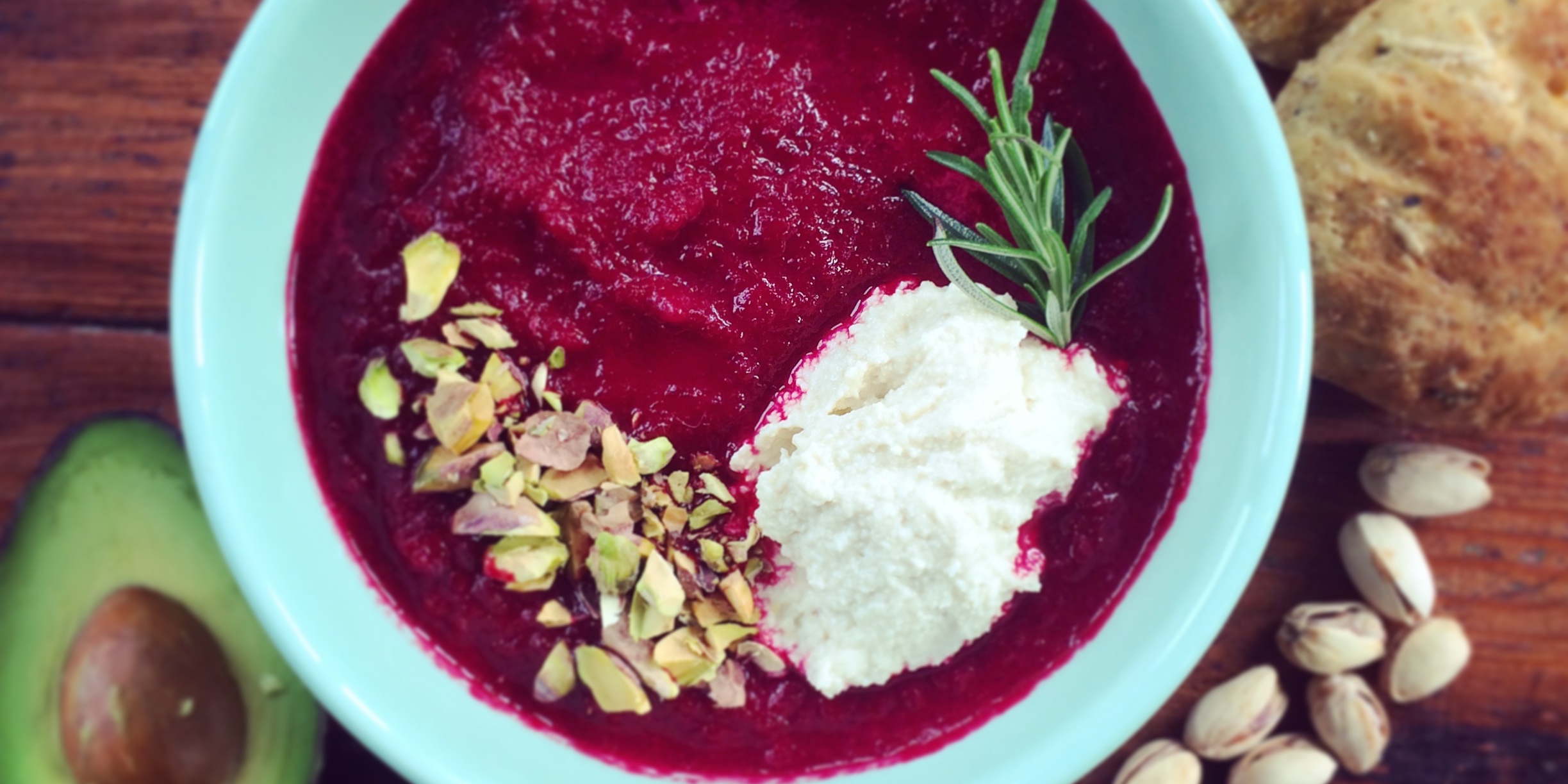
Oman keittoni päällä on rouhittuja pistaaseja, cashewtuorejuustoa ja tuoretta rosmariinia. Vieressä ihania pistaasi-porkkanasämpylöitä, kyllä kelpaa! Cashewtuorejuusto sopii keittojen lisäksi myös vallan mainiosti esimerkiksi leivän päälle, dipiksi vihannestikuille tai vedellä jatkettuna salaatinkastikkeeksi.

Raaka cashewtuorejuusto:

  • 2,5 dl cashewpähkinöitä
  • 2-3 rkl sitruunamehua
  • 2-3 rkl vettä
  • 3 rkl ravintohiivahiutaleita
  • 1/2 tl suolaa
  • 1/4 tl valkosipulijauhetta
  • 1/4 tl mustapippuria

Tee näin:

  1. Liota cashewpähkinöitä runsaassa vedessä vähintään kaksi tuntia. Valuta ja huuhtele pähkinät.
  2. Laita kaikki ainekset tehosekoittimeen ja soseuta, kunnes seos on tasaista. Voit lisätä seokseen vettä tarvittaessa.

Tutustu Ulrikaan - Herkkutrikoissa - facebookissa tai instagramissa!

Open post
Increased performance with mobility practice

Increased performance with mobility practice

11 marraskuuta 2015 | Av
Yogobe

Personal Trainer Matthew Griffiths explains why, and how everybody can benefit from an effective mobility practice. Learn more about mobility training, how it helps keeping a healthy and well functioning body as well as maximizing results and performance, here.


What is mobility?

The term mobility means the combination of full range of motion within each joint structure coupled with healthy soft tissue (muscles, tendons and fascia) that produces mobility. Erwan Le Corre the creator of MovNat clearly states that, “Mobility places you in optimal position”, which exactly works in accordance with the notion that form equals function. Mobility is the ability to get into a better position and move in such a way that you will be creating a stronger movement environment for your body and performance, whether you’re a runner, a tennis player or a person that just want a pain free functional body. 

There is no doubt that Form is Function, meaning the alignment of your body (form) will dictate how you perform (function). Mobility is an essential component to this formula because it dictates whether or not you can have correct form. It’s important to note that mobility is comprised of three factors, which are collectively represented by the degree of which one can accurately maintain proper alignment through a specific movement pattern. 

The Three components of Mobility:

  • Flexibility of the Soft Tissue
  • Range of Motion at the Joints
  • Neurological Coordination of Movement Patterns

Mobility is not your flexibility, mobility is the combination of flexibility of the soft tissue, the range of motion of every joint and the neuromuscular coordination involved in creating the specific movement. Problems can occur when someone misinterprets mobility as flexibility, as it implies the answer for addressing a lack of mobility is purely stretching, which is not the case as that solution neglects the associative neurological patterning and joint limitations within one’s movement.

In other words, stretching alone will not improve the way that you ‘create’ movement in a holistic sense because the flexibility of one’s soft tissue is only part of mobility. The other components that are essential to mobility are the range of motion at each joint and the neuromuscular coordination of every movement pattern, that ability to maintain strength at the end ranges of movement. To elaborate, a person may be ultra-flexible in certain positions, but still lack mobility when it comes to a specific movement pattern (another movement) because they may have limitations in the joint or not have the strength when the soft tissue is at full range.   

When one of the three components of mobility is compromised this can lead to an increased risk of injury and joint pain. If you remember that mobility is a combination of these three components and include them in your practice or training you will optimize your position and move more effortlessly.

Mindset

Although it is widely accepted that a powerful mindset can truly alter the outcome of a chosen task it is still under trained by the majority.  What happens in your mind during that important moment really sets the stage for whether you perform to the best or the worst of your ability.  I use these three mindsets, they have been particularly useful personally as well as in my work as a pro trainer. There are many variations that has been inspired from other mental training methods, but I find these to be logical and user friendly for many.

Booster
I think of the booster mindset as a way to be more proactive, assertive, and forceful, for example, when going for a risky shot in golf or tennis, or setting a fast pace in a marathon. This mindset is often needed for athletes to shift from a solid performance to exceptional performance because it allows them to take their performances to the next level, particularly for those who aren’t naturally proactive or assertive in how they perform. The Booster mindset can be developed in several ways.

First, you’re more likely to perform dynamic if your body is amped up a bit more than usual. You can raise your physical intensity with more movement during practice, in your pre-competitive routines, and just before you begin to compete. Simply moving more and being more dynamic in your movements will help you shift to a more powerful mindset. 

Second, you can use high-energy self-talk to instill that Booster mindset. Examples include: “I can do it, I will succeed".

Third, you can incorporate a booster mindset into mental imagery in which you see and feel yourself competing energetically which in turn helps in creating a more attacking thinking, focus, and feeling.

Calm
A calm mindset is typically good for those who can get nervous before game or a sense of doubt when performing a new drill. Your primary goal is to re-set your mindset and to settle down and relax, thus allowing your mind to let go of doubt and worry and your body to be free of nerves and tension. Additionally, a calm mindset can be valuable for many who are naturally very energetic.

A calm mindset can be created in several ways. First, it’s difficult to have a calm mind if your body is anxious, so focusing on relaxing your body is a good start. Deep breathing and muscle relaxation are two good tools you can use to calm your body.

Second, you can use mental imagery in which you see and feel yourself being calm before a competition. This imagery response has a direct physiologically relaxing effect on both your body and mind.

Third, calming and reassuring self-talk can ease your tension, for example, “Easy does it. Cool, calm, and collected." Relaxing self-talk can take the edge off of your nerves giving you the comfort and confidence to perform your best.

Clear
A clear mind involves having basically nothing related to performing going on in your mind before a big moment or game. This mindset is useful for those of us that might be cheerfully talking before a competition or speech, often smiling when talking to friends and coahces, dancing around, chatting it up, or singing to ourselves. These individuals can use a clear mindset because they have trained their bodies to an extent that they can trust it completely to perform their best without any interference from their minds.

A clear mind is most suited for individuals who are intuitive (meaning they don’t have to think about their sport very much to perform their best), free spirited (meaning they go with the flow rather than being really structured in their approach to their sport) and experienced (meaning they have a lot of confidence and trust in their capabilities from many years and successes).

Find the mindset that works best for you

You create a calm mindset by thinking about anything except your sport. Talking to others around you, thinking about someone or something that makes you feel good and listening to music in your head are some ways you can keep your mind clear, and thus preventing it from getting in the way of your body performing its best.

Training the mindset like any training or new practice requires several steps to instill and master. First, you have to experiment to figure out which mindset will work best for you. Second, you need to make a commitment to adopting an ideal mindset. Third, you must focus on your desired mindset in practice and competitions to create that mindset. And, finally, you need repetition in practice and competitions to ingrain your ideal mindset so deeply that, when you begin the most important competition of your life, that mindset just clicks on and it enables you to perform your very best.

Further reading

Mobility training online 

Yogobe Video: sv8k Yogobe Video: n3bd Yogobe Video: g42f Yogobe Video: sr57

About Matthew Griffiths

Matthew is an education provider and personal trainer within the fields of health and fitness. Matthew's work is focused on having every student develop their natural movement patterns.

To watch a full video you need to be logged in as a paying Yogobe member. Haven't tried Yogobe before? Try it for free during 14 days – get started here!


Open post
Hei kaikki Yogoben käyttäjät!

Hei kaikki Yogoben käyttäjät!

28 lokakuuta 2015 | Av
Yogobe
Olen Annette, Europe Activen auktorisoima kuntosalivalmentaja ja personal trainer. Viimevuonna vietin enemmänkin aikaa koulun penkillä ja opiskelin terveys- ja liikuntalääketieteiden perusopinnot sekä olen hakenut lisäosaamista Spartan Gearin kahvakuula-, bodyweight-trainer ja toiminnallisen harjoittelun koulutuksista. Joulukuussa syvennyn vielä toiminnallisen levytanko-harjoitteluun. Toimin tällä hetkellä yksilövalmentaja EasyFit Lauttasaaressa.


Olen hyvin kokematon Yogassa

Ensimmäinen muisto yoga tunnilta asettuu muutaman vuoden taakse. Ohjaaja oli varmasti hyvin pätevä, mutta kyseinen tunti oli nimenomaan sitä mitä minä olin pelännyt.  Olimme risti-istunnassa puolet tunnista jonka jälkeen teimme ilmeisestikin aurinkotervehdyksen ja kun ohjaaja ohjeisti meidät nousevaan koiraan aloin tuijottaa vain omia varpaitani. Minua alkoi naurattaa enkä siinä vilkkaassa vaiheessa ollut yksinkertaisesti valmis ohjaajan ohjaamaan hyvin rauhalliseen yogaan, vaan olisin tarvinnut jotain vaativampaa.
 

Sain viime kesänä erittäin positiivisen kokemuksen yogasta

Olen hyvin kiireinen ja ajauduttuani extempore Yin yogaan huomasin heti yhden tunnin jälkeen tuntevani oloni energisemmäksi.  Juteltuani edeltä mainitun tunnin ohjaajan kanssa minulle avautui täysin uusi tapa käsitellä yogaa. Kyse on erinomaisesta mahdollisuudesta hakea kiireen keskellä itselle aikaa sekä palauttaa kehoa stressistä tai esimerkiksi salitreenistä sekä antaa keholle systemaattista ärsykettä joka myös parataa elimistön suoritustasoa.  Ehkä kyse on kuitenkin tunteesta mitä ei oikeastaan voi selittää kunnolla. Jotta tämän voi ymmärtää jollain tasolla sanoisin omakohtaisen kokemuksen olevan hyvä keino kokeilla. Kaikesta ei tarvitse tykätä eikä pidäkään, mutta tuomitseminen ilman omakohtaista kokemusta on mielestäni suhteellisen uskaliasta. Minullakin oli tämän ensimmäisen yoga kokemuksen jälkeen vielä tiukemmat ennakkokäsitykset, mutta viime kesänä ne kariutuivat kaikki pois koska sain kokeilla mukavasti ohjattua Yin yogaa ja Air Yogaa, ja ymmärsin että yogaakin on montaa erilaista ja varmasti jokaiselle löytyy jotain itselle sopivaa.
 

Laadukasta yogaa kotona!

Ajatus mahdollisuudesta saada laadukasta yogaa kotona – tai missä tahansa on mieletön! Tein ensimmäisen Yogoben kaksi viikkoa sitten aamulla herättyäni ennen herätyskelloa. Koin alaselkäni vaativan jotain liikettä ja takareisissä tuntui kireyttä. Olin juuri herännyt enkä ollut halukas lähteä lenkillekään joten päätin kokeilla Yogobea. Hain valikosta yogaa alaselälle ja päädyin Timo Kurvin 30 minuutin sarja alaselän avaamiseen – videon pariin. Hän puhui siinä edellisestä videostaan jossa hän oli käsitellyt takareisiä, joten tein sen seuraavana päivänä. Tämä yhdistelmä toimi erittäin hyvin.
 
Tässä kuten muissakin, ei kannata tuomita koko lajia yhden kokemuksen perusteella vaan kannattaa kokeilla jotain toista vaihtoehtoa. Minkälaiset fiilikset muilla ensikertalaisilla on? Entä hiukan kokeneemmat yogaajat, oliko teillä samankaltaisia tuntemuksia ennen ensimmäisiä yoga-tuntejanne? 
 
Olen kirjoittamassa tänne hiukan tuntemuksia Yogasta 1-2 kertaa kuukaudessa. Kerron mitä videoita olen katsonut ja huomaanko omassa olotilassani mitään uutta.
 
Ihanaa viikonaloitusta teille!
 
Annette
 
Annetten videosuositukset:
 
Open post
Ruokaisa Ohrasalaatti

Ruokaisa Ohrasalaatti

28 lokakuuta 2015 | Av
Yogobe
On varmaan sanomattakin selvää, että rakastan kokkaamista. Tarjosin sukulaisilleni ison vegaanisen illallisen muutama viikko takaperin. Perheessäni ei juuri tiedetä mitä vegaaninen ruoka on, joten rajoja (ja stereotypioita) rikkoakseni keittelin laajan valikoiman erilaisia herkkuja. Suurimman suosion sai tämä salaatti, jonka reseptiä päädyin jakamaan illan päätteeksi.
 

Ohrasalaatista saa helposti gluteenittoman vaihtamalla ohran riisiin tai kvinoaan. Salaatti toimii mainiosti lisukkeena esimerkiksi falafeleille, osana buffet-pöytää, tai vaikkapa lounaana tomaatin ja avokadon kanssa. 
 
Huomioithan, että reseptistä tulee todella isokokoinen salaatti! Mikäli olet kokkaamassa 2-4 henkilölle, suosittelen tekemään huomattavasti pienemmän annoksen, esimerkiksi kolmasosan ohjeesta. Mikäli salaattia jää yli, sitä voi myös pakastaa. Pakastettu salaatti muuttaa hieman koostumustaan (sienet ja pinaatti), joten suosittelen lämmittämään sen esimerkiksi pannulla ennen tarjoilua.
 

Ohrasalaatti:

  • 2,5 dl ohrasuurimoita (mittaa kuivana)
  • 7,5 dl tuoretta pinaattia
  • 200-250 g tuoreita sieniä viipaloituna tai paloiteltuna
  • 1,25 dl rouhittuja saksanpähkinöitä
  • 1 sipuli, pieneksi paloiteltuna​

Kastike:

  • 1/2 dl balsamiviinietikkaa

  • 1/2 dl oliiviöljyä

  • 2 rkl hienonnettua valkosipulia

  • 2 rkl Dijon-sinappia (valitse mieto sinappi!)

  • 2 rkl sitruunamehua

  • 1 rkl vaahterasiirappia

Kypsennä ohra ja anna sen jäähtyä. Sekoita salaatinkastikkeen ainekset pienessä kulhossa. Hämmennä jäähtynyt ohra, pinaatti, sienet, sipuli ja saksanpähkinät. Lisää kastike ja nauti! 

/ Ulrika Lillsunde

Tutustu Ulrikaan facebookissa tai instagramissa!

Open post
Makea Kurpitsasosekeitto

Makea Kurpitsasosekeitto

22 lokakuuta 2015 | Av
Instructor
Olen pääasiassa raakaruokailija. Rakastan smoothieita ja kylmiä ruokia sekä ennen kaikkea rouskuvia salaatteja. Ilmojen viiletessä kehoni kaipaa jotain lämmintä. Vastaan kaipaukseen tekemällä vähintään kerran viikossa jonkin herkullisen sosekeiton. Sosekeitot ovat yleisesti ottaen erittäin helppoja ja nopeita kokata. Vaihtelua makuun ja väriin saat käyttämällä erivärisiä sesonkikasviksi.


Suosin ruoanlaitossa kotimaisia kasviksia ja hedelmiä. Useammassa suuressa kaupassa on jo esillä ns. satokausitiski, josta löytää helposti ja edullisesti valikoiman kotimaisia sesonkituotteita. Kotonamme tuota tiskiä kutsutaan nimellä "heräteostostaivas", sillä jokaisella kauppareissulla satokausitiskiltä tarttuu mukaan jotain ihanaa! Tällä viikolla löysin tiskiltä Hokkaidokurpitsoja, jotka päätyivät kauniin väriseen sosekeittoon.
 

Makea kurpitsasosekeitto

(3-4 annosta)
 
  • 1 Hokkaidokurpitsa (paino noin 2 kg)
  • 1 sipuli
  • 2 valkosipulinkynttä
  • 2 rkl oliiviöljyä
  • 7 dl kasvislientä
  • 1 prk (250 ml) kookosmaitoa
  • 1-2 rkl vaahterasiirappia
  • ripaus kanelia
  • (suolaa ja pippuria)
 
  1. Kuumenna oliiviöljy kattilassa ja kuullota siinä pilkottu ja kuorittu sipuli ja valkosipuli. Lisää sekaan kurpitsanpalaset ja anna seoksen paistua öljyssä muutaman minuutin ajan, koko ajan sekoitellen. Peitä kasvikset kasvisliemellä (noin 7 dl) ja anna kiehua, kunnes kurpitsat ova kypsiä. Kypsymisaika riippuu täysin siitä, miten pieneksi olet pilkkonut kurpitsat; jos haluat pikaruokaa, voit jop
  2. Halkaise kurpitsa ja koverra sen siemenet isoon kulhoon. Kuori ja pilko kurpitsanpuolikkaat.
  3. a raastaa kurpitsanpuolikkaat, jolloin ne kypsyvät erittäin nopeasti.
  4. Soseuta keitto sauvasekoittimella. Lisää kookosmaito, vaahterasiirappi ja mausta kanelilla. Tarkista maku ja lisää tarvittaessa suolaa ja pippuria.
Tarjoile esimerkiksi lehtikaalisipsien, auringonkukansiementen ja vastaleivottujen sämpylöiden kanssa.
 
Vaihtoehtoisesti voit myös paahtaa kurpitsat, jolloin saat keittoon syvemmän ja voimakkaamman maun. 
 
  1. Halkaise kurpitsa ja poista siemenet. Aseta kurpitsanpuolikkaat halkaistu puoli alaspäin uunipellille ja paahda 200 asteessa kunnes kurpitsat ovat kypsiä (noin 30 minuuttia). Kurpitsan kuoret pehmenevät ja rypistyvät hieman kurpitsan ollessa kypsää. Kuori kurpitsanpuolikkaat (kuori irtoaa kypsästä kurpitsasta helposti) ja pilko ne hieman pienemmäksi, jotta saat kurpitsat mahtumaan kattilaan muiden kasvisten kanssa.
  2. Paahdettuja kurpitsoja voi myös pakastaa palasina tai soseena sopivan kokoisissa annosrasioissa. Voit käyttää maustamatonta kurpitsasosetta piirakoihin, keittoihin, kastikkeisiin, erilaisiin tahnoihin tai vaikkapa sämpylätaikinan pohjaan.

Hyvää ruokahalua!
Ulrika Lillsunde

Tutustu Ulrikaan facebookissa tai instagramissa!

Open post
5 syytä miksi olen acrojogini!

5 syytä miksi olen acrojogini!

22 lokakuuta 2015 | Av
Yogobe

Tällä listalla olevat kohdat ovat kaikki samanarvoisia ja jakavat yhdessä ykkössijan.


Kontakti
Fyysinen kosketus. Se kun on kokonaan siinä, koko kehollaan ja painollaan kannattelemassa toista ihmistä. Ja toisinpäin: se kun antaa jonkun kannatella itseään. Haaste näissä tekee harjoituksesta fyysisen lisäksi psyykkisen. On tärkeää uskaltaa luottaa henkilöön jonka kanssa harjoittelee.

Kommunikaatio
Acroyoga kutsuu kommunikoimaan verbaalisesti, mutta myös opettelemaan herkkyyttä huomata muutoksia parin hengityksessä, lihaskireyksissä tai vaikka ihon värissä. Toisen kanssa joogaamalla olen oppinut kommunikoimaan paremmin ilman sanoja. On olemassa paljon sellaista kuunneltavaa ja kuultavaa jota ei koskaan sanota ääneen.

Läsnäolo
Kun harjoittelen yhdessä toisen ihmisen kanssa ja jokin stuntti on meneillään, on mahdotonta, jopa vaarallista, jollei ole läsnä hetkessä. Acroyogassa on suurempi riski loukkaantumiseen jos vertaa vaikka hathajoogaharjoitteluun, jossa keskittyminen tai sen puute ei ole suurikaan riski minulle tai muille. Acroyoga on siksi haastavaa ja vaatii tietoista ja keskittynyttä liikkumista.

Itseilmaisu
Muotojen, joogan, akrobatian sekä kahden kehon yhdistämisen rajattomissa mahdollisuuksissa voi käyttää valtavasti luovuutta. Minusta on mielenkiintoista ja kaunista oppia näkemään mitä tapahtuu, jos siirrän painoa hieman puolelta toiselle tai jos kurotan hieman enemmän johonkin suuntaan.

Ilo
Se on hauskaa!

Acroyoga sisältää paljon sielua hyväilevää naurua.

/ Milla Floryd

Videosuosituksia:
​Mitä on acroyoga? - Timo Kurvi
Front bird - perustekniikka acroyogassa - Timo Kurvi
Folded leaf - perusteet, terapeuttinen acroyoga asento - Timo Kurvi
High flying whale - terapeuttinen taaksetaivutus - Timo Kurv

Open post

Search

Categories