Do you also want access to our video library?

  • 2500 videos
  • No binding period
  • Free trial

Welcome to our blog

Yoga, training and health inspiration for you

blog post thumbnail

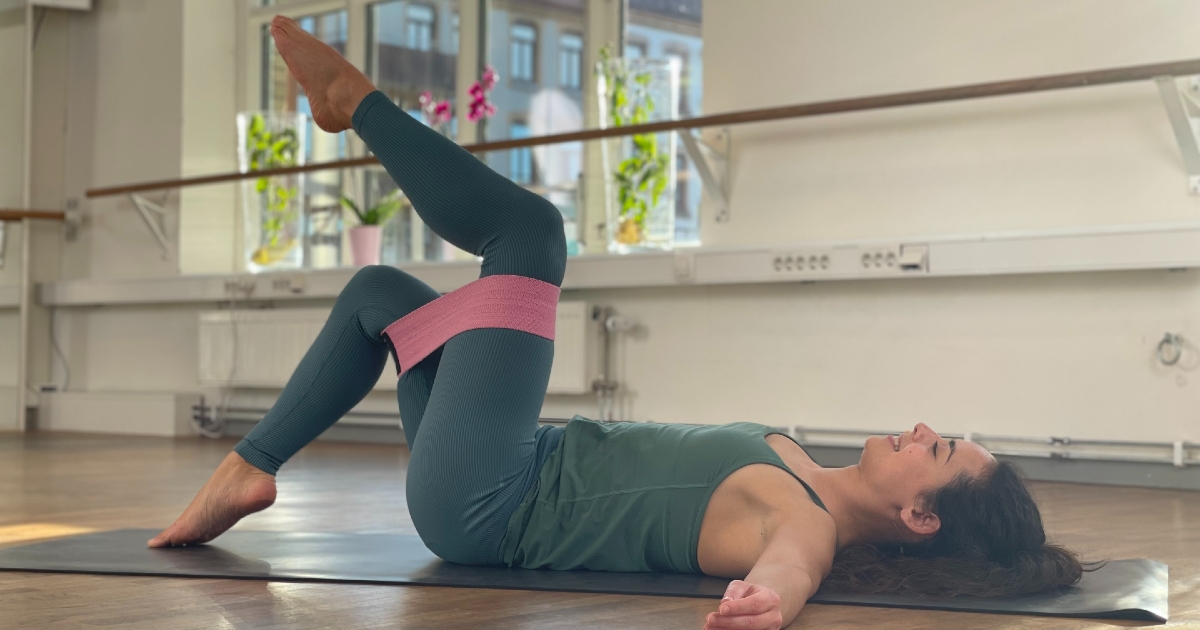
5 Benefits of Pilates – A Fitness Approach for Your Body and Mind

30 tammikuuta 2024 | Av

Pilates can help you strengthen your body, with quick results, and also strengthen the mind and body connection. In this post I give you five reasons to start practicing Pilates.

Pilates – Tones Your Body and Provides Mental and Physical Benefits

I’ve worked and practiced Pilates for over a decade now. When I began my practice, I noticed the result almost immediately. With consistent practice Pilates has provided me with a strong body from the inside out that moves with ease. I’ve gained more confidence and a deeper interest in all activies that strengthen the mind and body connection!

Practicing Pilates offers a comprehensive workout that tones your body and provides mental and physical benefits. Here are five reasons why I think Pilates can make a significant difference to your workout routine:

5 Reasons Why You Should Do Pilates

  • Core Strength: Pilates focuses on deep abdominal and core muscles, giving you a strong foundation for overall stability. Strengthening these muscles enhances balance and leaves you feeling more powerful.
  • Flexibility: Pilates is a full-body workout that boosts flexibility and increases your range of motion. By stretching and lengthening muscles, it makes you more agile and less prone to injuries. Because of this I highly recommend incorporating Pilates with any other type of workout regimen!
  • Mind-Body Connection: Beyond physical exercise, Pilates is a mindful practice. Controlled movements and conscious breathing create a connection between mind and body, reducing stress and promoting overall well-being.
  • All-Inclusive: Suitable for all fitness levels, Pilates can be adapted to individual needs. It's gentle on the joints yet challenging enough for both fitness enthusiasts and beginners. All you need is a mat, and you're good to go!
  • Results: Consistency with Pilates brings results – expect improved posture, increased muscle tone, and enhanced overall strength. Pilates sculpts and defines your body without heavy weights or intense workouts.

Pilates is more than a workout; it's a fitness approach for your body and mind. Roll out that mat and start a journey towards a stronger, more flexible, and harmonious you. Your body will thank you!

Happy training,
Emma

Exercises Online – Pilates with Emma Cowan

Do you want to try out Pilates? Here you'll find selected classes and playlists. You will find all our Pilates classes, in both Swedish and English, in the audio and video library.

Yogobe Video: 4ec3 Yogobe Video: 9rw2 Yogobe Video: x67e Yogobe Video: 62ch

To watch a full video you need to be logged in as a paying Yogobe member. Haven't tried Yogobe before? Try it for free during 14 days – get started here!

Further reading

Open post
blog post thumbnail

Meditation as a tool for improving mental health

13 marraskuuta 2022 | Av
Anna-Mari Pentikäinen

Do you know that mindfulness and meditation can have positive effects on our mental health? And that we can alter our mood with meditation? Meditation also teaches us something profound that can be very transformative and shift our way of being.

Coping with life's ups and downs through mindfulness

In the news, we hear about global pandemics, conflicts, environmental crises and wars. The stories we read or hear on the news feed our minds with fear and anxiety and we wander away by stressing about the future or dwelling in the past. It’s only human. Yet it's also an evolutionary fact that we tend to focus on the possible threats rather than what’s good and pleasurable in our lives.

We can’t run away from adversity but we can learn to adjust to it by practicing mindfulness and meditation. I experienced this strongly during the hardships of last summer when I had a miscarriage and my partner got a cancer diagnosis.

Mindfulness – the art of observing

Research shows that people are the happiest when they live in the moment. Jon Kabat-Zinn (the founder of Mindfulness-Based Stress Reduction) describes mindfulness as awareness that arises through purposefully paid attention to the present moment, without any judgement.

According to the University of California–Berkeley mindfulness is “maintaining a moment-by-moment awareness of our thoughts, feelings, bodily sensations, and surrounding environment.”

In my experience, the thought of a threat is often more painful than the threat itself. Even in the midst of a health crisis or grieving and loss, when we mindfully bring our awareness to this very moment – which can happen by simply observing our natural breath – we can bring a sense of safety, roundedness and stability into the now, no matter what we're experiencing in our inner landscape or what the outer circumstances are.

Meditation and mental health

Researchers have also found a link between mental health and wellbeing and mindfulness practices like meditation. Studies show that mindfulness and meditation can improve our mental health and that even the people who are not naturally mindful can acquire these benefits through cultivating meditation and mindfulness.

Studies also prove that mindfulness practices, such as meditation, improve attentiveness, emotional stability, compassion, social skills and happiness, even in the face of adversity.

When I talk about meditation I don't mean only sitting meditation but also movement meditation or yin yoga done in meditative way. Explore different meditation techniques and choose the meditation style that resonates with you.

The mental health benefits of meditation

  • Develop emotion regulation skills: According to many studies, meditation can develop our emotion regulation skills. Emotion regulation means recognizing, understanding, labeling, expressing and regulating our emotions. These skills develop naturally but studies show that we can improve them by practicing mindfulness and meditation.
  • We can tame negative feelings: Researchers from Michigan State University have found neural evidence that mindfulness helps to control negative feelings.
  • Become calmer: Meditation helps us to stay centered and keep our inner peace and calmness – despite the external circumstances.
  • Be aware of what we think and do: Meditation helps us to notice and change harmful thinking and behavioral patterns.
  • More positivity and happiness: We can linger in the positive and empowering feelings and emotions with meditation and through that, bring more happiness, hope and meaning into our lives.
  • Nothing lasts forever: Last but not least, in my experience the most transformational effect of regular meditation practice – it helps us realize that we are not our social roles, age, feelings, emotions, thoughts or actions. All emotions and thoughts are fleeting, even the most difficult ones. Nothing lasts forever.

In short, we can say that mindfulness and meditation can improve our mental health and that emotional skills are also part of mental health skills.

When we dedicate time to meditation we improve our wellbeing and mental health. In my experience, even 10 minutes of meditation each day can help us to create a significant change to the tone of the day – no matter where you are and what you are going through.

Practical tips for meditation

  • Invite an attitude of curiosity. It will help you to sustain your meditation practice when your mind is busy, restless or frustrated.
  • Try Metta ”Loving Kindness” meditation to change your negative self–talk. It’s one of my favorites and is suitable for anyone.
  • Try mantra meditation to create stability and inner safety. There's a lot of transformational power in words.  Repeat "I am safe" mantra silently to yourself for 5–10 minutes whenever you feel anxious or worried. Imagine that the words are like honey drops melting into your heart space and softening it.
  • Explore our online video library and find your favorite style of meditation. Try this playlist to get started.

Further readings about meditation

Meditate with Anna-Mari & others

In the library you can find:

Yogobe Video: z49f Yogobe Video: 3e8f Yogobe Video: f93a Yogobe Video: r79g

To see a whole video you need to be logged in as a paying Yogobe member. Haven't tried Yogobe before? Try it for free for 14 days – click here to get started right away!

Up-coming yoga retreats with Anna-Mari

Sources: 

Open post
blog post thumbnail

Yoga from a scientific perspective – for a sustainable body, mind, and community

06 syyskuuta 2022 | Av

How can yoga help us to find our way towards restful states and to move our bodies? I will tell you more about yoga’s benefits and what the research says.

Pockets of time where we can catch our breath

Whatever happened to margins, air in the schedule, and our perspectives on tempo? In our modern society, in the chase for efficiency and performance, we quite often find ourselves with packed schedules ready to burst. We seem to somehow have removed the margins, those pockets of time where we can catch our breath and relax. Not only have we built away moments for doing ‘nothing’, moments of physical movement also seem to have gotten lost.

The question I will address here is, how can yoga help us to find our way towards restful states and to move our bodies? I will tell you more about yoga’s benefits and what the research says.

Yoga as a support for physical and mental health (challenges)

Yoga is unique. It is unique in the way that it contains both movement and rest, two things that many of us lack today. This is true from us as individuals, bur also for our society. We have built away getting between places through movement, we have built away the margins in our schedules that would have given us recovery. To mention a few.

Although our health has generally improved over the past 100 years, with increased life expectancy and fewer deaths and infectious diseases, we face other problems. Challenges we face are all the years that we live but with reduced health and function. Today, it is (too) common to be struggling with mental illness such as depression, stress and fatigue, pain e.g. It is easy to think that it does not concern you or me, but most likely you will have already experienced something of the mentioned yourself, or have had someone close to you who has. When challenges like this hit you or your loved ones, it can be very helpful to have wellness and coping strategies at hand.

Fortunately, I think we as communities are starting to realize that many are facing these challenges, and we now know that we can do something about it. But then, what can we do? Yoga might be the answer.

What is yoga?

In order to be able to answer what yoga ’works for’, let's for a moment concretize what we mean by yoga. Even though yoga can take many shapes and forms, within the (medical) scientific landscape, yoga can be described, mainly, as having the following four components:

  • Low-intensity form of physical activity
  • Relaxation
  • Breath
  • Meditation

When researchers investigate the reason why we engage in yoga, it is mainly two reasons that come up:

  • For wellbeing and to prevent ill-health.
  • To take care of pre-existing health problems such as depression, exhaustion, pain, and anxiety.

Reserach shows effects from breathing exercises and meditation

  • When you have two minutes to spare:
    Some researchers investigated the effect of slow breathing on a group of yoga beginners. By breathing slowly for two minutes, both blood pressure and the experience of anxiety were lowered. The likely mechanism behind the effect is increased activation of the calming part of the nervous system. Exciting news, as a large percentage of us walk around with high blood pressure, much due to our lifestyles with a lack of physical activity and stress management.
  • When you want to sleep better:
    The hours of sleep in the day are your most important restorer. The hormone melatonin is an important regulator in the body to stimulate sleep. Some researchers, therefore, wanted to investigate melatonin levels in connection with meditation. A small group of experienced meditators meditated with different techniques, one group meditated for 30 minutes with one technique and another for 60 minutes with another. The meditation took place at midnight just before melatonin levels are at their peak. Blood samples were taken once an hour to measure levels, between 10 pm and 2 am. Another night the same things were measured but without the meditation to check for any differences in levels. Both groups got increased levels of melatonin the night they meditated. The researchers, therefore, theorized about how this effect can positively affect sleep. Most likely, meditation can be practiced at any time of the day, depending on the effect you want to achieve. So you don't necessarily have to meditate in the morning, or at midnight.

The effects of yoga compared to other physical activity

The calmer components of yoga can thus have a positive effect on things that have a strong connection to our health. However, most research that has been done on yoga involves yoga's physical activity components of some kind.

So how does yoga compare to other physical activity? This is something that is currently being researched intensively. As an example, one of the largest studies conducted on mild and moderate depression was conducted in Sweden, where several hundred participants took part. Three training groups (yoga, and two other cardio training groups) performed their training three times a week for 60 minutes, for a total of 12 weeks. That study showed that yoga produced the same effect as moderate- and high-intensity cardio exercise on lowering the level of depression, in particular compared to usual treatment.

In summary, yoga reminds us to move the body we were given and it can make us aware of how it feels at the moment. Yoga also reminds us to slow down, and pace the outer tempo with our inner tempo.

Yoga in the future

Change is inevitable, but which direction change takes can often be influenced by the actions we and our communities choose to take.

I believe that we have to start to rethink how we construct our schedules in the present moment, and for the future. In politics, at workplaces, at schools, in our residential areas, and at home. Building sustainable practices and communities means bringing back the margins and pockets of space in our schedules to do nothing, as well as for opportunities to move and relax. To create opportunities for yoga. As individuals, we must show that we want change through the choices we make on a daily basis. We must be the role models we want others to be for us. For ourselves, but above all, for others. It is something we can do together. Every small change matter, because it accumulates into something bigger. Our vision about the future begins right now, in this exact moment, through action. I guess next question is: what will your next step be?

Foto: Malin Wittig, copywright Bonnier Fakta (top image)

Playlists and more to read about science and yoga

Videos to get you started

Yogobe Video: 4gu3 Yogobe Video: ax64 Yogobe Video: 9uh4 Yogobe Video: d72r Yogobe Video: pf54 Yogobe Video: s6k9

To see a whole video you need to be logged in to Yogobe, as well as a paying member. First time here? Try our subscription service – free of charge for 14 days! 

Refereces:

Open post
blog post thumbnail

Integrating healthy, creative and wholesome eating into your daily life

21 elokuuta 2022 | Av

How do we sustain inspired and healthy cooking and eating in daily life? It’s not always easy! In this blog post, I'll give you tips and inspiration for healthy, creative, and wholesome eating.

Cooking to let go of the day

Sometimes for me, it helps to see cooking not just as something that needs to be done, but rather as a way to unwind. A moment to let go of the day. Especially when I sat behind the computer for a long time or when I had many meetings with people, cooking could be a beautiful way to calm down. It’s a way to work with all my senses and to be in the moment, enjoying the smells, colors, and warmth.

It requires a little mind shift, but it can really bring a more calm and more enjoyable quality to cooking, especially on busy days. Of course, it helps when we have some practical pillars that can help support this.

Tips for healthy, creative and wholesome everyday eating 

  • A good mix of easy and more challenging, creative recipes.
    It’s good to have a whole bunch of easy and fast recipes for daily life, that take under 30-minutes of preparing time. These are the go-to meals on a daily basis: think of vegetable soups, salads with good grains and nuts in them, a simple curry or Indian dal with lentils. We can save the more challenging or time-consuming recipes for weekends and special occasions. You can make the daily recipes more festive by adding some easy but wonderful toppings, like sunflower seeds, sesame, dried cranberries, nuts or fresh herbs.
  • Have easy healthy and yummy ingredients and snacks always available.
    Some of my favorite go-to ingredients for easy and good eating, are: canned butterbeans, dried fruits, frozen tempeh by Bärta, hazelnuts and walnuts, frozen green peas, apples, cucumbers, red paprikas, baby spinach and other lettuce, good olive oil. The great thing about many of these ingredients, is that all you have to do is to combine them on a plate, and you are ready to go.
  • Make extra’s!
    While you are making a soup, a curry or a salad, just make extra! Then you immediately have a good lunch (or another evening meal) for the next day.
  • Food excursions!
    Make the Farmer’s Market, visiting a local farm or buying at REKO-ring (regional networks and markets for local farms) part of a fun (bi-)weekly excursion. This way, you can combine exploring local, healthy and seasonal ingredients, with a nice day out with family or friends.

Photo: Sara Vitale

  • Foraging and walks in nature.
    I have a puppy that needs to go on a daily walk. Since I am out every day, I have discovered the amazing amount of edible plants that grow in the Swedish countryside. Not only is it really fun to pick wild plants for eating, it is also very tasty and healthy! So if you love nature walks, I would highly recommend studying edible wild plants, such as berries, herbs, mushrooms, leaves and flowers. Some of my favorites are wild pea (gökärt), sorrel (ängssyra), lingonberries, pine sprouts (granskott), ramson (ramslök), parasol mushroom (stolt fjällskivling), lilac (syren) and dandelion (maskros).
  • Grow your own!
    For those of you who love to also work with plants, you can grow your own food! Why only grow decorative plants? There are so many plants that are both beautiful and edible. Only have a window to grow in? Then go for sprouts and herbs. Especially sprouts of mung beans, lentils, and yellow peas are east to grow. If you have a garden, the sky is the limit (and the climate ;)). Lazy gardener? Go for berry bushes, fruit trees, rhubarb and edible weeds. These take care of themselves.
  • And… last but not least: Be kind and patient.
    It’s not easy to change eating habits! It takes time to find new ways, discover what works for you. And sometimes that frozen pizza is the best option for you that day. Don’t be discouraged when you don’t get it right every time. You’re on a journey, enjoy the ride!

Recipe – easy, tasty and healthy 

The recipe of the month is one of my favorite and easiest recipes to go to:
Creamy tomato soup with lemongrass and lime leaves! So easy and yet so tasty, as well as delicious. Guaranteed within 30 minutes on the table!

Mundekullas Gröna Kök – want to buy Stephanie's book?

Mundekullas Gröna Kök won the Gourmand Cookbook Awards 2021 for Best Vegetarian Cookbook in Sweden and Best Hotel Cookbook in the World. The book features more than 70 vegan and vegetarian recipes and 10 chapters on playing with flavors and textures, how to design and plant-based meal or buffet, the love for cooking farm-to-table. Buy the book here.

Read more: Inspiration & recipes from Stephanie Verstift

Videos for creativity and healthy living

Yogobe Video: 97se Yogobe Video: z47a Yogobe Video: dh52 Yogobe Video: 4c9t

To watch a full video you need to be logged in as a paying Yogobe member. Haven't tried Yogobe before? Try it for free during 14 days – get started here!

Mundekulla retreat center

Mundekulla is an ecological course and retreat center in the Småland countryside. At Mundekulla, people meet for courses, conferences and festivals, focusing on personal development, mindfulness, creativity, nature and of course beautiful nutritious food! Since its start over 20 years ago, the center has been built on sustainable principles. With traditional building methods and green energy, as well as with a focus on social justice and promoting various peace projects. The whole idea with Mundekulla is to create and co-create learning, art, music, community and health. The best thing is all the wonderful, meaningful encounters with other people. That's the core. Find out more at mundekulla.se

Photographer: Sara Vitale

Open post
blog post thumbnail

What is trauma yoga?

03 elokuuta 2022 | Av
Yogobe

Do you want to learn how yoga can help you with trauma and PTSD? Read more here!

What is a trauma?

It is an extraordinarily stressful event that often involves a threat to life or safety, but it can also be caused by situations that left you feeling overwhelmed and isolated, even if it doesn't involve physical harm.

That means that it is not the objective circumstances that determine whether an event is traumatic, but your subjective emotional experience of the event.

Trauma can affect your body in different ways

  • upsetting emotions
  • memories or memory loss
  • anxiety that won't go away
  • problem with sleep
  • tired vs. hypervigilance
  • feeling numb
  • disconnected
  • difficulty trusting other people

Yoga as a support while healing from PTSD

There are studies that show yoga as a more effective treatment for PTSD and trauma than traditional medicine. 

Even if the experience is individual, you see common denominators where unresolved traumatic stress affects the autonomic nervous system and our ability to handle stress. It changes the chemistry and structure of the brain by triggering hormonal changes, increasing the production of adrenaline and cortisol, and reducing neurotransmitters and hormones that make us feel safe and happy. This is where you can go through stages of feeling trapped in your own stressed body. While doing yoga there is a process going on that will help you reown your body, according to psychiatrist Bessel van der Kolk. Trauma-informed yoga is an evidenced-based yoga practice that can support people who are suffering from triggers caused by traumatic stress.

“At some point, the story often becomes an alibi. Many traumatized people, tell the same story over and over again. Instead of feeling things very deeply, they go through a recital of misery, which is not the same thing as psychotherapy.” – Bessel van der Kolk.

Trauma-informed yoga online – program in Swedish & English

Yogobe has together with our yoga teachers Heather Mason and Josefin Wikström, created a 6-week program to help you learn more about trauma and PTSD, and how trauma-informed yoga can support you with your trauma reactions in your everyday life.

Who is this program for?
For anyone who has gone through a trauma and is now experiencing PTSD (Post-traumatic Stress Disorder) symptoms, even if you have not yet been diagnosed but recognize a lot of the symptoms within you.

You can also find a 9-week trauma-informed yoga program in Swedish with Josefin Wikström and Eleonora Ramsby Herrera.

Read more about PTSD and trauma

Classes & lectures online – trauma-informed yoga

See all classes and lectures in our library: Trauma-informed yoga

Yogobe Video: 6px9 Yogobe Video: 3e8f Yogobe Video: p3k5 Yogobe Video: 72wr

To see a whole video you need to be logged in as a paying member. If you are new to Yogobe, try for free for 14 days – get started straight away

References:

Open post
blog post thumbnail

Back to Basics – How to eat sustainable, plant-based and delicious?

24 toukokuuta 2022 | Av

Curious about healthy, sustainable and plant-based foods? Let me guide you through the basics of healthy and sustainable food and give you my best tips for cooking tasty, and healthy, food!

Inspiration to healthy eating

Many of us love to live a life that feels healthy and balanced, with care for ourselves and the environment. That is joyful, inspiring and nourishing to our wellbeing. Food can be such a beautiful way to work with all of that, and at the same time it can sometimes feel challenging too! May this blog series, where you'll get recipes and learn more, be an inspiring contribution to your personal journey and exploration. Whether you are new or seasoned on this topic.

Food that help you to a sustainable and healthy life

What to eat? How to cook for ourselves and others? How to make sure you’re getting all the nutrition you need? For me, when I first started cooking vegetarian and vegan, a whole world of possibilities opened up. While I expected to feel restricted by a more plant-based kitchen, it rather felt like the opposite: it was a doorway to a whole new world of ingredients, flavors and ways of cooking. Did I mess up sometimes during my experiments? Sure! And still do occasionally. Did I discover delicious and sustainable jewels along the way? Oh yes! Majority of the time. Before we dive into more in-depth topics, let’s start with some basics.

Healthy and sustainable foods

  • Plant-based meals: Whether you choose vegetarian or vegan, eating more plant-based meals is good for our bodies and for the environment. Filled with minerals, fibers and vitamins.
  • Organic ingredients: Grown on healthy land and soil, with limited or no use of pesticides, artificial fertilizers or genetic modification.
  • Local and seasonal produce: Working with local and seasonal produce is a great way to reduce transport emissions, support local farmers and eat in line with the season.
  • Fair trade: Products that are made with dignity and a better income for the people who produce them. Especially important in certain sectors like cacao, coffee, banana, etc.
  • Ecological products: Ecological products can include being organic, however ecological points more towards how the products are produced, processed, and packaged. For example, with recyclable packaging, green energy, no waste policies, and so on.

Photographer: Elaine Lilje


5 tips for creating nourishing and delicious plant-based meals

  • Get the full picture.
    For a healthy plant-based meal, look at the full picture of all ingredients. I usually like to take the raw food pyramid as a base (also for cooked foods): Vegetables and greens as the base, grains or starches as the next level, followed by proteins. Then fats and herbs and spices in the top. Don’t forget those healthy fats! They also play an important role. You could think of seeds, avocado or extra virgin olive oil.
  • Become friends with plant-based proteins.
    Proteins are important building blocks for our body, and they help us to feel satisfied and full after a meal. Good protein sources are legumes such as beans, lentils and peas. You can also use nuts, almond and seeds. sprouts, tofu, tempeh and quinoa. If you eat vegetarian foods, you can add eggs, thick yogurt and cheese to the list. With ‘becoming friends’ with your ingredients you’ll know better how the ingredient responds, what other ingredients they like and what brings out the best in them.
  • Experiment!
    Many of the plant-based proteins are either dried or frozen, and therefore easy to store and use when you feel inspired or when you need them. What happens if you use the ingredients a little differently than before? White beans to make a humus? Tofu in a creamy tomato sauce?
  • Discover the wonders of umami.
    Umami is considered the fifth base flavor in the Japanese kitchen and i s often associated with meat, however, there are many ways to bring umami into a plant-based meal. Through ingredients such as fermented vegetables like sauerkraut or kimchi, soy sauce, sun-dried tomato, mushrooms, miso, smoked paprika. But also through cooking techniques like smoking, grilling or making pickles. At best, umami is subtle and well-balanced. It should be used in moderation, same as with a good perfume.
  • Be prepared to eat a fantastic meal and also be prepared to fail!
    I love to think up new ideas in my head and then see how they work out in the kitchen. Whether it turned out delicious or not, I learned just as much! A bit of laughter, compassion and curiosity are some of the best ingredients.

Recipes & inspiration

I wish you beautiful cooking! In the blog her at Yogobe you'll also find one of my favorite recipes for early spring: Lukewarm Gnocchi with broccoli, spinach, radish and tarragon. The next part of the series is coming in June – stay tuned!

Book (in Swedish) – Mundekullas Gröna Kök

Mundekullas Gröna Kök won the Gourmand Cookbook Awards 2021 for Best Vegetarian Cookbook in Sweden and Best Hotel Cookbook in the World. The book features more than 70 vegan and vegetarian recipes and has 10 chapters on playing with flavors and textures, how to design and plant-based meal or buffet, the love for cooking farm-to-table.

In May, you find a great price for the book – buy it here

You can also follow my kitchen adventures on Instagram: @stephanie.verstift

Photographer: Elaine Lilje

Mundekulla – what kind of place is that?

Mundekulla is an ecological course and retreat center in the Småland countryside, in Sweden. At Mundekulla, people meet for courses, conferences and festivals, focusing on personal development, mindfulness, creativity, nature and of course beautiful nutritious food!

Since its start over 20 years ago, the center has been built on sustainable principles. With traditional building methods and green energy, as well as with a focus on social justice and promoting various peace projects. The whole idea with Mundekulla is to create and co-create learning, art, music, community and health. The best thing is all the wonderful, meaningful encounters with other people. That's the core.

Read more at: mundekulla.se

Meditations to appreciate the food even more

Yogobe Video: rk75 Yogobe Video: t6k8 Yogobe Video: f85c Yogobe Video: 4s5p

To watch a full video you need to be logged in as a paying Yogobe member. Haven't tried Yogobe before? Try it for free during 14 days – get started here!

Photographer: Elaine Lilje

Open post
blog post thumbnail

How to build your endurance

29 tammikuuta 2022 | Av

What exactly is endurance and what does it mean for your body? Endurance and cardio training are connected to different systems in the body, and we train them in different ways – keep up when I sort out the concepts!

The difference between cardio and endurance

Many people think that endurance and condition are the same but this is not true, you also train them in different ways. Endurance is tied to the nervous system and muscles, while cardio training is primarily tied to the heart. A combination of both of them is fantastic for the body – being enduring and having good condition makes you both fast and enduring/tough.

Endurance training is often specific, when for example a cyclist needs to train endurance, they must train close to the branch – ie cycling. So to be persistent in an area, you need to train in the area where the right muscles are trained.

Cardio training, on the other hand, can be trained in different ways and with different exercises, which train the heart and lungs.

Build strength and endurance

When I talk about being strong and enduring, I mainly mean being able to work for a long time without feeling that you run out of energy. When I do strength training or run intervals, I want to be able to perform the entire workout without feeling the need to take a break. For me, this is to be strong and enduring.

Benefits of exercise & movement

  • You feel more alert and overall healthy. As the body becomes more relaxed through physical activity, your experience of stress decreases.
  • Job, school, yes the whole everyday life usually works better as the ability to concentrate is improved during physical activity.
  • Regular loads and shocks improve the skeleton and make it easier for you to stay injury-free, etc.
  • The effectiveness of the immune system improves and you become less susceptible to infections.
  • I experience that I feel happier and as a better version of myself when I move regularly. Try and find out what it means for you!

Finally, all the movement that is actually done is good. Movement should be fun because then it will be done. Becoming strong and enduring does not happen in one day – it requires continuity of training. Let the process take time and enjoy the journey. I hope you want to try my classes and give yourself a gift of movement!

Exercise online – for endurance in everyday life

Yogobe Video: 8x6z Yogobe Video: 6bc7

video id: /s8tv

Yogobe Video: 6zsh

To watch a full video you need to be logged in as a paying Yogobe member. Haven't tried Yogobe before? Try it for free during 14 days – get started here!

Open post
blog post thumbnail

Five mindfulness tips to cope with stress in everyday life

20 joulukuuta 2021 | Av

Do you think about the past and the future, more often than being here and now in the present moment? You are not alone! This is how our brains are evolutionarily created. But to be happier, we also need to be more present. Therefore, I will give you five tips on how you can become more present in your everyday life!

Feel better by practicing presence

From an evolutionary perspective, it has benefited us as a species to have a mind that not only focuses on the present, but that also wanders between the past and the future. In this way, we have been able to anticipate dangers and learn from mistakes.

Today we know that the ability to be in the present moment is linked to positive emotions, while living too much in the past or the future creates feelings of for example anxiety, stress and depression. By practicing mindfulness, we can become calmer and feel better.

Tips for more mindfulness and presence in everyday life

  • Do not use your mobile phone as an alarm clock. When we start the day with the mobile phone in our hands, it often leads to a reactive behavior. We start to react and act on the flow on social media, the notifications, the email and other inputs we received during the night. Starting the day like this, it is unfortunately easy for us to continue the reactive patterns for the rest of the day.
  • Create pleasant morning routines. How we start the day often affects how the rest of our day will be. Try to have some activity in your morning routine where you consciously try to be present with your attention and your senses, for example in the shower, when brushing your teeth or when you drink your morning coffee.
  • Do one thing at a time. Doing many things at the same time is impossible, so what we do when we multitask is that we change focus, which makes us inefficient and stressed. Switching between different focuses makes us feel divided and not present in what we do.
  • Pay attention to your surroundings or your body. To consciously direct attention to trees, plants or the sky can, according to studies, create a feeling of presence, reverence and space. You can also choose to consciously direct your attention to your body, such as your feet, how it feels to stand or walk, etc.
  • Pay attention when you have a nice moment. "Ah now I have a good time." It is easy for the gold nuggets to pass in everyday life without us noticing them. But they are far too precious to pass unnoticed!

Mindfulness program at Yogobe – Explore mindfulness

Want to practice mindfulness more in depth? Join our Explore mindfulness program. Yoga and mindfulness teacher Eleonora Ramsby Herrera guide you through six weeks of different kinds of mindfulness practice.

Mindfulness online to stress down

Yogobe Video: 7z3r Yogobe Video: 86hr Yogobe Video: 84es Yogobe Video: 4x2r

To watch a full video you need to be logged in as a paying Yogobe member. Haven't tried Yogobe before? Try it for free during 14 days – get started here!

Open post

Search

Categories