Do you also want access to our video library?

  • 2500 videos
  • No binding period
  • Free trial

Welcome to our blog

Yoga, training and health inspiration for you

Yogobe launches a new app for Android and iOS

Yogobe launches a new app for Android and iOS

14 June 2021 | Av
Yogobe

Finally it's here - today Yogobe launches a new app with its service on Android and iOS. Read more about the app here!

Download the app:

Google play
AppStore

All you need to know about the Yogobe Apps

Several years ago, we developed a simple and effective iOS app for the occasions when you didn’t have an internet connection and still wanted to have access to Yogobe. With the offline mode functionality, the app was a complement to the web version, Yogobe.com.

In the past few years, our members have requested an app with more comprehensive functionality. Together with a couple of hundred members, we have gained a great understanding of our members' needs and with the new app we want to make everyday life easier and make it easier for you to maintain routines that make you feel good. Now we are finally launching the first version of this app! Read more further down about what is coming now and what we are working on next.

Many thanks to all the members who were involved and for your engagement. In the app, there is a feedback function which we welcome you to use so that, based on what you tell us, we can further develop our apps in line with your needs and wishes.

What features are included in the new app?

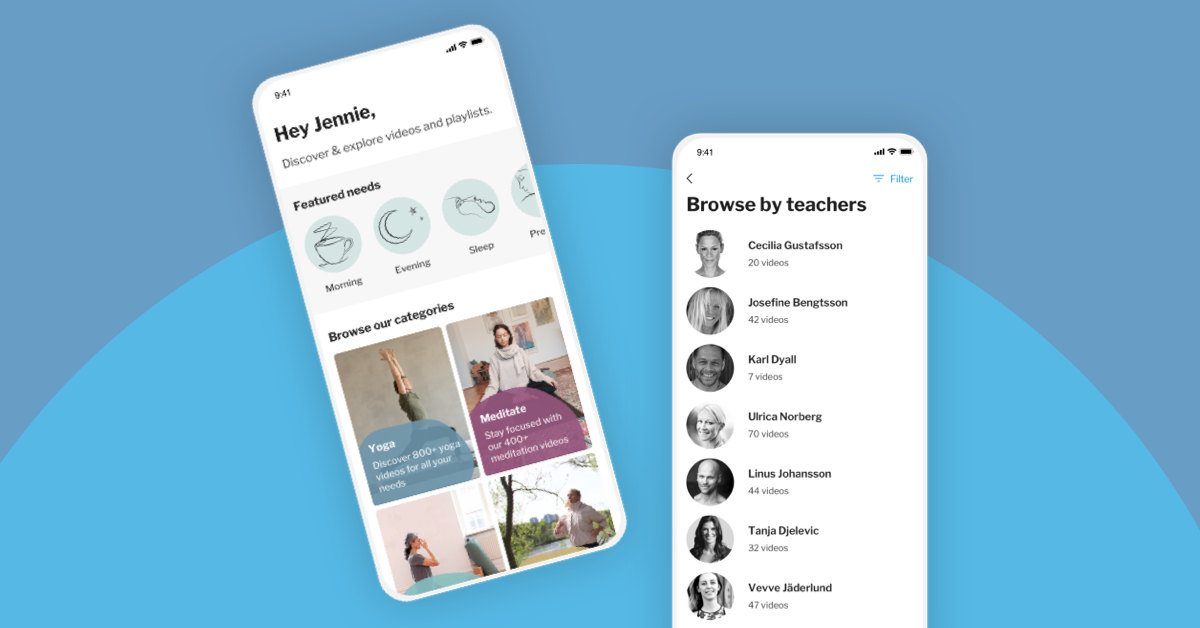
The new Yogobe app includes many new, user-friendly features:

In the first release we offer the following features:

  • Offline-mode: Get access to all videos on Yogobe even when you don’t have internet connection
  • Recommended: Based on your interests and needs you are provided with recommended videos and playlists - to make it even more simple to find what you need
  • Search: Type in a search word and find a specific video or audio session. Combine the search with the filter and find exactly what you are looking for!
  • Filter: Use the filter function to find content that corresponds to your needs
  • Favorites: Favorite mark the videos you love for quick access
  • Playlists: Create, change and share your own playlists or save someone else's as a favorite
  • Cast: Use Airplay or Chromecast to yoga and workout in front of your TV.

In future releases, the following features will be included:

  • Programs: Full access to all of our + 45 customized programs
  • Challenges: Join our 4 week challenges, optimized for your individual needs
  • Courses: Get access to your online course
  • Notifications: You decide when and if you want to get motivational notifications
  • Team Yogobe: Follow teachers and visit their profiles to see their playlists, favorites and blog posts.

Can I become a member through the app, and does it cost?

The app is free to download and you can become a member directly via the app. However, below we explain the benefits of becoming a member and upgrade your membership at Yogobe.com compared to via the apps.

→ Become a member first via yogobe.com - and then download the app 
When you register as a new member on Yogobe through the website you get a free period of at least 14 days. A trial period when you can try the service without binding time and always without entering payment card or account details. This means that your trial period can never automatically turn into a paying subscription. For us at Yogobe, it is important that you choose whether you want to upgrade to becoming a paying member or not.

→ Pay via Yogobe.com instead of through App Store and Google Play
When it comes to the App Store and iOS, however, it does not work the same way as it does via the website. They require you to enter your payment information in order for you to get access to your free trial. Admittedly, this simply means that you yourself need to cancel the trial before your 14 days are over, if you do not want your membership to automatically turn into a paying subscription and then to the prices that apply in the app (which is on average 15 % above the prices on Yogobe.com as a result of Google and Apple charging up to 30%).

NOTE:
If / when you choose to pay for Yogobe via Google Play or the App Store, you start a paying subscription with them, not with us. When you want to cancel a subscription, it is therefore important that you do so directly in your iOS or Android device and not on Yogobe.com or in Yogobe's app. However, we are ALWAYS there to give you support and help and you can reach us via [email protected].

Therefore, we strongly recommend that you first create your account and also start subscriptions on Yogobe.com, to save money and then choose to download the app and log in with your login details. Everything you do as logged in on the website and in the apps mirrors each other.

Read more about the app here!

Give us a review

Do you appreciate the app? Please give us a review. Your feedback will help us get better. Psst! We love tips, ideas and 5 stars;)

Leave a review via the App Store here, and Google Play here.

Download the app

Google play
AppStore

Open post
June on Yogobe – a smooth transition into vacay mode

June on Yogobe – a smooth transition into vacay mode

04 June 2021 | Av
Yogobe

Welcome June! Perhaps the most beautiful time of the year - but also a time that can be busy with  before the upcoming summer vacation. This month we are exploring how we can balance activity with moments of mindfulness and recovery so that we can face the summer with energy.

Gather strength for the summer - take time for recovery

Summer is here and it's soon time for vacation. We know that this time before the summer holidays can be intense. Therefore, during June we want to emphasize the importance of taking time for recovery and to check in, so we can soften a bit and transition slowly from work to holiday. To not go from 0 to 100 but to let this period be like a soft deceleration. We may not be able to influence our work situation or other commitments that has to be done before the summer, but what we can do is to give ourselves time to stop, breathe and listen in. 

We also want to give a friendly reminder to plan your summer, and try to create a nice balance between activity and recovery. It's easy to try to catch up with as much as possible during the holidays, perhaps especially now when we have been locked up for so long during the pandemic, but do not forget to take time for rest and lazy days ♡

What's coming on Yogobe in June?

The big news of the month is that we are starting to broadcast LIVE-streamed classes together with Team Yogobe! Sign up for the free week 7-13 June and read more here!

In the blog, you will be able to take part in inspiring reading about training, recovery and much more from Majja Lund, Hillevi Borga and Julia Glutz, among others! In the video library, there will soon be new training classes with Team Yobobe's latest profile - Jenny Ström! In addition, we release the new program Viva Vagina together with Emma Öberg.

We release new videos on a regular basis - in this playlist you will find a selection of our latest launches.

7 tips for more mindfulness in your everyday life

  • Meditate in the shower. Focus on the scent of the soap and how the water feels against your skin.
  • Do small services for your after-work self. Empty the dishwasher, take out the trash or turn on a diffuser in the morning before you go to work.
  • Set checkpoints throughout the day to check in on how you feel. Name the feeling and acknowledge it: is it anxiety? Is it stress? Is it joy? No need to implement solutions; just recognize your feelings.
  • Stop and smell the flowers. Touch a leaf or tree trunk. Experience the joy of running your hands or bare feet through grass and soil. Pamper your senses with the abundance of nature.
  • Be direct about your needs. Tell your partner, friends or colleagues what you need. And ask others to be just as direct with you.
  • Turn yourself upside down. Let the head come lower than the heart in a handstand, headstand or standing forward fold. Let it be a playful act and a reminder that you do not have to be so serious all the time.
  • While brushing your teeth for the night - identify a success that you have achieved during the day.


Editor's picks: playlists of the month

This month we have selected playlists with a nice balance between recovery and activity. A lovely mix of meditation, yin and restorative yoga and exercise:

  • Good morning!: Get going in the morning and wake up your body to lay the groundwork for a great day. Combine several of the sequences or select just one – the one you need today.
  • Meditation for inner stillness:  In this playlist we have collected a mix of meditation practices for different occasion and needs.
  • Relax & Restore: This playlist is created to help you activate your parasympathetic nervous system with calming yin, yoga nidra and meditation
  • Strength & breathwork: Combine classes that focuses on strengthening your muscles and breathing exercises.


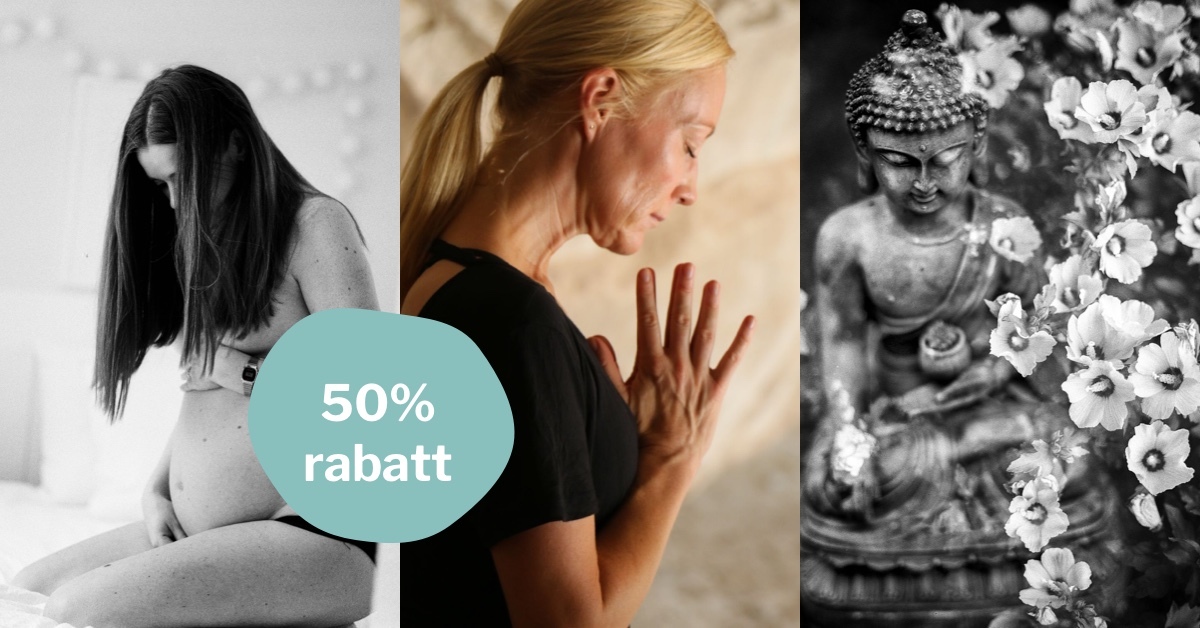
This summer's selected online courses - 50% discount

During the summer, you can buy three of our most popular online courses for half the price! Choose between:

  • Föda utan rädsla online: This modern birth preparation prophylaxis course gives you, your partner and the baby in the womb the best conditions for childbirth.
  • Lär dig meditera: A 12-week meditation course for you who want to learn how to meditate or for you who are ready to take the step to get a regular meditation practice in everyday life, guided by Ulrica Norberg.
  • Yoga Philosophy: This is the course for you who want to learn more about yoga philosophy, and learn how to implement the Indian wisdom in a way that is directly linked to your life. The course content is in English and the course is guided by Simon Krohn.

The offer is valid until 31/8 2021.

Read more about mindfulness, restorative and yin yoga

Video recommendations – recovery

Yogobe Video: f85c Yogobe Video: h85u Yogobe Video: 84es Yogobe Video: 8u4g

To watch a full video you need to be logged in as a paying Yogobe member. Haven't tried Yogobe before? Try it for free during 14 days – get started here!

Open post
Run, Flow, Let Go – a five minute workout that makes you feel REAL

Run, Flow, Let Go – a five minute workout that makes you feel REAL

30 May 2021 | Av

A few minutes a day of activity can give you significant health benefits. Run, Flow, Let Go is a training format that strengthens your body and nourish your emotional being. Discover an experience in training and emotional intelligence – read more here!

What is Run, Flow, Let Go?

Run, Flow, Let Go is a new training format weaving together energizing movements designed to strengthen your body, improve your cardio health whilst nourishing your emotional being.

Each Run, Flow, Let Go video is 5 minutes and includes these three stages:

  • RUN – cardio energising exercises based on the essentials of interval training & running.
  • FLOW – yoga-inspired movements linked with the breath.
  • LET GO – techniques to express & release pent up energy.

In each stage you will be fully ON for 20 seconds & then totally OFF for 10 seconds of rest.

In each video during the LET GO stage, there will be a focus on accessing and releasing one of the primary emotions – MAD, SAD, BAD or GLAD. The session ends with moving into the emotion of GLAD by celebration and wild free dance!

Can a 5 minute workout be effective?

When many of us think about health and getting fitter, we imagine the long, hard slog at the gym for hours or running for miles on a lonely road.

And yet a mountain of science is now accumulating around the merit of micro shifts or micro interventions, short bursts of activity we can do anywhere with next-to-no equipment. The latest science in exercise and health clearly shows that any activity is better than none, and that more is better than a little. The UK health guidelines in 2011 stated we should aim for 150 minutes of moderate or 75 minutes of vigorous physical activity per week in bouts of at least 10 minutes with muscle-strengthening activities twice a week, in that order. That advice was changed in 2019 to “some is good; more is better”. The Run Flow Let Go videos are designed around this micro shift format, because we know that as little as five to six minutes a day of objectively measured increases in activity have been shown to deliver significant health benefits.

Let go – train your emotional intelligence

While surgical procedures date back as early as Christ, our exploration into mental health didn’t really start until the mid-18th century, and even then, it was only looking at dysfunction, not how to improve mental health. The consideration of emotional intelligence emerged in 1964, although it didn’t gain traction as a concept until science journalist Daniel Goleman popularised it through his book. Since then, studies have shown that people with higher levels of emotional intelligence tend to have better mental health as they’re able to take a constructive perspective of the ups and downs of their life, and because they’ve developed a level of emotional literacy and mastery over their emotional state.

We need the right vocabulary to articulate to ourselves what we’re feeling and why. If we want to improve how we feel, we need to begin by becoming more aware of what we’re thinking, then change our thoughts accordingly. A simple exercise is to pause and connect to the feeling you’re having — mad, sad, glad, or bad — and think about what might be causing you to feel that way. Emotions are signals, not invitations to take up residency. Run Flow Let Go trains your emotional intelligence by inviting you to move into and let go of the various emotions of mad, bad and sad and we always end in glad, letting go into celebration of life!

Real is where the gold is

I sense that, as a species, we’re at a crossroads. We’ve tried all these different extremes to attain some measure of peace or happiness: success, power, money, stuff, bigger houses, faster cars, nicer clothes, better holidays … but none of it works. We lurch to the other extreme: meditation, shrinking needs, simplicity, deep work, and a quest for enlightenment. It also doesn’t work. It may feel better and more authentic, and we may be able to manage the angst better, but even with glimpses of enlightenment, something is still missing.

And that’s where en-realment comes in. It’s the daily actions and effort to be real that give us the changed reality — not the glimpses of enlightenment, however profound they may feel at the time. I’m forever grateful for the experience, but it’s the daily mantra of being real that has truly changed my life. Life invites us to immerse ourselves in that chaos and wonder, using our real experiences to illuminate our path; to learn, grow, make mistakes, take risks, and seek to become more tomorrow than we were today. Real is where the gold is. It’s also where the heart is (and sometimes the heartache), but it’s worth it.

Further reading – Run, Flow, Let Go, yoga and wellbeing

Video recommendations – try Run, Flow, Let Go online

Yogobe Video: p7x6 Yogobe Video: z2u6 Yogobe Video: r5f2 Yogobe Video: 47ze

To watch a full video you need to be logged in as a paying Yogobe member. Haven't tried Yogobe before? Try it for free during 14 days – get started here!

Open post
May on Yogobe – time for transformation

May on Yogobe – time for transformation

01 May 2021 | Av
Yogobe

Welcome beautiful month of May! This month we are inspired by nature's magnificent transformation, all the buds that bloom. Examine your relationship to change - and find the motivation to make the changes that make you more YOU.

Change - a natural part of life

"There is nothing permanent except change." – Heraclitus

That change is a natural and constant part of life has been stated by several philosophers and thinkers, such as the philosopher Heraclitus, whose quotation is mentioned above, and the Buddha, who speaks of anicca - the impermanence of life. Whether you perceive it or not, everything is constantly changing - the environment, the weather, the economy, technology, society, culture, your friends and family - and you too.

What is your relationship to change? For some people, the thought of constant and infinite change is frightening, while others have a hard time imagining a life without change. The sooner you can begin to accept, embrace and seek change, the faster you can begin to enjoy the natural process of life. There are so many opportunities out there waiting to be discovered.

You can not change the fact that change will take place, but you can adjust your view and attitude to it to live a happier and richer life. Of course, the resistance only grows the more we ignore the need for change. And it does not always have to be the big changes that are the most life-changing. Eating more vegetables, trying a new form of exercise, starting to meditate in the morning instead of scrolling on your mobile phone are examples of small changes that can lead to positive consequences for your health and well-being.

What's happening on Yogobe in May?

In May, we have collected videos and playlists to inspire you to train and be present in nature. In the blog, you will be able to read posts from, among others, Karl Dyall, Magnus Hagström and Cecilia Gustafsson in Team Yogobe. You will also be able to enjoy new forest bathing classes with Cecilia, new classes with Hillevi Borga for osteoarthritis and seniors and dance and tabata classes with Team Yogobe's latest addition Frida Lindgren Karlsson in the video library.

9 tips to embrace change

  • Remember that change is inevitable, normal and necessary – maybe you want to use this sentence (or a similar one) as an affirmation? Repeat it as often as self-doubt or resistance to change arises.
  • What is in your control? – assess your situation and write a list of which elements are within your control and which are outside your control. What emotions come up when you see the things that are in your control on your list? When you are sitting with what is "out of your control", you may ask yourself, "Is there anything I can let go of? Ask for help?"
  • Maintaining routines and rituals for self-love – while things are changing in life, it can be helpful to stick to rituals and routines for self-love that grounds and support you. It can be anything from walking, yoga and exercise to a quiet cup of tea in the evening. What's on your self-love list?
  • Focus on your resilience – every change will bring some discomfort. As you face this discomfort and learn new things about yourself, you become stronger, wiser, and more resilient. With the help of body scanning, you can explore where the resistance lives in your body.
  • Celebrate your progress – every change you make is a step forward, so do not forget to celebrate - pat yourself on the back, call a friend, journal, make a post on social media, buy yourself something tasty or find another way to honor your progress.
  • Watch out for success anxiety – Some of us can avoid change even if it is positive change that means success. Success anxiety is a real phenomenon. Many of us can feel more relaxed with less responsibility and less success because we are comfortable with how it is now. Success can be scary and uncomfortable. As we learn to accept change, we can enjoy the success and good things that come with change and stop self-sabotaging. You are worth shining!
  • Reflect on your own unique journey – stop regularly to think about how far you have come. Maybe every week, every month or after a big challenge. You can also summarize the changes that have taken place during a year and note how they have affected you.
  • Connect with community – it can be helpful to reach out to other people who have been through a similar change. Get help from support groups, group therapy, FB groups, podcasts, IG accounts or friends and acquaintances who share the same experience.
  • Find support in nature - go out in nature and find peace and security in watching the constant change that takes place there.


This month's handpicked playlists

This month we have selected playlists that you can enjoy in nature and that will help you let go and bloom. A sweet mix of exercise, mindfulness, yoga and dance:

  • Run, Flow, Let Go – amazing classes to do outside in nature. Train cardio, strength and mobility while letting go of emotional tensions.
  • Life Force: Power from within – short talks with personal trainer Tanja Djelevic on how to find your life force and what helps you create the life you really want.
  • Meditation for inner stillness – take your meditation practice outside with these calming and grounding meditation classes.
  • Feminine awakening – open up to your inner goddess and allow yourself to challenge norms that might be holding you back.

Further reading

Video recommendations – yoga, movement and meditation online

Yogobe Video: 7s9k Yogobe Video: r5f2 Yogobe Video: 89rs Yogobe Video: k5t3

To watch a full video you need to be logged in as a paying Yogobe member. Haven't tried Yogobe before? Try it for free during 14 days – get started here!

Open post
What is metta meditation?

What is metta meditation?

14 April 2021 | Av
Yogobe

Metta meditation is a Buddhist meditation that focuses on loving kindness. You direct the feeling first to yourself, then to someone you hold close, and to all living beings. Here you will learn more about metta bhavana meditation that can help you to open your heart.

Metta bhavana – meditation for loving kindness

In Buddhism, there is no word that means the same as our Western "meditation". Instead, they usually use the word bhavana, which means "cultivation" or "cultivation of". For example, if you focus your attention on the breath, it is called anapanasati bhavana, ie the cultivation of attention (sati) on the inhalation and exhalation (ana-pana).

Bhavana shows that meditation is something you actively do, not something that just happens by itself. To meditate, some effort is needed – a balance between effort and receptivity, to let go. In metta bhavana, it is metta (loving kindness) that you grow, awaken or produce. 

Metta is a deep desire that things will go well for both yourself and others. It is free and does not need anything in return. This desire comes from an open heart, and is based on the fact that we deeply identify ourselves with other people and everything that lives and breathes.

Metta meditation – an excercise

  • Sit comfortably and relaxed.
  • Take two or three deep breaths with long exhalation.
  • Become aware of how you feel in the body, how you feel right now.
  • Give yourself permission to experience whatever you feel.
  • For a few minutes, feel or imagine how the breath moves through the center of your chest – in the area around the heart.
  • Peacefully begin to mentally repeat, slowly and steadily, the following or similar phrases:

May I be happy.
May I live in peace and harmony.
May I be safe and secure.
May I have patience and courage.

Start with yourself, then expand to someone close and then to all beings, "May you be ...". Try to keep the phrases in your heart just as you would hold something fragile and precious in your hand.

When you say the phrases, distracting thoughts may emerge. It starts to itch on your forehead, your knee hurts or you start thinking about the job interview you have tomorrow. When the distraction comes, try to get back to the phrase again and again.

The liberation of the heart – metta is also being kind to oneself

Of course we are not always so present or open-hearted, and it takes time and patience to cultivate metta. But if we are in contact with ourselves and are aware, we will naturally wish that things will go well for others. Metta can then arise only by thinking about or becoming aware of another.

Metta meditation can be the heart's path to liberation – having a friendly attitude towards oneself is also part of metta.

Källa: Viryabodhi, Tricycle

Read more about meditation, mindfulness and wisdom

Videos with meditation and loving kindness

Yogobe Video: x83k Yogobe Video: z5a3

To watch a full video you need to be logged in as a paying Yogobe member. Haven't tried Yogobe before? Try it for free during 14 days – get started here!

Open post
Explore Ashtanga yoga online with Laruga Glaser

Explore Ashtanga yoga online with Laruga Glaser

04 April 2021 | Av
Laruga Glaser

As a teacher I want to give students the skills to inhabit themselves fully. To make them trust the wisdom that we all have inside of us. Join me on the mat exploring Ashtanga yoga online here at Yogobe.

Ashtanga yoga – a practice where you can explore and grow

I am really passionate about human development, and entering into that new dawn, exploring what the truth is. This has guided me into the practice of yoga, especially Ashtanga yoga. I've been practicing ashtanga yoga for 25 years and I always say that Ashtanga yoga was the best decision I ever made for myself and happy to share with others. Teaching is just an extension of my own practice, my sadhana – that consistant journey of uncovering the truth of who I am. I love to explore the sense of empowerment and connection with all the students that cross my path.

When I am teaching, I'm exploring too and love the sense of giving students the skills and the true beauty of what yoga develops in each human being. I find it to be my duty to give students the skills to make that connection, the skills to inhabit themselves fully, to trust the wisdom that they have inside of them.

One of the true rewards of a longterm yoga practice is to trust that inner guidance and yoga is really about clearing that path. As a teacher I just facilitate that energy. Because everyone has the ability to obtain a connection to that higher self and also to heal old wounds. I try to help to clear that path and to facilitate a space to explore, to learn and also to grow.

I am here to take you through the Ashtanga yoga practice, and I feel it's my purpose to share the development with people who are open to explore the nature of yoga. It will be fun! Expect growth, transformation and to work outside your comfort zone where I will support and guide you along the way.

What is Ashtanga yoga?

For those of you who are new to the embarking of the Ashtanga yoga practice, Ahtanga yoga is a method of practice, with six set sequences. This particular practice was spread throughout the world by the late teacher Sri K. Pattabhi Jois. We memorize this sequence of poses to actually be able to create the sense of moving meditation.

Ashtanga yoga has a way of cultivating strength to the physical body, we become more flexible, we become healthier as well in our physical body. But the beauty of it is that we also become more confident, we feel more centered in ourselves, we obtain and connect to this greater sense of peace within ourselves. It doesn't necessarily mean it will make life easy, but this type of practice gives us the skills to navigate through life more fully.

Learn Ashtanga yoga online with Laruga at Yogobe


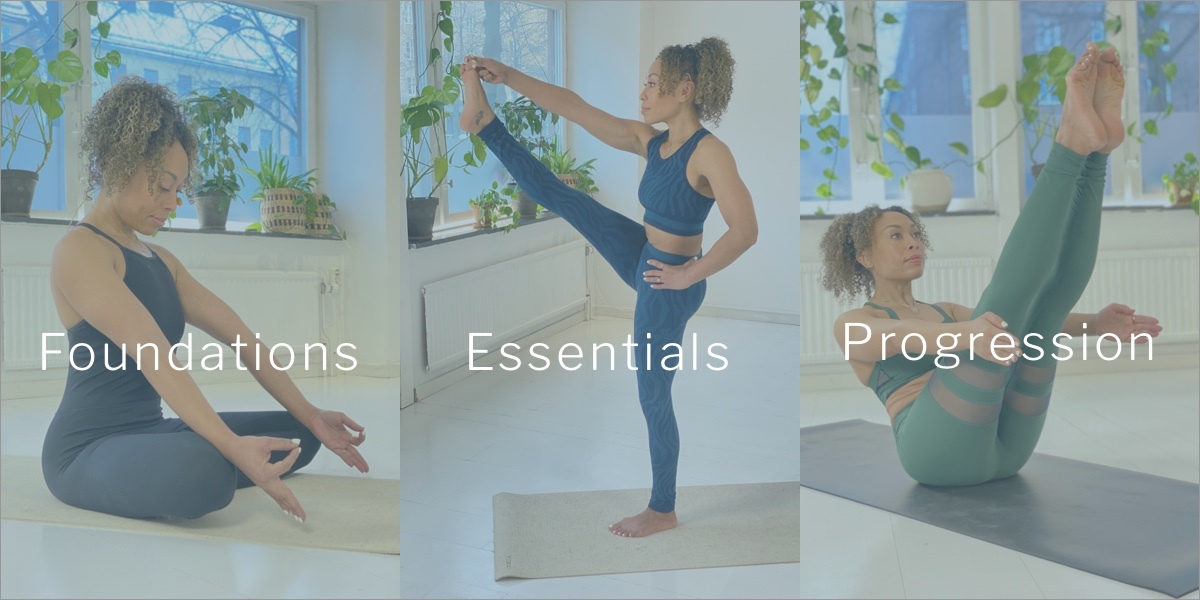
We have created three different playlists that are adapted to different levels of knowledge, which is based on the first series in Ashtanga - Primary Series. Each playlist starts with an introductory workshop and also includes lectures, hands-on classes and tutorial videos.

  • Ashtanga Yoga Foundations – this playlist is for you who is new to ashtanga which will provide you with an introduction to the practice and it's foundations.
  • Ashtanga Yoga Essentials – these classes will deepen your understanding of Ashtanga yoga, working from the inside out.
  • Ashtanga Yoga Progression – Laruga ties everything together and guides you through the full primary series.

Read more about Ashtanga and the good habits of yoga

Video recommendations – Ashtanga yoga online with Laruga Glaser

Yogobe Video: f2z3 Yogobe Video: 4r7f Yogobe Video: b92e Yogobe Video: k8a3

To watch a full video you need to be logged in as a paying Yogobe member. Haven't tried Yogobe before? Try it for free during 14 days – get started here!

Open post
Can mindfulness help the growing brain in children and adolescents?

Can mindfulness help the growing brain in children and adolescents?

24 March 2021 | Av
Yogobe

Mindfulness can help you focus, feel happier and reduce your anxiety. But what does research say about mindfulness for children? And what happens when schools have mindfulness on the schedule? Read more about how mindfulness can help children and young people – while their brains grow.

Mindfulness for children can lay the foundation for good habits

Mindfulness is a meditation technique that is about learning conscious presence, which increases the feeling of calm in both body and mind. Mindfulness is used today in care and psychotherapy to treat various stress symptoms and states of depression, anxiety and worry. Researchers have also shown that the practice of mindfulness and meditation can improve the immune system, lower blood pressure and even change the structure and function of the brain.

Developmental neurologist Hilary A. Marusak of Wayne State University, USA, has been interested in how mindfulness affects the brains of children and adolescents while it is still developing.

– I believe that mindfulness and meditation may be especially beneficial for children and teens because these skills may strengthen brain circuits that control the ability to focus and concentrate and to regulate emotions, which are maturing during this time. Establishing these habits early in life may also set the stage for good habits later in life, says Hilary A. Marusak.

How does mindfulness work?

When you practice mindfulness, you use all five senses: touch, hearing, sight, smell and taste, to focus on the present moment. One of the most common ways to practice mindfulness is to focus on your own breath.

The tendency for the mind to wander, or lose focus on the present, seems to be a standard state of brain function – and can actually be beneficial. The wandering thoughts can, among other things, trigger creativity. But the wandering mind can also go wrong and lead to excessive worry, focus on negative things or dwelling on the past. Research also shows that we are less happy when thoughts and minds wander than we are when we pay attention to the present.

Mindfulness can also help reduce distraction. Being distracted can disrupt children's ability to handle schoolwork, manage relationships with friends or family, or regulate emotions, which is a problem in today's fast-paced world of distractions everywhere.

Effects of mindfulness on the growing brain

Hilary A. Marusak's study examined how mindfulness affects brain connectivity in children and adolescents. The study scanned the brains of 42 children and adolescents between the ages of 7 and 17, using fMRI (Functional Magnetic Resonance Imaging). Participants' degree of "natural awareness", mindfulness as a trait was also measured.

It turns out that children who are more attentive in the present can act more consciously. They also find it easier to observe and accept their inner experiences without judging them. Adolescents with greater attendance reported lower anxiety levels and their brains switched more often between different connectivity states during the scan.

Greater flexibility in the brain can help explain some of the perceived positive effects of mindfulness training in children and adolescents.

Mindfulness in school

Several schools today use mindfulness as a way to help students in school environment and in everyday life. Swedish television SVT reported, for example, about the International School ISGR in Gothenburg:

– We have noticed fantastic results with calmer and more focused students which has made both mine and their working environment much better, says teacher Camilla Martinsson.

At ISGR, three classes in grade four have done mindfulness exercises for ten minutes a day for just over a year. In 2020, mindfulness was introduced on the schedule in 20 classes at the school.

– There are far fewer social conflicts now. The children can follow the reasoning and join in in a different way, says Camilla Martinsson. Many of the students also say that they sleep better.

Read more about mindfulness in swedish!

Source: Oregon live, SVT, Göteborgs stad

Read more about yoga and mindfulness 

Videos online –  mindfulness and breathing

Yogobe Video: 7z3r Yogobe Video: x83k Yogobe Video: 4x2r Yogobe Video: 4s5p

To watch a full video you need to be logged in as a paying Yogobe member. Haven't tried Yogobe before? Try it for free during 14 days – get started here!

Open post
March on Yogobe – find YOUR flow

March on Yogobe – find YOUR flow

01 March 2021 | Av
Yogobe

March is here! The light has begun to return to our latitudes and spring is on it's way. The snow and ice begin to slowly melt and return to a liquid state. Just like the transformation that is now taking place in nature, we have the opportunity to let stagnant energy flow which make us feel vital again. In March, we want to inspire you to find your flow - in your yoga, training and everyday life.

Flow – when you feel that magic

Have you ever been so engrossed in something that you forgot about time? Then you have experienced the state of flow - the feeling that everything just flows. It can be in your practice on the yoga mat, when you perform a task, paint a picture or play with your children. The state of flow occurs when there is a balance between how challenging a task is and the capacity to perform the task. We have the opportunity to steer ourselves towards the state of flow by learning what arouses our flow and actively making choices to achieve it. The great thing about flow is that it washes over us and allows us to get more flow in everything we do in our everyday lives.

You know you're in flow when you:
– are completely focused on what you do
– forget yourself, others and the world around you
– lose the perception of time
– feel happy and in control
– get creative and productive

This month we have collected videos and playlists to inspire you to explore how you can create flow both on and off the yoga mat. In the blog, you will be able to read about flow from different perspectives and take part in inspiring reading from, among others, Moa Westman and Cecilia Gustafsson in Team Yogobe. You can also look forward to new exciting classes with Milla Floryd, four new vinyasa classes with Moa Westman and at the end of March, Laruga Glaser's new asthanga classes for both beginners and experienced yogis will be launched.

6 tips to invite more flow in life

  • Follow your heart – it's easier to reach the flow state when we do things we like and enjoy, so choose what you spend your time on carefully. A job that you enjoy, training that peppers you and fill your everyday life with activities that make your heart beat.
  • Challenge yourself – tasks without resistance do not give rise to flow, nor do tasks that are too difficult. Challenge yourself, but set the bar at a reasonable level.
  • Find focus - being able to focus on one thing at a time is the key to the state of flow. By strengthening your concentration, you will therefore be able to reach flow more easily. Mindfulness and meditation are two techniques that help you strengthen your focus.
  • Timing - by being observant of the times when you experience flow, you can also plan your days to create more opportunities for flow. Choose to do more difficult tasks a certain time of the working day, yoga the times when it feels the best, etc.
  • Optimize your internal and external environment - move your body, eat healthy and make sure to prioritize sleep and recovery. Adapt your external environment by having order around you and avoid distractions that can steal your attention.
  • Allow yourself to enjoy - in order to dive into the flow, it is important to find joy in the task itself instead of performing it with a focus on what the result will mean for you. Allow yourself to fully immerse in what you are doing and to enjoy every moment.

Editor's picks: playlists of the month

Do you want to explore flow through yoga? This month's playlist invites you to do just that - in both physical and calmer yoga styles – so that you can find your flow:

- Morning Flow

- Give flow a go - try 5 different styles

- Mindfulness (inner flow)

You'll find more Flow playlists here!

Swedish online courses - 50% discount

Every month we offer some of our fantastic online courses at half price! Catch the offer here. In March, you can choose between:

- Föda utan rädsla: This modern birth preparation prophylaxis course gives you, your partner and the baby in the womb the best conditions for childbirth.

- Lär dig meditera: A 12-week journey for you who are new to meditation, or you who want to deepen your meditation training, guided by Ulrica Norberg.

Read more about yoga and meditation

Video recommendations – explore flow online

Yogobe Video: 83zs Yogobe Video: p7x6 Yogobe Video: 4d7e Yogobe Video: 64fp

To watch an entire video, you need to be logged in as a paying member of Yogobe. New to the service? Try for free for 14 days, without a lock-in period - click here to get started right now!

Open post

Search

Categories